

10.8 Some Aims for Present and Future Research
At least from the taxonomic point of view, the main groups of marine invertebrates
of the Alboran Sea (e.g. sponges, anthozoans, molluscs, decapod crustaceans,
echinoderms) are reasonably well known, but knowledge on most of minor groups,
and also on polychaetes and non-decapod crustaceans, is much scarcer and needs to
be improved. However, research work on basic scientific issues, such as taxonomy,
systematics or biogeography, seems to be currently unfashionable for funding
agencies. Qualified and constantly updated systematic inventories of all the components of biodiversity are necessary since they provide a permanent scientific record
for documenting patterns of diversity, endemism and alien species. Small cryptic
invertebrates are numerically dominant in most marine ecosystems, but the inventory of these species requires the participation of trained taxonomists (those experts
able to identify, describe and classify species). Regrettably, expertise in biodiversity
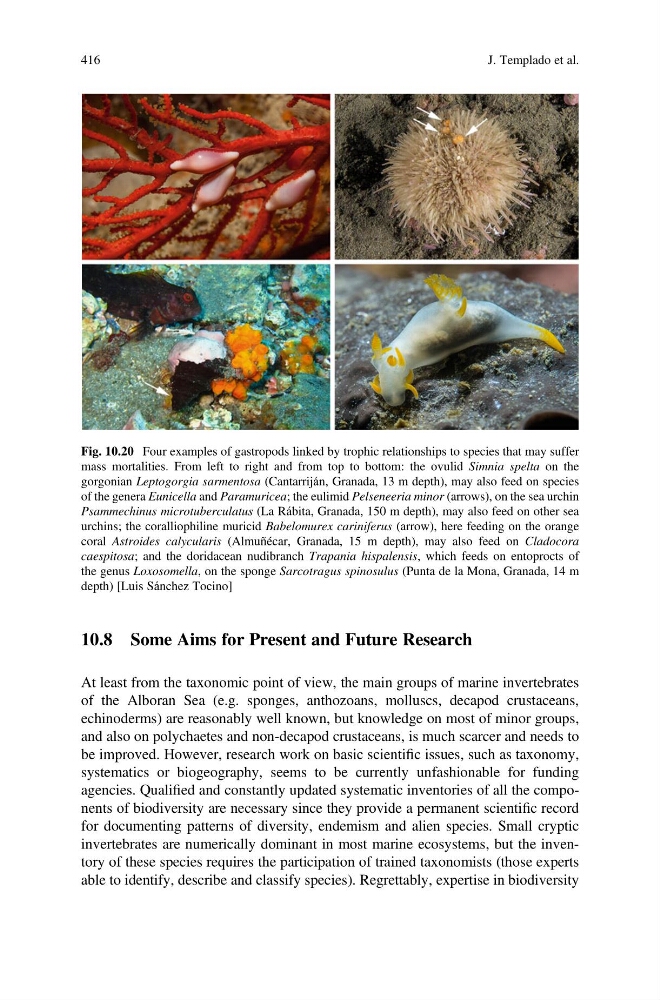
Fig. 10.20 Four examples of gastropods linked by trophic relationships to species that may suffer
mass mortalities. From left to right and from top to bottom: the ovulid Simnia spelta on the
gorgonian Leptogorgia sarmentosa (Cantarriján, Granada, 13 m depth), may also feed on species
of the genera Eunicella and Paramuricea; the eulimid Pelseneeria minor (arrows), on the sea urchin
Psammechinus microtuberculatus (La Rábita, Granada, 150 m depth), may also feed on other sea
urchins; the coralliophiline muricid Babelomurex cariniferus (arrow), here feeding on the orange
coral Astroides calycularis (Almuñécar, Granada, 15 m depth), may also feed on Cladocora
caespitosa; and the doridacean nudibranch Trapania hispalensis, which feeds on entoprocts of
the genus Loxosomella, on the sponge Sarcotragus spinosulus (Punta de la Mona, Granada, 14 m
depth) [Luis Sánchez Tocino]
416
J. Templado et al.
At least from the taxonomic point of view, the main groups of marine invertebrates
of the Alboran Sea (e.g. sponges, anthozoans, molluscs, decapod crustaceans,
echinoderms) are reasonably well known, but knowledge on most of minor groups,
and also on polychaetes and non-decapod crustaceans, is much scarcer and needs to
be improved. However, research work on basic scientific issues, such as taxonomy,
systematics or biogeography, seems to be currently unfashionable for funding
agencies. Qualified and constantly updated systematic inventories of all the components of biodiversity are necessary since they provide a permanent scientific record
for documenting patterns of diversity, endemism and alien species. Small cryptic
invertebrates are numerically dominant in most marine ecosystems, but the inventory of these species requires the participation of trained taxonomists (those experts
able to identify, describe and classify species). Regrettably, expertise in biodiversity
Fig. 10.20 Four examples of gastropods linked by trophic relationships to species that may suffer
mass mortalities. From left to right and from top to bottom: the ovulid Simnia spelta on the
gorgonian Leptogorgia sarmentosa (Cantarriján, Granada, 13 m depth), may also feed on species
of the genera Eunicella and Paramuricea; the eulimid Pelseneeria minor (arrows), on the sea urchin
Psammechinus microtuberculatus (La Rábita, Granada, 150 m depth), may also feed on other sea
urchins; the coralliophiline muricid Babelomurex cariniferus (arrow), here feeding on the orange
coral Astroides calycularis (Almuñécar, Granada, 15 m depth), may also feed on Cladocora
caespitosa; and the doridacean nudibranch Trapania hispalensis, which feeds on entoprocts of
the genus Loxosomella, on the sponge Sarcotragus spinosulus (Punta de la Mona, Granada, 14 m
depth) [Luis Sánchez Tocino]
416
J. Templado et al.