

in the case of the Alboran platform, where common sponges include Dysidea
fragilis, Sarcotragus pipetta, Hexadella racovitzai, Penares helleri, Crambe
tailliezi, Caminus vulcani, Dercitus plicatus, Craniella cranium as well as several
species of the genera Axinella, Suberites, Calthropella, Erylus, Haliclona,
Spongosorites and Phorbas (Maldonado 1992, 1993; Sitjà and Maldonado 2014).
Other common organisms include the polychaete Sabella pavonina, which can
develop dense aggregations in some areas of the Alboran platform, becoming a
typifying species of the community; the bryozoans Myriapora truncata, Pentapora
fascialis and Reteporella grimaldii; the ascidians Diazona violacea, Ascidia
mentula, Botryllus schlosseri, Polycarpa mamillaris, Polycarpa pomaria, Styela
canopus and Microcosmus vulgaris among others; and the brachiopods Megathiris
detruncata, Terebratulina retusa, Novocrania anomala and Megerlia truncata.
Furthermore, a great diversity of mobile organisms swarms around these complex
bioconstructions, including a large number of small-size polychaetes, molluscs,
crustaceans and echinoderms. Echinoderms are among the best represented largesize organisms and include the sea urchins Sphaerechinus granularis, Gracilechinus
acutus and Centrostephanus longispinus and especially the basket sea star
Astrospartus mediterraneus, which is observed on several gorgonians with their
branched arms totally extended. Besides, threatened and/or protected species are
frequently observed in the coralligenous community including several species with
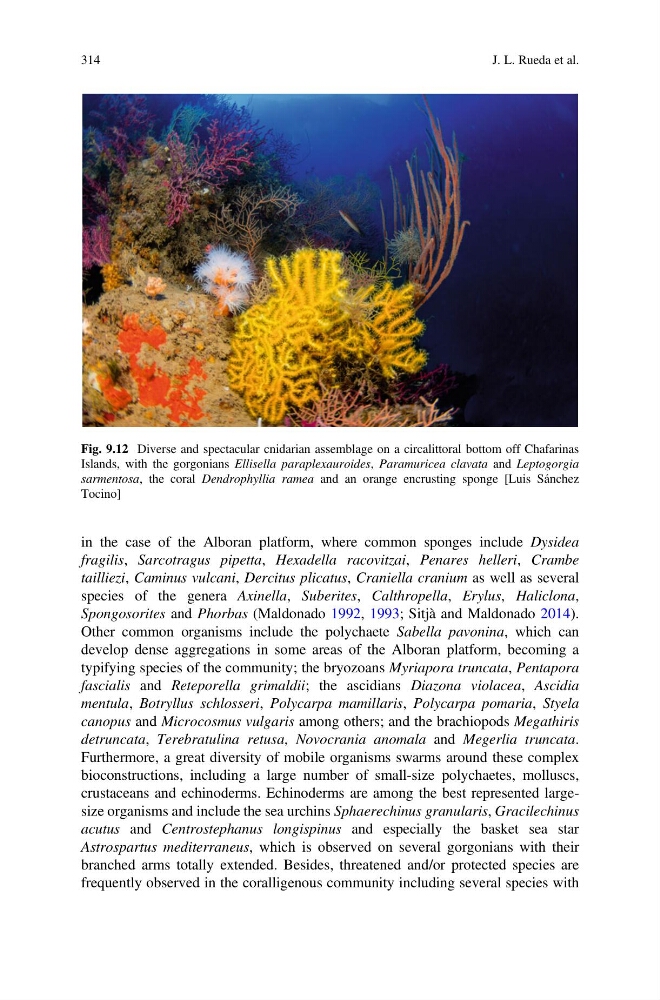
Fig. 9.12 Diverse and spectacular cnidarian assemblage on a circalittoral bottom off Chafarinas
Islands, with the gorgonians Ellisella paraplexauroides, Paramuricea clavata and Leptogorgia
sarmentosa, the coral Dendrophyllia ramea and an orange encrusting sponge [Luis Sánchez
Tocino]
314
J. L. Rueda et al.
fragilis, Sarcotragus pipetta, Hexadella racovitzai, Penares helleri, Crambe
tailliezi, Caminus vulcani, Dercitus plicatus, Craniella cranium as well as several
species of the genera Axinella, Suberites, Calthropella, Erylus, Haliclona,
Spongosorites and Phorbas (Maldonado 1992, 1993; Sitjà and Maldonado 2014).
Other common organisms include the polychaete Sabella pavonina, which can
develop dense aggregations in some areas of the Alboran platform, becoming a
typifying species of the community; the bryozoans Myriapora truncata, Pentapora
fascialis and Reteporella grimaldii; the ascidians Diazona violacea, Ascidia
mentula, Botryllus schlosseri, Polycarpa mamillaris, Polycarpa pomaria, Styela
canopus and Microcosmus vulgaris among others; and the brachiopods Megathiris
detruncata, Terebratulina retusa, Novocrania anomala and Megerlia truncata.
Furthermore, a great diversity of mobile organisms swarms around these complex
bioconstructions, including a large number of small-size polychaetes, molluscs,
crustaceans and echinoderms. Echinoderms are among the best represented largesize organisms and include the sea urchins Sphaerechinus granularis, Gracilechinus
acutus and Centrostephanus longispinus and especially the basket sea star
Astrospartus mediterraneus, which is observed on several gorgonians with their
branched arms totally extended. Besides, threatened and/or protected species are
frequently observed in the coralligenous community including several species with
Fig. 9.12 Diverse and spectacular cnidarian assemblage on a circalittoral bottom off Chafarinas
Islands, with the gorgonians Ellisella paraplexauroides, Paramuricea clavata and Leptogorgia
sarmentosa, the coral Dendrophyllia ramea and an orange encrusting sponge [Luis Sánchez
Tocino]
314
J. L. Rueda et al.