

research in the area, in particular the “¿Dónde va? Experiment” during the twentieth
century, with the participation of an international team co-directed by the United
States and Spain, or the recently Morocco’s incorporation into the scientific arena in
the region mainly through the creation of a research center in Nador and another in
Tangier. This book comes to fill a tremendous gap in the synthesis of more than a
century of multilateral research. Nevertheless, a challenge for sustainability science
and sustainable development of a region is to promote new perspectives in the
interaction between scientists and the other actors involved in the governance
process. Science–Policy Interfaces (SPI), as social processes oriented toward the
collaboration between scientists, decision makers, and the general public to enrich
environmental governance, is revealed as an adequate approach (López Rodríguez
2016). SPI based on shared projects, joint declarations, and shared experiences are a
common value in the Alboran region with several examples (Dónde va Group 1984;
Kinder et al. 1983), an international consortium that studied the circulation of the
western Alboran Sea and the Strait of Gibraltar, the adoption of the Intercontinental
Biosphere Reserve of the Mediterranean in Andalusia (Spain)—Morocco (Molina
Vázquez and Villa Díaz 2008) to establish a cooperation channel between the two
countries, putting common efforts into the promotion of a model toward sustainable
development favouring the preservation of the shared ecosystems, the I International
Meeting on Conservation and Sustainable Development in the Alboran Sea held in
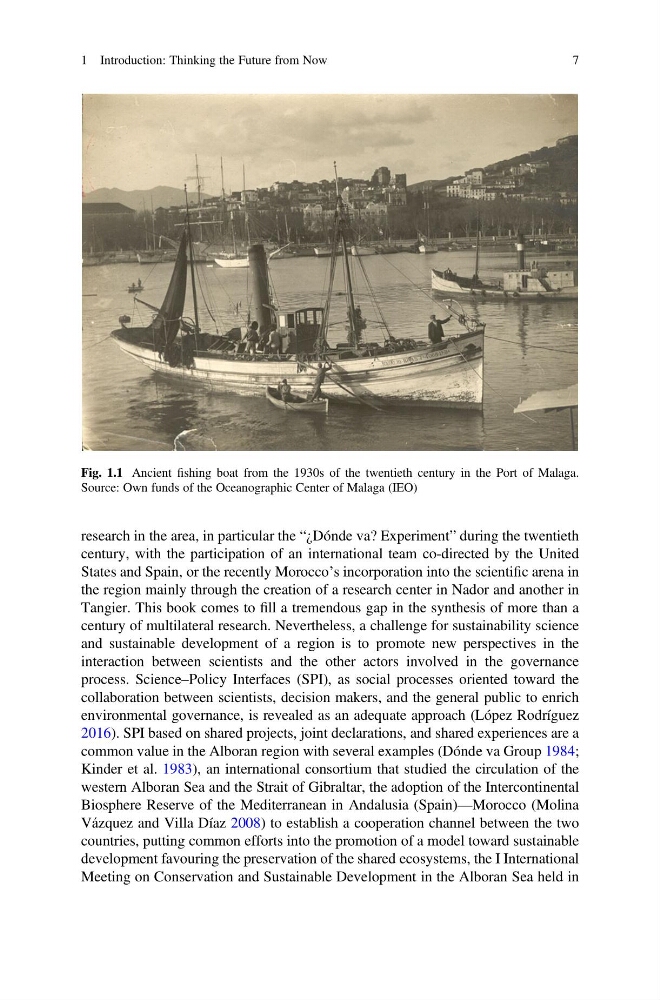
Fig. 1.1 Ancient fishing boat from the 1930s of the twentieth century in the Port of Malaga.
Source: Own funds of the Oceanographic Center of Malaga (IEO)
1 Introduction: Thinking the Future from Now
7
century, with the participation of an international team co-directed by the United
States and Spain, or the recently Morocco’s incorporation into the scientific arena in
the region mainly through the creation of a research center in Nador and another in
Tangier. This book comes to fill a tremendous gap in the synthesis of more than a
century of multilateral research. Nevertheless, a challenge for sustainability science
and sustainable development of a region is to promote new perspectives in the
interaction between scientists and the other actors involved in the governance
process. Science–Policy Interfaces (SPI), as social processes oriented toward the
collaboration between scientists, decision makers, and the general public to enrich
environmental governance, is revealed as an adequate approach (López Rodríguez
2016). SPI based on shared projects, joint declarations, and shared experiences are a
common value in the Alboran region with several examples (Dónde va Group 1984;
Kinder et al. 1983), an international consortium that studied the circulation of the
western Alboran Sea and the Strait of Gibraltar, the adoption of the Intercontinental
Biosphere Reserve of the Mediterranean in Andalusia (Spain)—Morocco (Molina
Vázquez and Villa Díaz 2008) to establish a cooperation channel between the two
countries, putting common efforts into the promotion of a model toward sustainable
development favouring the preservation of the shared ecosystems, the I International
Meeting on Conservation and Sustainable Development in the Alboran Sea held in
Fig. 1.1 Ancient fishing boat from the 1930s of the twentieth century in the Port of Malaga.
Source: Own funds of the Oceanographic Center of Malaga (IEO)
1 Introduction: Thinking the Future from Now
7