

Exercises
67
SRWHQWLRVWDW
D
E
0
Q
0
Q
¨[
SRWHQWLRVWDW
GLODWRPHWHU
SXVKNQRE
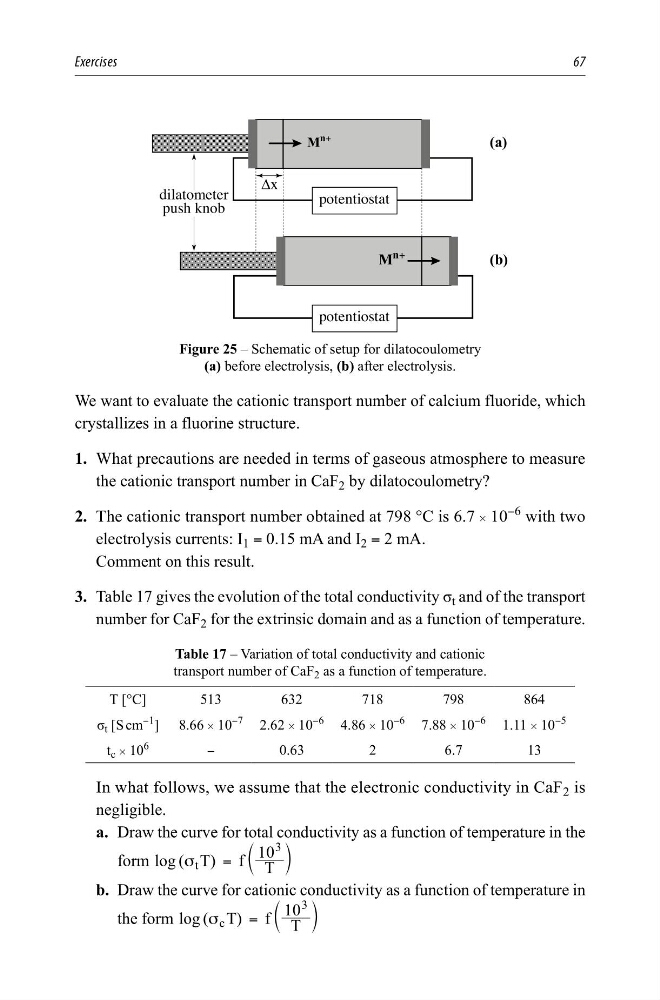
Figure 25 – Schematic of setup for dilatocoulometry
(a) before electrolysis, (b) after electrolysis.
We want to evaluate the cationic transport number of calcium fluoride, which
crystallizes in a fluorine structure.
1. What precautions are needed in terms of gaseous atmosphere to measure
the cationic transport number in CaF 2 by dilatocoulometry?
2. The cationic transport number obtained at 798 °C is 6.7 # 10
−6
with two
electrolysis currents: I 1 = 0.15 mA and I 2 = 2 mA.
Comment on this result.
3. Table 17 gives the evolution of the total conductivity σ t and of the transport
number for CaF 2 for the extrinsic domain and as a function of temperature.
Table 17 – Variation of total conductivity and cationic
transport number of CaF 2 as a function of temperature.
T [°C]
513
632
718
798
864
σ t [S cm
−1
] 8.66 # 10
−7
2.62 # 10
−6
4.86 # 10
−6
7.88 # 10
−6
1.11 # 10
−5
t c # 10
6
−
0.63
2
6.7
13
In what follows, we assume that the electronic conductivity in CaF 2 is
negligible.
a. Draw the curve for total conductivity as a function of temperature in the
form log ( T) f T
10
t
3
σ
= c
m
b. Draw the curve for cationic conductivity as a function of temperature in
the form log ( T) f T
10
c
3
σ
= c
m
67
SRWHQWLRVWDW
D
E
0
Q
0
Q
¨[
SRWHQWLRVWDW
GLODWRPHWHU
SXVKNQRE
Figure 25 – Schematic of setup for dilatocoulometry
(a) before electrolysis, (b) after electrolysis.
We want to evaluate the cationic transport number of calcium fluoride, which
crystallizes in a fluorine structure.
1. What precautions are needed in terms of gaseous atmosphere to measure
the cationic transport number in CaF 2 by dilatocoulometry?
2. The cationic transport number obtained at 798 °C is 6.7 # 10
−6
with two
electrolysis currents: I 1 = 0.15 mA and I 2 = 2 mA.
Comment on this result.
3. Table 17 gives the evolution of the total conductivity σ t and of the transport
number for CaF 2 for the extrinsic domain and as a function of temperature.
Table 17 – Variation of total conductivity and cationic
transport number of CaF 2 as a function of temperature.
T [°C]
513
632
718
798
864
σ t [S cm
−1
] 8.66 # 10
−7
2.62 # 10
−6
4.86 # 10
−6
7.88 # 10
−6
1.11 # 10
−5
t c # 10
6
−
0.63
2
6.7
13
In what follows, we assume that the electronic conductivity in CaF 2 is
negligible.
a. Draw the curve for total conductivity as a function of temperature in the
form log ( T) f T
10
t
3
σ
= c
m
b. Draw the curve for cationic conductivity as a function of temperature in
the form log ( T) f T
10
c
3
σ
= c
m