

222
5 – Applications
b. Verify that the data in the table are consistent with the theoretical expression for emf.
c. Deduce the standard free enthalpy of formation of solid AgCl at 350 °C.
Exercise 5.7 – CO 2 sensor (a)
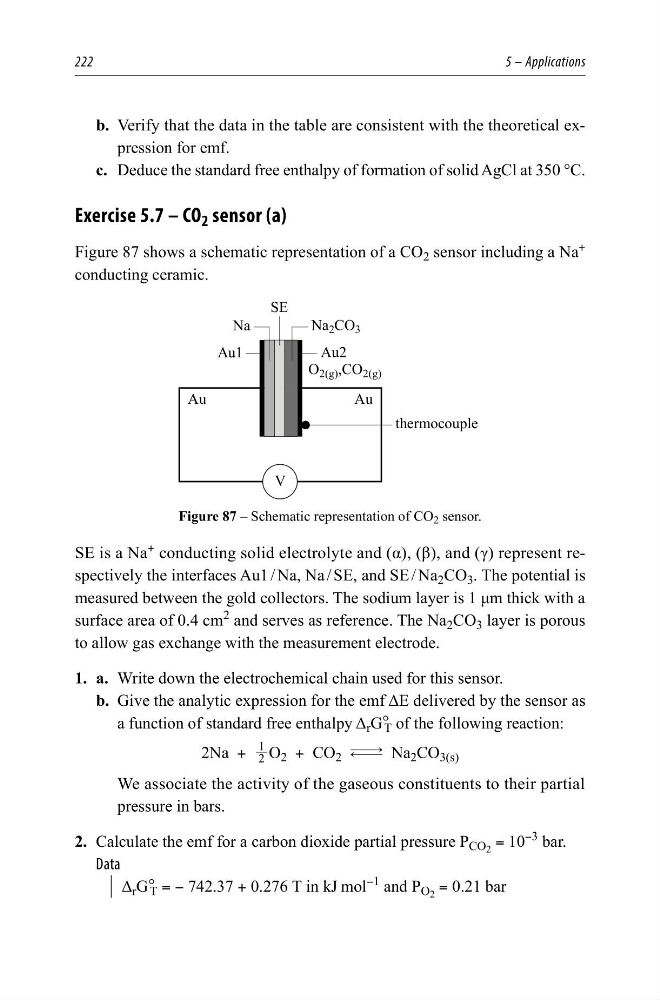
Figure 87 shows a schematic representation of a CO 2 sensor including a Na
+
conducting ceramic.
$X
1D
1D &2
$X
$X
WKHUPRFRXSOH
2 J &2 J
9
$X
6(
Figure 87 – Schematic representation of CO 2 sensor.
SE is a Na
+
conducting solid electrolyte and (α), (β), and (γ) represent respectively the interfaces Au1 / Na, Na / SE, and SE / Na 2 CO 3 . The potential is
measured between the gold collectors. The sodium layer is 1 μm thick with a
surface area of 0.4 cm
2
and serves as reference. The Na 2 CO 3 layer is porous
to allow gas exchange with the measurement electrode.
1. a. Write down the electrochemical chain used for this sensor.
b. Give the analytic expression for the emf ΔE delivered by the sensor as
a function of standard free enthalpy Δ r G ° T of the following reaction:
2Na + 2
1
O 2 + CO 2 m Na 2 CO 3(s)
We associate the activity of the gaseous constituents to their partial
pressure in bars.
2. Calculate the emf for a carbon dioxide partial pressure P CO 2 = 10
−3
bar.
Data
Δ r G ° T = − 742.37 + 0.276 T in kJ mol
−1
and P O 2 = 0.21 bar
5 – Applications
b. Verify that the data in the table are consistent with the theoretical expression for emf.
c. Deduce the standard free enthalpy of formation of solid AgCl at 350 °C.
Exercise 5.7 – CO 2 sensor (a)
Figure 87 shows a schematic representation of a CO 2 sensor including a Na
+
conducting ceramic.
$X
1D
1D &2
$X
$X
WKHUPRFRXSOH
2 J &2 J
9
$X
6(
Figure 87 – Schematic representation of CO 2 sensor.
SE is a Na
+
conducting solid electrolyte and (α), (β), and (γ) represent respectively the interfaces Au1 / Na, Na / SE, and SE / Na 2 CO 3 . The potential is
measured between the gold collectors. The sodium layer is 1 μm thick with a
surface area of 0.4 cm
2
and serves as reference. The Na 2 CO 3 layer is porous
to allow gas exchange with the measurement electrode.
1. a. Write down the electrochemical chain used for this sensor.
b. Give the analytic expression for the emf ΔE delivered by the sensor as
a function of standard free enthalpy Δ r G ° T of the following reaction:
2Na + 2
1
O 2 + CO 2 m Na 2 CO 3(s)
We associate the activity of the gaseous constituents to their partial
pressure in bars.
2. Calculate the emf for a carbon dioxide partial pressure P CO 2 = 10
−3
bar.
Data
Δ r G ° T = − 742.37 + 0.276 T in kJ mol
−1
and P O 2 = 0.21 bar