

184
4 – Electrode reactions
3 2 LQEDU@
ORJ5
Ș >5
Ș LQȍFP
@
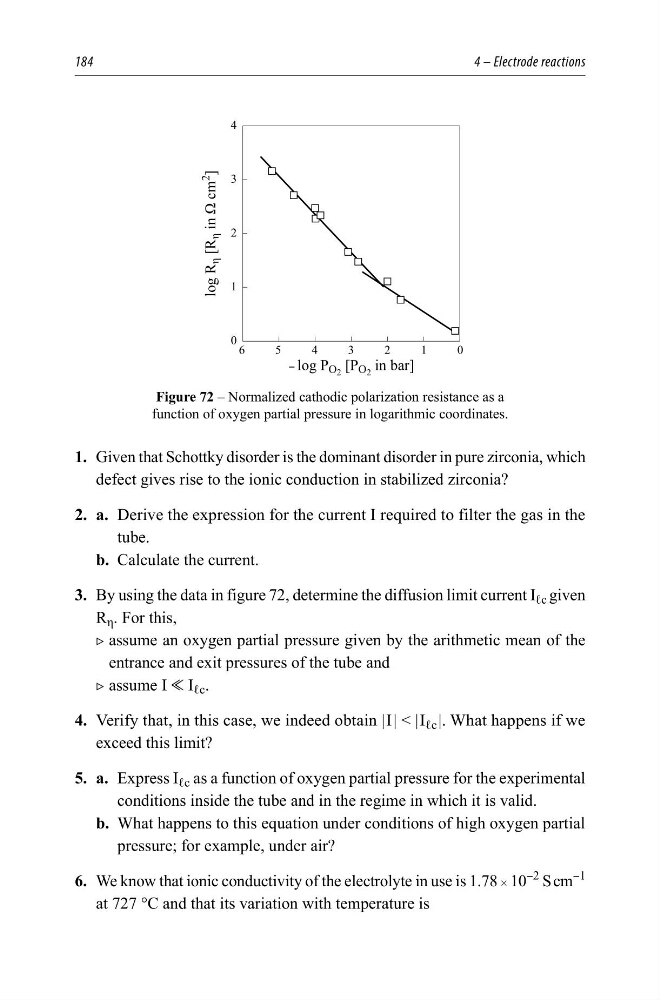
Figure 72 – Normalized cathodic polarization resistance as a
function of oxygen partial pressure in logarithmic coordinates.
1. Given that Schottky disorder is the dominant disorder in pure zirconia, which
defect gives rise to the ionic conduction in stabilized zirconia?
2. a. Derive the expression for the current I required to filter the gas in the
tube.
b. Calculate the current.
3. By using the data in figure 72, determine the diffusion limit current I ℓc given
R η . For this,
2 assume an oxygen partial pressure given by the arithmetic mean of the
entrance and exit pressures of the tube and
2 assume I % I ℓc .
4. Verify that, in this case, we indeed obtain |I | < |I ℓc |. What happens if we
exceed this limit?
5. a. Express I ℓc as a function of oxygen partial pressure for the experimental
conditions inside the tube and in the regime in which it is valid.
b. What happens to this equation under conditions of high oxygen partial
pressure; for example, under air?
6. We know that ionic conductivity of the electrolyte in use is 1.78 # 10
−2
S cm
−1
at 727 °C and that its variation with temperature is
4 – Electrode reactions
ORJ5
Ș >5
Ș LQȍFP
@
Figure 72 – Normalized cathodic polarization resistance as a
function of oxygen partial pressure in logarithmic coordinates.
1. Given that Schottky disorder is the dominant disorder in pure zirconia, which
defect gives rise to the ionic conduction in stabilized zirconia?
2. a. Derive the expression for the current I required to filter the gas in the
tube.
b. Calculate the current.
3. By using the data in figure 72, determine the diffusion limit current I ℓc given
R η . For this,
2 assume an oxygen partial pressure given by the arithmetic mean of the
entrance and exit pressures of the tube and
2 assume I % I ℓc .
4. Verify that, in this case, we indeed obtain |I | < |I ℓc |. What happens if we
exceed this limit?
5. a. Express I ℓc as a function of oxygen partial pressure for the experimental
conditions inside the tube and in the regime in which it is valid.
b. What happens to this equation under conditions of high oxygen partial
pressure; for example, under air?
6. We know that ionic conductivity of the electrolyte in use is 1.78 # 10
−2
S cm
−1
at 727 °C and that its variation with temperature is