

production on a global market, the technological advances in agriculture are continuously pushing the possibilities. Genetic manipulation is often inherent to selective
breeding techniques. Genetic properties of species are recombined on a global scale
to counter environmental threats, increase yields or to make the crops commercially
more attractive. Having the lead in agricultural techniques improves the competitive
position of farmers and pushes them to strengthen their position on a global market.
Particularly in western society, the agricultural systems have been pushed over their
environmental limits, which led to unsustainable farming that on itself has a demand
of natural resources, which the land cannot provide. Resulting in pollution, hypertrophy and land depletion. At the same time, farmers that are outcompeted abandon
their lands or are forced to use outdated and often polluting techniques and products.
As environmental problems are becoming more apparent, agricultural legislation
in regards to pesticides, emissions, food quality and land use in western society are
becoming more strict. This is not only leading to tensions between farmers and
society (as farmers’ competitive positions are threatened), but it also forces farmers
to expand their activities abroad. Intensive and large-scale farming by western
European farmers in Eastern Europe and Northern America strongly increased
over the last decades often at the cost of local small-scale farming (Deininger and
Byerlee 2011).
As agricultural products are sold worldwide, an increase in transportation (and its
environmental consequences) have rapidly increased. As an example, the US state
Iowa alone transports a yearly 152.6 million tons of agricultural products by train
(a revenue of 6.1 billion US dollars). On a total, the United States export 33% of its
agricultural products abroad for circa 190 billion dollars. Where to US has about
22.6 million hectares of agricultural area, the Netherlands is the runner-up in export
of agricultural products (Figures of 2015). With a production area of 2.2 million
hectares, the country exports for 115 billion dollars of agricultural products
140
135
130
125
120
115
110
105
2002
2004
2006
2008
2010
2012
2014
2016
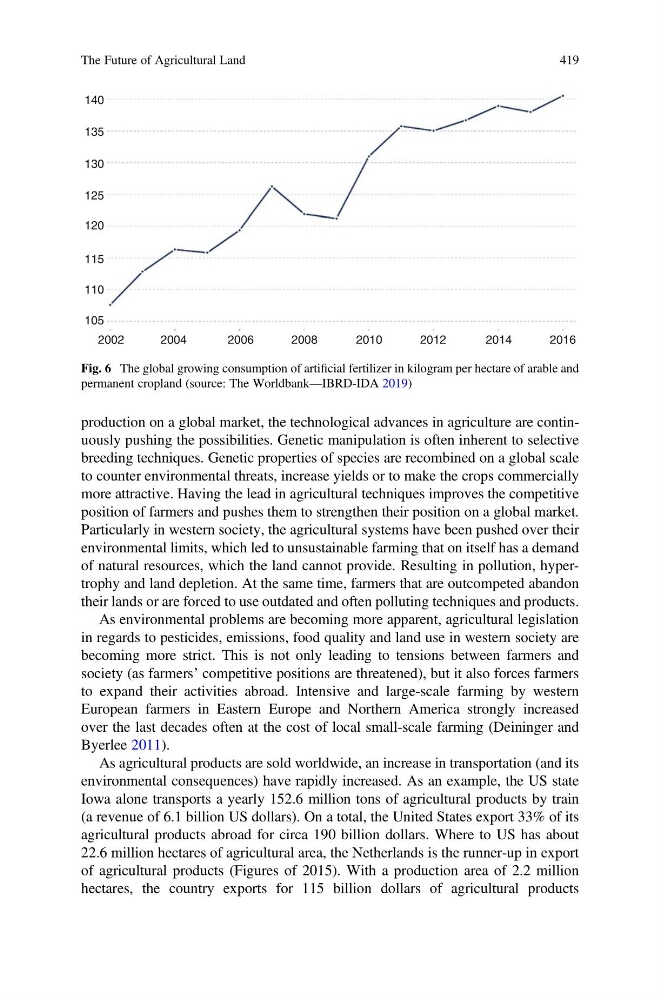
Fig. 6 The global growing consumption of artificial fertilizer in kilogram per hectare of arable and
permanent cropland (source: The Worldbank—IBRD-IDA 2019)
The Future of Agricultural Land
419
breeding techniques. Genetic properties of species are recombined on a global scale
to counter environmental threats, increase yields or to make the crops commercially
more attractive. Having the lead in agricultural techniques improves the competitive
position of farmers and pushes them to strengthen their position on a global market.
Particularly in western society, the agricultural systems have been pushed over their
environmental limits, which led to unsustainable farming that on itself has a demand
of natural resources, which the land cannot provide. Resulting in pollution, hypertrophy and land depletion. At the same time, farmers that are outcompeted abandon
their lands or are forced to use outdated and often polluting techniques and products.
As environmental problems are becoming more apparent, agricultural legislation
in regards to pesticides, emissions, food quality and land use in western society are
becoming more strict. This is not only leading to tensions between farmers and
society (as farmers’ competitive positions are threatened), but it also forces farmers
to expand their activities abroad. Intensive and large-scale farming by western
European farmers in Eastern Europe and Northern America strongly increased
over the last decades often at the cost of local small-scale farming (Deininger and
Byerlee 2011).
As agricultural products are sold worldwide, an increase in transportation (and its
environmental consequences) have rapidly increased. As an example, the US state
Iowa alone transports a yearly 152.6 million tons of agricultural products by train
(a revenue of 6.1 billion US dollars). On a total, the United States export 33% of its
agricultural products abroad for circa 190 billion dollars. Where to US has about
22.6 million hectares of agricultural area, the Netherlands is the runner-up in export
of agricultural products (Figures of 2015). With a production area of 2.2 million
hectares, the country exports for 115 billion dollars of agricultural products
140
135
130
125
120
115
110
105
2002
2004
2006
2008
2010
2012
2014
2016
Fig. 6 The global growing consumption of artificial fertilizer in kilogram per hectare of arable and
permanent cropland (source: The Worldbank—IBRD-IDA 2019)
The Future of Agricultural Land
419