

During the twentieth century the proportion of grassland vs. arable land changed
from grassland dominance to dominance of arable land. Still in the 1970s grassland
occupied 38% of the agricultural land in Europe (without Soviet Union;
cf. Dziewulska 1990). In 2005 permanent grassland in the 25 member states of the
EU (EU 25) occupied an area of c. 516,520 km
2 or 32% of the agricultural land and
13% in total. Permanent grassland in the EU is defined as land dominated by herbs
and grasses which is not tilled for more than 5 years (Reheul et al. 2007). This
definition includes rather species-poor and highly artificial agricultural land, and
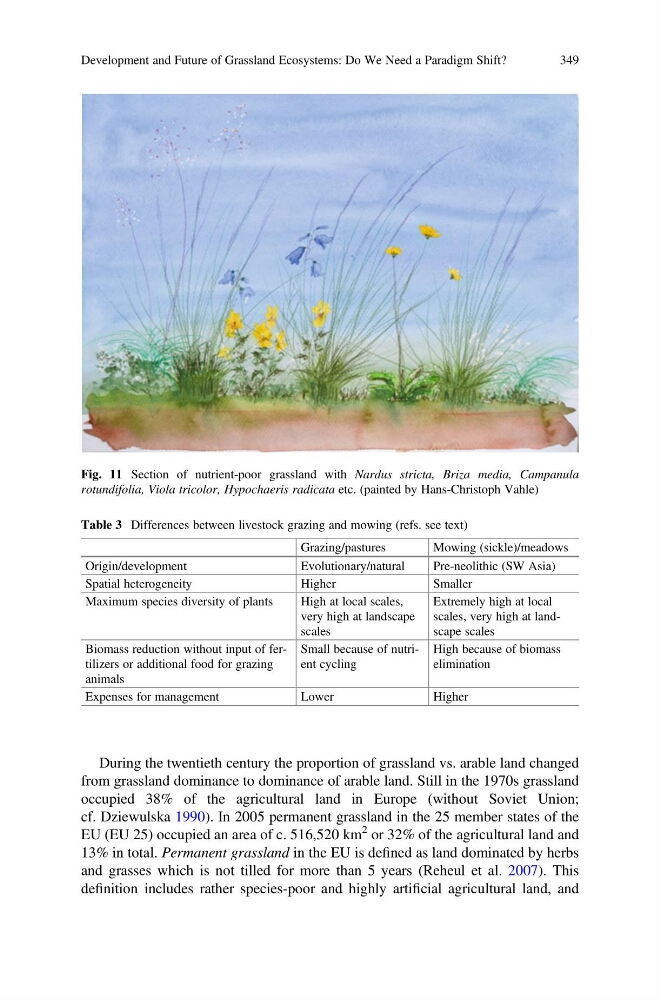
Fig. 11 Section of nutrient-poor grassland with Nardus stricta, Briza media, Campanula
rotundifolia, Viola tricolor, Hypochaeris radicata etc. (painted by Hans-Christoph Vahle)
Table 3 Differences between livestock grazing and mowing (refs. see text)
Grazing/pastures
Mowing (sickle)/meadows
Origin/development
Evolutionary/natural
Pre-neolithic (SW Asia)
Spatial heterogeneity
Higher
Smaller
Maximum species diversity of plants
High at local scales,
very high at landscape
scales
Extremely high at local
scales, very high at landscape scales
Biomass reduction without input of fertilizers or additional food for grazing
animals
Small because of nutrient cycling
High because of biomass
elimination
Expenses for management
Lower
Higher
Development and Future of Grassland Ecosystems: Do We Need a Paradigm Shift?
349
from grassland dominance to dominance of arable land. Still in the 1970s grassland
occupied 38% of the agricultural land in Europe (without Soviet Union;
cf. Dziewulska 1990). In 2005 permanent grassland in the 25 member states of the
EU (EU 25) occupied an area of c. 516,520 km
2 or 32% of the agricultural land and
13% in total. Permanent grassland in the EU is defined as land dominated by herbs
and grasses which is not tilled for more than 5 years (Reheul et al. 2007). This
definition includes rather species-poor and highly artificial agricultural land, and
Fig. 11 Section of nutrient-poor grassland with Nardus stricta, Briza media, Campanula
rotundifolia, Viola tricolor, Hypochaeris radicata etc. (painted by Hans-Christoph Vahle)
Table 3 Differences between livestock grazing and mowing (refs. see text)
Grazing/pastures
Mowing (sickle)/meadows
Origin/development
Evolutionary/natural
Pre-neolithic (SW Asia)
Spatial heterogeneity
Higher
Smaller
Maximum species diversity of plants
High at local scales,
very high at landscape
scales
Extremely high at local
scales, very high at landscape scales
Biomass reduction without input of fertilizers or additional food for grazing
animals
Small because of nutrient cycling
High because of biomass
elimination
Expenses for management
Lower
Higher
Development and Future of Grassland Ecosystems: Do We Need a Paradigm Shift?
349