

C. 97% of the Cerrado area is private or indigenious land which is not managed
by federal or state agencies. Only 2.85% of the biome is formally protected as nature
reserve or national park. Most Indian reserves (4.1% of Cerrado) harbour grassland
and savanna under relatively favourable conditions and with little impact on the
natural environment. Private landowners are by law required to leave a minimum of
35% of their land to support wildlife and nature conservation. However, many
landowners have more than one private area. And the private lands are sometimes
very distant. Thus, the farmers can decide where they want to intensify agriculture
and where they want to set aside 35% of their rural properties as legal reserves. As a
consequence Cerrado vegetation in the hot North are much less destroyed than in
regions to the South where the conditions for cropland are better.
Thus, also here the interpretation of what is needed or allowed, the expansion of
agriculture, timber production, forest growth, the introduction of exotic tree plants
(eucalypt for charcoal production), and the control of fire is a matter of political
specifications (Válka Alves and Janišová 2016; Janišová et al. 2016; Bonanomi et al.
2019).
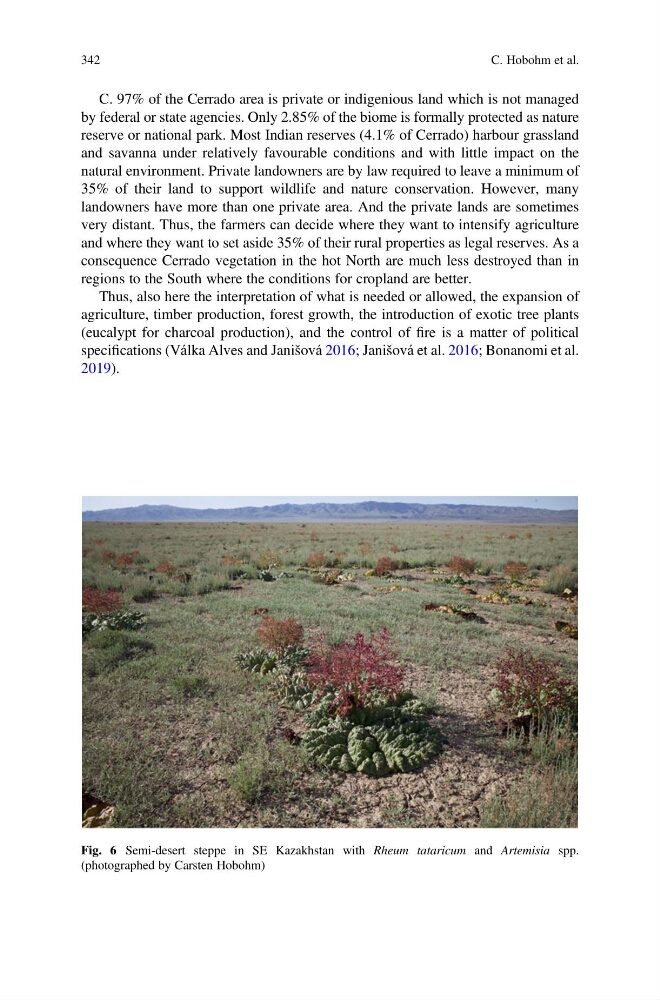
Fig. 6 Semi-desert steppe in SE Kazakhstan with Rheum tataricum and Artemisia spp.
(photographed by Carsten Hobohm)
342
C. Hobohm et al.
by federal or state agencies. Only 2.85% of the biome is formally protected as nature
reserve or national park. Most Indian reserves (4.1% of Cerrado) harbour grassland
and savanna under relatively favourable conditions and with little impact on the
natural environment. Private landowners are by law required to leave a minimum of
35% of their land to support wildlife and nature conservation. However, many
landowners have more than one private area. And the private lands are sometimes
very distant. Thus, the farmers can decide where they want to intensify agriculture
and where they want to set aside 35% of their rural properties as legal reserves. As a
consequence Cerrado vegetation in the hot North are much less destroyed than in
regions to the South where the conditions for cropland are better.
Thus, also here the interpretation of what is needed or allowed, the expansion of
agriculture, timber production, forest growth, the introduction of exotic tree plants
(eucalypt for charcoal production), and the control of fire is a matter of political
specifications (Válka Alves and Janišová 2016; Janišová et al. 2016; Bonanomi et al.
2019).
Fig. 6 Semi-desert steppe in SE Kazakhstan with Rheum tataricum and Artemisia spp.
(photographed by Carsten Hobohm)
342
C. Hobohm et al.