

taking position number two and three and the Mediterranean and Black Sea together
number four.
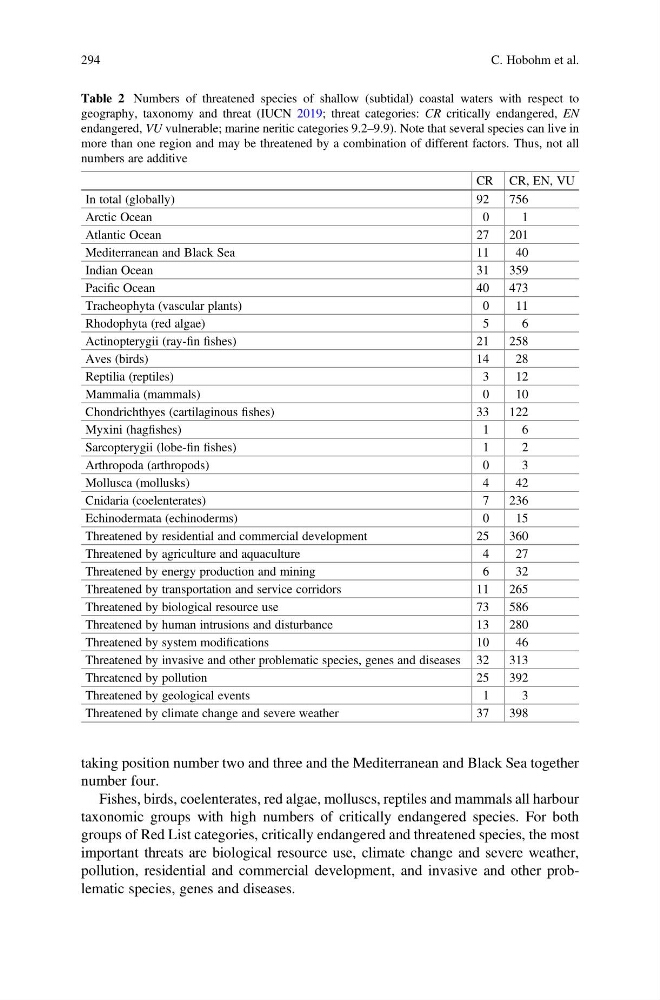
Fishes, birds, coelenterates, red algae, molluscs, reptiles and mammals all harbour
taxonomic groups with high numbers of critically endangered species. For both
groups of Red List categories, critically endangered and threatened species, the most
important threats are biological resource use, climate change and severe weather,
pollution, residential and commercial development, and invasive and other problematic species, genes and diseases.
Table 2 Numbers of threatened species of shallow (subtidal) coastal waters with respect to
geography, taxonomy and threat (IUCN 2019; threat categories: CR critically endangered, EN
endangered, VU vulnerable; marine neritic categories 9.2–9.9). Note that several species can live in
more than one region and may be threatened by a combination of different factors. Thus, not all
numbers are additive
CR CR, EN, VU
In total (globally)
92
756
Arctic Ocean
0
1
Atlantic Ocean
27
201
Mediterranean and Black Sea
11
40
Indian Ocean
31
359
Pacific Ocean
40
473
Tracheophyta (vascular plants)
0
11
Rhodophyta (red algae)
5
6
Actinopterygii (ray-fin fishes)
21
258
Aves (birds)
14
28
Reptilia (reptiles)
3
12
Mammalia (mammals)
0
10
Chondrichthyes (cartilaginous fishes)
33
122
Myxini (hagfishes)
1
6
Sarcopterygii (lobe-fin fishes)
1
2
Arthropoda (arthropods)
0
3
Mollusca (mollusks)
4
42
Cnidaria (coelenterates)
7
236
Echinodermata (echinoderms)
0
15
Threatened by residential and commercial development
25
360
Threatened by agriculture and aquaculture
4
27
Threatened by energy production and mining
6
32
Threatened by transportation and service corridors
11
265
Threatened by biological resource use
73
586
Threatened by human intrusions and disturbance
13
280
Threatened by system modifications
10
46
Threatened by invasive and other problematic species, genes and diseases 32
313
Threatened by pollution
25
392
Threatened by geological events
1
3
Threatened by climate change and severe weather
37
398
294
C. Hobohm et al.
number four.
Fishes, birds, coelenterates, red algae, molluscs, reptiles and mammals all harbour
taxonomic groups with high numbers of critically endangered species. For both
groups of Red List categories, critically endangered and threatened species, the most
important threats are biological resource use, climate change and severe weather,
pollution, residential and commercial development, and invasive and other problematic species, genes and diseases.
Table 2 Numbers of threatened species of shallow (subtidal) coastal waters with respect to
geography, taxonomy and threat (IUCN 2019; threat categories: CR critically endangered, EN
endangered, VU vulnerable; marine neritic categories 9.2–9.9). Note that several species can live in
more than one region and may be threatened by a combination of different factors. Thus, not all
numbers are additive
CR CR, EN, VU
In total (globally)
92
756
Arctic Ocean
0
1
Atlantic Ocean
27
201
Mediterranean and Black Sea
11
40
Indian Ocean
31
359
Pacific Ocean
40
473
Tracheophyta (vascular plants)
0
11
Rhodophyta (red algae)
5
6
Actinopterygii (ray-fin fishes)
21
258
Aves (birds)
14
28
Reptilia (reptiles)
3
12
Mammalia (mammals)
0
10
Chondrichthyes (cartilaginous fishes)
33
122
Myxini (hagfishes)
1
6
Sarcopterygii (lobe-fin fishes)
1
2
Arthropoda (arthropods)
0
3
Mollusca (mollusks)
4
42
Cnidaria (coelenterates)
7
236
Echinodermata (echinoderms)
0
15
Threatened by residential and commercial development
25
360
Threatened by agriculture and aquaculture
4
27
Threatened by energy production and mining
6
32
Threatened by transportation and service corridors
11
265
Threatened by biological resource use
73
586
Threatened by human intrusions and disturbance
13
280
Threatened by system modifications
10
46
Threatened by invasive and other problematic species, genes and diseases 32
313
Threatened by pollution
25
392
Threatened by geological events
1
3
Threatened by climate change and severe weather
37
398
294
C. Hobohm et al.