

Dunes are formed in coastal areas where enough sediments are available, and the
sand supply is continuously replenished. Moderate marine currents can supply
beaches with sand derived from estuaries or old sediments on the nearby sea floor.
For a sufficient sedimentation gradual shores are necessary. Here, water currents are
slowed down, sedimentation occurs, and beaches are formed. These shores can
stretch for great lengths, for example the kilometres-long beaches in north-western
Europe, Brazil and south-eastern Australia or can form small patches in sheltered
corners between rocks and cliffs. However, in the latter there is no room for an entire
dune system to form. Nonetheless, beaches can harbour some diversity. Many bird
species rely on beaches for food or even nesting grounds. In addition, crustaceans,
insects and even some amphibians find their habitat on beaches. Plants and fungi
form drift line communities on organic matter washed ashore.
The presence of wind is another important variable necessary for dune formation.
Wind transports the sediments land inwards and is the main driver for the formation
of dune structures and a condition to which the entire ecosystem is adapted.
The general geomorphology of dunes consists of a classification which follows
dune succession land inwards. The spatial sequence is called xeroseries. Pioneer
dunes are formed when pioneer vegetation catches and collects sand particles
transported by wind or water. With a growing pioneer dune more sand, water and
organic material is concentrated eventually succeeding into a vegetation with species
such as Marram grass (Ammophila) which is a dominant genus distributed around
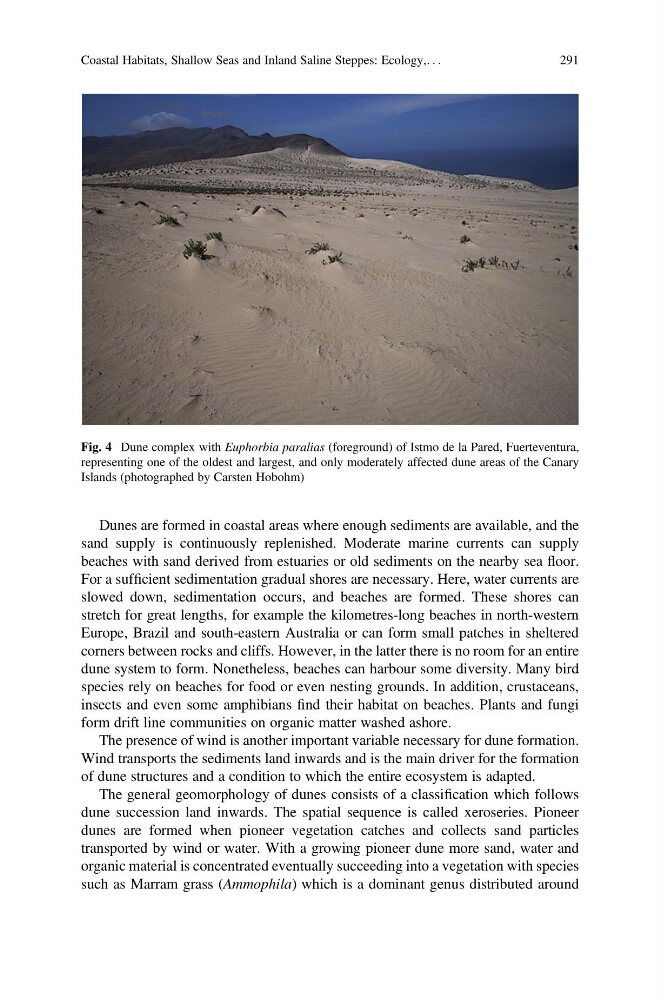
Fig. 4 Dune complex with Euphorbia paralias (foreground) of Istmo de la Pared, Fuerteventura,
representing one of the oldest and largest, and only moderately affected dune areas of the Canary
Islands (photographed by Carsten Hobohm)
Coastal Habitats, Shallow Seas and Inland Saline Steppes: Ecology,. . .
291
sand supply is continuously replenished. Moderate marine currents can supply
beaches with sand derived from estuaries or old sediments on the nearby sea floor.
For a sufficient sedimentation gradual shores are necessary. Here, water currents are
slowed down, sedimentation occurs, and beaches are formed. These shores can
stretch for great lengths, for example the kilometres-long beaches in north-western
Europe, Brazil and south-eastern Australia or can form small patches in sheltered
corners between rocks and cliffs. However, in the latter there is no room for an entire
dune system to form. Nonetheless, beaches can harbour some diversity. Many bird
species rely on beaches for food or even nesting grounds. In addition, crustaceans,
insects and even some amphibians find their habitat on beaches. Plants and fungi
form drift line communities on organic matter washed ashore.
The presence of wind is another important variable necessary for dune formation.
Wind transports the sediments land inwards and is the main driver for the formation
of dune structures and a condition to which the entire ecosystem is adapted.
The general geomorphology of dunes consists of a classification which follows
dune succession land inwards. The spatial sequence is called xeroseries. Pioneer
dunes are formed when pioneer vegetation catches and collects sand particles
transported by wind or water. With a growing pioneer dune more sand, water and
organic material is concentrated eventually succeeding into a vegetation with species
such as Marram grass (Ammophila) which is a dominant genus distributed around
Fig. 4 Dune complex with Euphorbia paralias (foreground) of Istmo de la Pared, Fuerteventura,
representing one of the oldest and largest, and only moderately affected dune areas of the Canary
Islands (photographed by Carsten Hobohm)
Coastal Habitats, Shallow Seas and Inland Saline Steppes: Ecology,. . .
291