

of scientists collected data during long times. However, expert groups represent
scientific communities of different size. They not in every case use scientific terms or
a species concept in the same meaning. Thus, the expert knowledge and resulting
information on different taxa, habitat types, and regions on Earth is not equally
distributed (e.g. Cardoso et al. 2020). Moreover, there are indications that e.g. the
IUCN Red List and the list of hyperendemics presented here are biased with respect
to taxonomy and geography. Most species of these lists belong to vascular plants and
vertebrates. Since much more species on Earth are invertebrates (insects, molluscs
etc.), and because many of them also have small ranges (e.g. Wang et al. 2017;
Wynne 2017) it can be assumed that invertebrates are underrepresented.
Almost 10% of the list of hyperendemics (54 species) belong to Sorbus (53) and
Rubus (1), Rosaceae. Sorbus is a genus with a majority of apomictic microspecies.
All Sorbus and the one Rubus species listed here were described for European
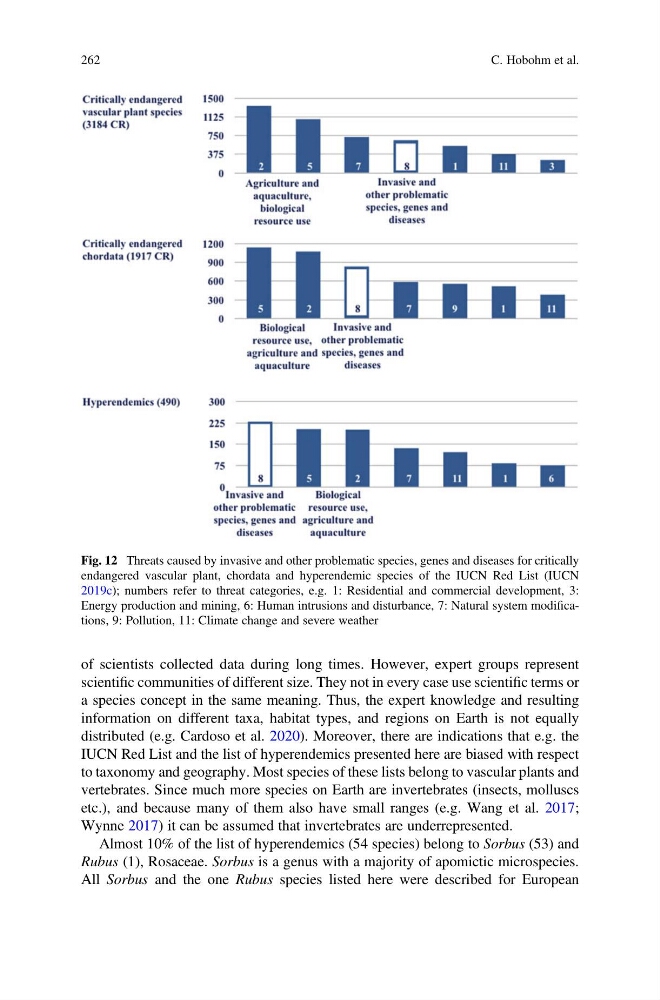
Fig. 12 Threats caused by invasive and other problematic species, genes and diseases for critically
endangered vascular plant, chordata and hyperendemic species of the IUCN Red List (IUCN
2019c); numbers refer to threat categories, e.g. 1: Residential and commercial development, 3:
Energy production and mining, 6: Human intrusions and disturbance, 7: Natural system modifications, 9: Pollution, 11: Climate change and severe weather
262
C. Hobohm et al.
scientific communities of different size. They not in every case use scientific terms or
a species concept in the same meaning. Thus, the expert knowledge and resulting
information on different taxa, habitat types, and regions on Earth is not equally
distributed (e.g. Cardoso et al. 2020). Moreover, there are indications that e.g. the
IUCN Red List and the list of hyperendemics presented here are biased with respect
to taxonomy and geography. Most species of these lists belong to vascular plants and
vertebrates. Since much more species on Earth are invertebrates (insects, molluscs
etc.), and because many of them also have small ranges (e.g. Wang et al. 2017;
Wynne 2017) it can be assumed that invertebrates are underrepresented.
Almost 10% of the list of hyperendemics (54 species) belong to Sorbus (53) and
Rubus (1), Rosaceae. Sorbus is a genus with a majority of apomictic microspecies.
All Sorbus and the one Rubus species listed here were described for European
Fig. 12 Threats caused by invasive and other problematic species, genes and diseases for critically
endangered vascular plant, chordata and hyperendemic species of the IUCN Red List (IUCN
2019c); numbers refer to threat categories, e.g. 1: Residential and commercial development, 3:
Energy production and mining, 6: Human intrusions and disturbance, 7: Natural system modifications, 9: Pollution, 11: Climate change and severe weather
262
C. Hobohm et al.