

3 Therefore This rule is a good one.
Some remarks about the standardized argument should be added: The thesis that a
certain rule is a good one opens the argument as a claim in line 0 and finishes the
reasoning as a conclusion in line 3. In line 1 a proposition about the fulfilment of
some criteria is adduced as a reason. The proposition is normally based on empirical
observations. So, we need evidence that the criteria are (at least to a certain degree)
fulfilled by the rule. And for knowing which evidence we need we should formulate
our criteria in a precise way. The standards of a yardstick specify which properties an
object must have in order to (not) fulfil the criteria—or to fulfil them better or worse.
This is determined by the standards applied in each case. We use standards for the
specification or operationalisation of the criteria. For establishing a proposition about
the fulfilment of criteria we argue again. For example, we can say that if a rule has
the characteristics E 1 , E 2 , . . ., then the rule fulfils the criterion C 1 . If we want to know
whether the criteria are fulfilled by certain rules, we can rely on evidence-based
arguments, where different arguments are related to the different criteria. In order to
know what evidence is relevant and needed, we have to consider these different
arguments. With this rule-centred view on the role of evidence in arguments related
to policy-making we can consider some of the obstacles for getting the required
evidence. The general reason in line 2 formulates the conditions for the goodness of
a rule—the weighing of the criteria can be incorporated into the formulation of the
proposition. From line 1 and 2 the claimed proposition can be inferred in the line 3.
In this case, an evaluandum was evaluated axiologically. If, for example, the
correctness of an action is evaluated, one evaluates normatively. Even then, appropriate criteria of correctness must be applied.
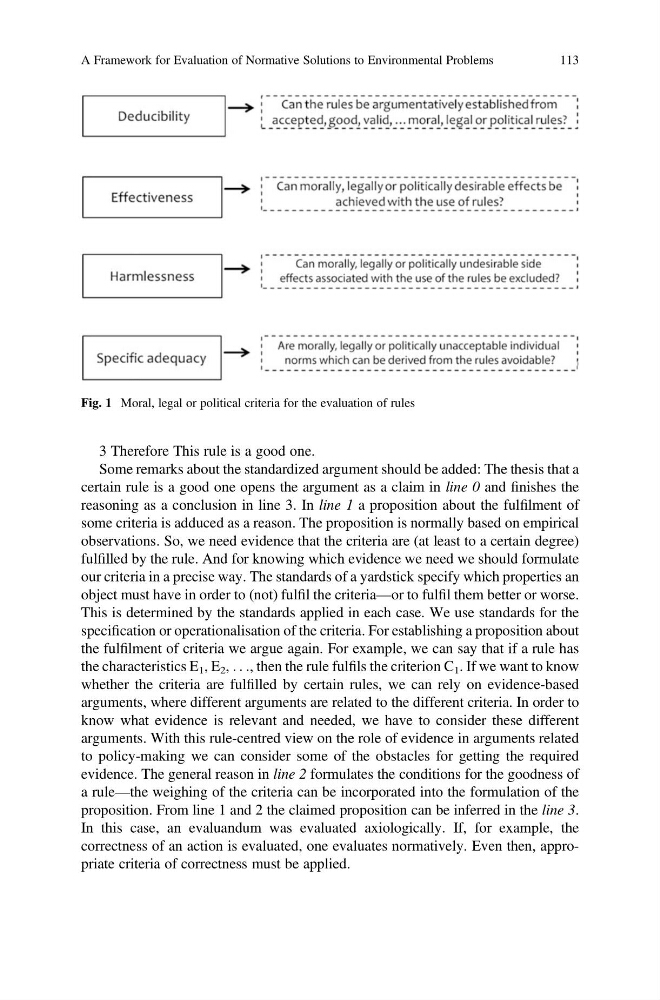
Fig. 1 Moral, legal or political criteria for the evaluation of rules
A Framework for Evaluation of Normative Solutions to Environmental Problems
113
Some remarks about the standardized argument should be added: The thesis that a
certain rule is a good one opens the argument as a claim in line 0 and finishes the
reasoning as a conclusion in line 3. In line 1 a proposition about the fulfilment of
some criteria is adduced as a reason. The proposition is normally based on empirical
observations. So, we need evidence that the criteria are (at least to a certain degree)
fulfilled by the rule. And for knowing which evidence we need we should formulate
our criteria in a precise way. The standards of a yardstick specify which properties an
object must have in order to (not) fulfil the criteria—or to fulfil them better or worse.
This is determined by the standards applied in each case. We use standards for the
specification or operationalisation of the criteria. For establishing a proposition about
the fulfilment of criteria we argue again. For example, we can say that if a rule has
the characteristics E 1 , E 2 , . . ., then the rule fulfils the criterion C 1 . If we want to know
whether the criteria are fulfilled by certain rules, we can rely on evidence-based
arguments, where different arguments are related to the different criteria. In order to
know what evidence is relevant and needed, we have to consider these different
arguments. With this rule-centred view on the role of evidence in arguments related
to policy-making we can consider some of the obstacles for getting the required
evidence. The general reason in line 2 formulates the conditions for the goodness of
a rule—the weighing of the criteria can be incorporated into the formulation of the
proposition. From line 1 and 2 the claimed proposition can be inferred in the line 3.
In this case, an evaluandum was evaluated axiologically. If, for example, the
correctness of an action is evaluated, one evaluates normatively. Even then, appropriate criteria of correctness must be applied.
Fig. 1 Moral, legal or political criteria for the evaluation of rules
A Framework for Evaluation of Normative Solutions to Environmental Problems
113