

560
T. Onodera and H. Oikawa
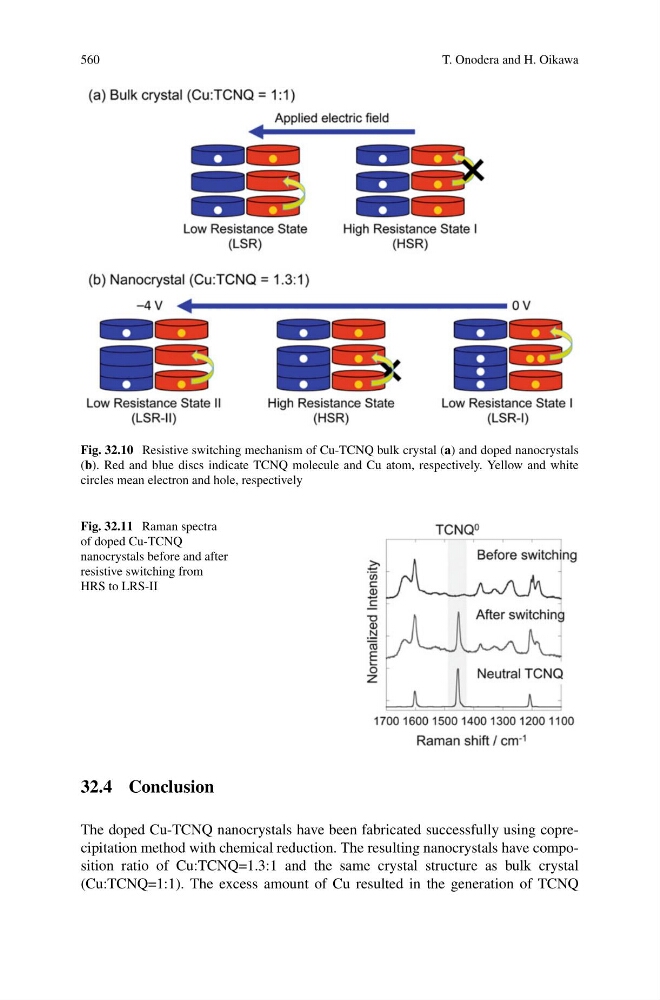
Fig. 32.10 Resistive switching mechanism of Cu-TCNQ bulk crystal (a) and doped nanocrystals
(b). Red and blue discs indicate TCNQ molecule and Cu atom, respectively. Yellow and white
circles mean electron and hole, respectively
Fig. 32.11 Raman spectra
of doped Cu-TCNQ
nanocrystals before and after
resistive switching from
HRS to LRS-II
32.4 Conclusion
The doped Cu-TCNQ nanocrystals have been fabricated successfully using coprecipitation method with chemical reduction. The resulting nanocrystals have composition ratio of Cu:TCNQ=1.3:1 and the same crystal structure as bulk crystal
(Cu:TCNQ=1:1). The excess amount of Cu resulted in the generation of TCNQ
T. Onodera and H. Oikawa
Fig. 32.10 Resistive switching mechanism of Cu-TCNQ bulk crystal (a) and doped nanocrystals
(b). Red and blue discs indicate TCNQ molecule and Cu atom, respectively. Yellow and white
circles mean electron and hole, respectively
Fig. 32.11 Raman spectra
of doped Cu-TCNQ
nanocrystals before and after
resistive switching from
HRS to LRS-II
32.4 Conclusion
The doped Cu-TCNQ nanocrystals have been fabricated successfully using coprecipitation method with chemical reduction. The resulting nanocrystals have composition ratio of Cu:TCNQ=1.3:1 and the same crystal structure as bulk crystal
(Cu:TCNQ=1:1). The excess amount of Cu resulted in the generation of TCNQ