

520
M. Vacha and S. Hirata
PMMA
PVK
PMMA
PVK
a
b
c
d
e
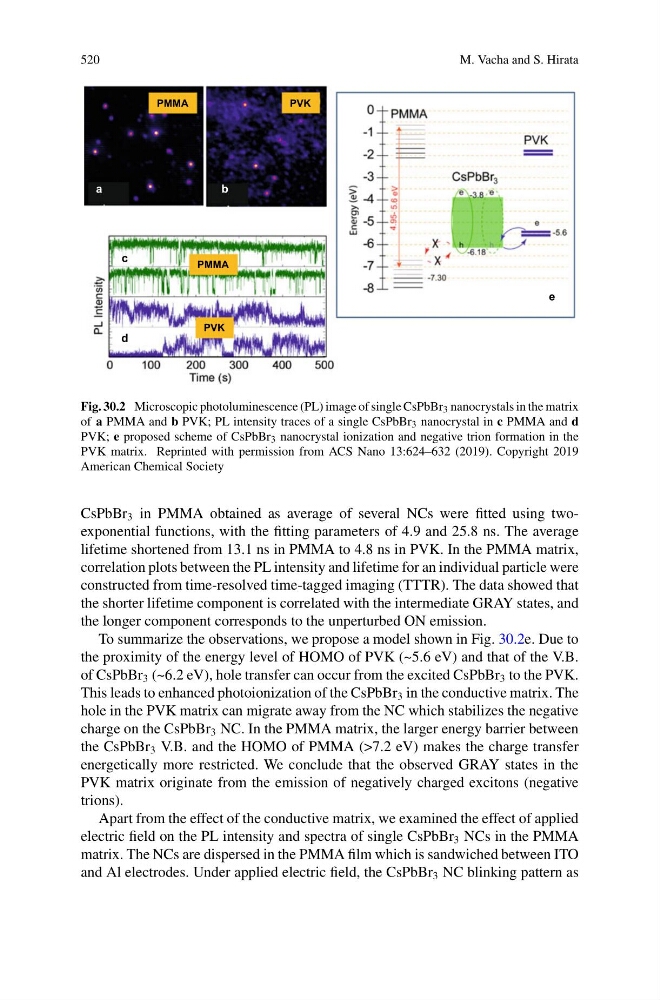
Fig. 30.2 Microscopic photoluminescence (PL) image of single CsPbBr 3 nanocrystals in the matrix
of a PMMA and b PVK; PL intensity traces of a single CsPbBr 3 nanocrystal in c PMMA and d
PVK; e proposed scheme of CsPbBr 3 nanocrystal ionization and negative trion formation in the
PVK matrix. Reprinted with permission from ACS Nano 13:624–632 (2019). Copyright 2019
American Chemical Society
CsPbBr 3 in PMMA obtained as average of several NCs were fitted using twoexponential functions, with the fitting parameters of 4.9 and 25.8 ns. The average
lifetime shortened from 13.1 ns in PMMA to 4.8 ns in PVK. In the PMMA matrix,
correlation plots between the PL intensity and lifetime for an individual particle were
constructed from time-resolved time-tagged imaging (TTTR). The data showed that
the shorter lifetime component is correlated with the intermediate GRAY states, and
the longer component corresponds to the unperturbed ON emission.
To summarize the observations, we propose a model shown in Fig. 30.2e. Due to
the proximity of the energy level of HOMO of PVK (~5.6 eV) and that of the V.B.
of CsPbBr 3 (~6.2 eV), hole transfer can occur from the excited CsPbBr 3 to the PVK.
This leads to enhanced photoionization of the CsPbBr 3 in the conductive matrix. The
hole in the PVK matrix can migrate away from the NC which stabilizes the negative
charge on the CsPbBr 3 NC. In the PMMA matrix, the larger energy barrier between
the CsPbBr 3 V.B. and the HOMO of PMMA (>7.2 eV) makes the charge transfer
energetically more restricted. We conclude that the observed GRAY states in the
PVK matrix originate from the emission of negatively charged excitons (negative
trions).
Apart from the effect of the conductive matrix, we examined the effect of applied
electric field on the PL intensity and spectra of single CsPbBr 3 NCs in the PMMA
matrix. The NCs are dispersed in the PMMA film which is sandwiched between ITO
and Al electrodes. Under applied electric field, the CsPbBr 3 NC blinking pattern as
M. Vacha and S. Hirata
PMMA
PVK
PMMA
PVK
a
b
c
d
e
Fig. 30.2 Microscopic photoluminescence (PL) image of single CsPbBr 3 nanocrystals in the matrix
of a PMMA and b PVK; PL intensity traces of a single CsPbBr 3 nanocrystal in c PMMA and d
PVK; e proposed scheme of CsPbBr 3 nanocrystal ionization and negative trion formation in the
PVK matrix. Reprinted with permission from ACS Nano 13:624–632 (2019). Copyright 2019
American Chemical Society
CsPbBr 3 in PMMA obtained as average of several NCs were fitted using twoexponential functions, with the fitting parameters of 4.9 and 25.8 ns. The average
lifetime shortened from 13.1 ns in PMMA to 4.8 ns in PVK. In the PMMA matrix,
correlation plots between the PL intensity and lifetime for an individual particle were
constructed from time-resolved time-tagged imaging (TTTR). The data showed that
the shorter lifetime component is correlated with the intermediate GRAY states, and
the longer component corresponds to the unperturbed ON emission.
To summarize the observations, we propose a model shown in Fig. 30.2e. Due to
the proximity of the energy level of HOMO of PVK (~5.6 eV) and that of the V.B.
of CsPbBr 3 (~6.2 eV), hole transfer can occur from the excited CsPbBr 3 to the PVK.
This leads to enhanced photoionization of the CsPbBr 3 in the conductive matrix. The
hole in the PVK matrix can migrate away from the NC which stabilizes the negative
charge on the CsPbBr 3 NC. In the PMMA matrix, the larger energy barrier between
the CsPbBr 3 V.B. and the HOMO of PMMA (>7.2 eV) makes the charge transfer
energetically more restricted. We conclude that the observed GRAY states in the
PVK matrix originate from the emission of negatively charged excitons (negative
trions).
Apart from the effect of the conductive matrix, we examined the effect of applied
electric field on the PL intensity and spectra of single CsPbBr 3 NCs in the PMMA
matrix. The NCs are dispersed in the PMMA film which is sandwiched between ITO
and Al electrodes. Under applied electric field, the CsPbBr 3 NC blinking pattern as