

452
Y. Kageyama
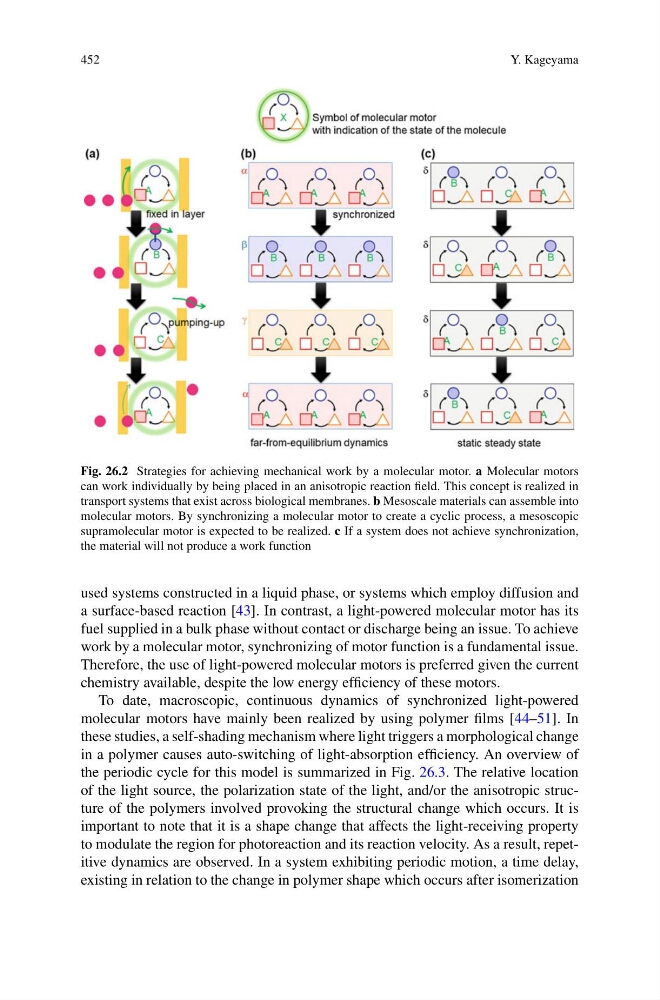
Fig. 26.2 Strategies for achieving mechanical work by a molecular motor. a Molecular motors
can work individually by being placed in an anisotropic reaction field. This concept is realized in
transport systems that exist across biological membranes. b Mesoscale materials can assemble into
molecular motors. By synchronizing a molecular motor to create a cyclic process, a mesoscopic
supramolecular motor is expected to be realized. c If a system does not achieve synchronization,
the material will not produce a work function
used systems constructed in a liquid phase, or systems which employ diffusion and
a surface-based reaction [43]. In contrast, a light-powered molecular motor has its
fuel supplied in a bulk phase without contact or discharge being an issue. To achieve
work by a molecular motor, synchronizing of motor function is a fundamental issue.
Therefore, the use of light-powered molecular motors is preferred given the current
chemistry available, despite the low energy efficiency of these motors.
To date, macroscopic, continuous dynamics of synchronized light-powered
molecular motors have mainly been realized by using polymer films [44–51]. In
these studies, a self-shading mechanism where light triggers a morphological change
in a polymer causes auto-switching of light-absorption efficiency. An overview of
the periodic cycle for this model is summarized in Fig. 26.3. The relative location
of the light source, the polarization state of the light, and/or the anisotropic structure of the polymers involved provoking the structural change which occurs. It is
important to note that it is a shape change that affects the light-receiving property
to modulate the region for photoreaction and its reaction velocity. As a result, repetitive dynamics are observed. In a system exhibiting periodic motion, a time delay,
existing in relation to the change in polymer shape which occurs after isomerization
Y. Kageyama
Fig. 26.2 Strategies for achieving mechanical work by a molecular motor. a Molecular motors
can work individually by being placed in an anisotropic reaction field. This concept is realized in
transport systems that exist across biological membranes. b Mesoscale materials can assemble into
molecular motors. By synchronizing a molecular motor to create a cyclic process, a mesoscopic
supramolecular motor is expected to be realized. c If a system does not achieve synchronization,
the material will not produce a work function
used systems constructed in a liquid phase, or systems which employ diffusion and
a surface-based reaction [43]. In contrast, a light-powered molecular motor has its
fuel supplied in a bulk phase without contact or discharge being an issue. To achieve
work by a molecular motor, synchronizing of motor function is a fundamental issue.
Therefore, the use of light-powered molecular motors is preferred given the current
chemistry available, despite the low energy efficiency of these motors.
To date, macroscopic, continuous dynamics of synchronized light-powered
molecular motors have mainly been realized by using polymer films [44–51]. In
these studies, a self-shading mechanism where light triggers a morphological change
in a polymer causes auto-switching of light-absorption efficiency. An overview of
the periodic cycle for this model is summarized in Fig. 26.3. The relative location
of the light source, the polarization state of the light, and/or the anisotropic structure of the polymers involved provoking the structural change which occurs. It is
important to note that it is a shape change that affects the light-receiving property
to modulate the region for photoreaction and its reaction velocity. As a result, repetitive dynamics are observed. In a system exhibiting periodic motion, a time delay,
existing in relation to the change in polymer shape which occurs after isomerization