

358
S. Saito
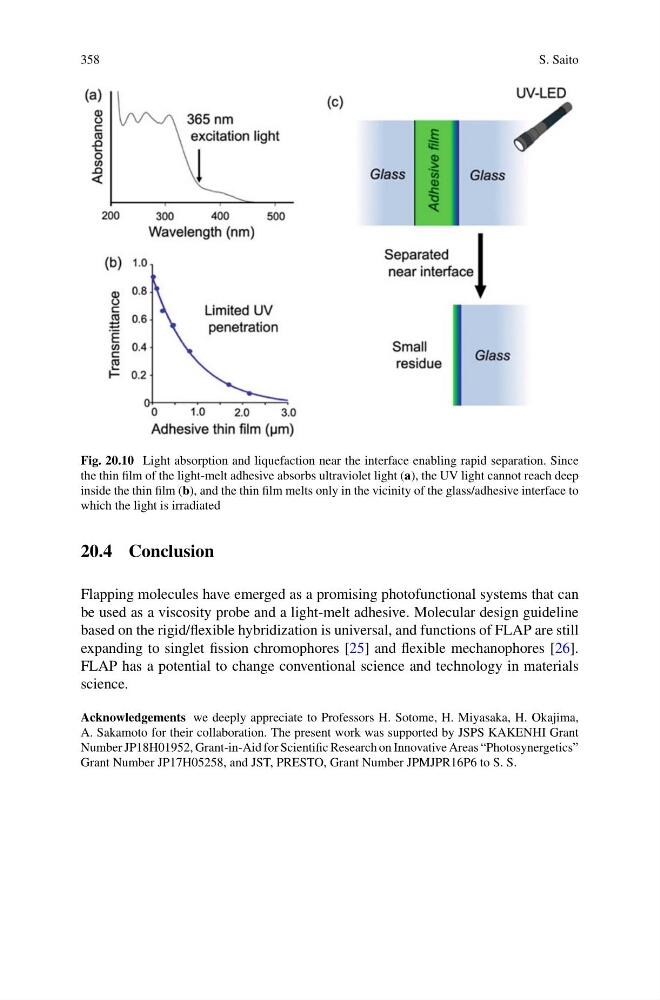
Fig. 20.10 Light absorption and liquefaction near the interface enabling rapid separation. Since
the thin film of the light-melt adhesive absorbs ultraviolet light (a), the UV light cannot reach deep
inside the thin film (b), and the thin film melts only in the vicinity of the glass/adhesive interface to
which the light is irradiated
20.4 Conclusion
Flapping molecules have emerged as a promising photofunctional systems that can
be used as a viscosity probe and a light-melt adhesive. Molecular design guideline
based on the rigid/flexible hybridization is universal, and functions of FLAP are still
expanding to singlet fission chromophores [25] and flexible mechanophores [26].
FLAP has a potential to change conventional science and technology in materials
science.
Acknowledgements we deeply appreciate to Professors H. Sotome, H. Miyasaka, H. Okajima,
A. Sakamoto for their collaboration. The present work was supported by JSPS KAKENHI Grant
Number JP18H01952, Grant-in-Aid for Scientific Research on Innovative Areas “Photosynergetics”
Grant Number JP17H05258, and JST, PRESTO, Grant Number JPMJPR16P6 to S. S.
S. Saito
Fig. 20.10 Light absorption and liquefaction near the interface enabling rapid separation. Since
the thin film of the light-melt adhesive absorbs ultraviolet light (a), the UV light cannot reach deep
inside the thin film (b), and the thin film melts only in the vicinity of the glass/adhesive interface to
which the light is irradiated
20.4 Conclusion
Flapping molecules have emerged as a promising photofunctional systems that can
be used as a viscosity probe and a light-melt adhesive. Molecular design guideline
based on the rigid/flexible hybridization is universal, and functions of FLAP are still
expanding to singlet fission chromophores [25] and flexible mechanophores [26].
FLAP has a potential to change conventional science and technology in materials
science.
Acknowledgements we deeply appreciate to Professors H. Sotome, H. Miyasaka, H. Okajima,
A. Sakamoto for their collaboration. The present work was supported by JSPS KAKENHI Grant
Number JP18H01952, Grant-in-Aid for Scientific Research on Innovative Areas “Photosynergetics”
Grant Number JP17H05258, and JST, PRESTO, Grant Number JPMJPR16P6 to S. S.