

354
S. Saito
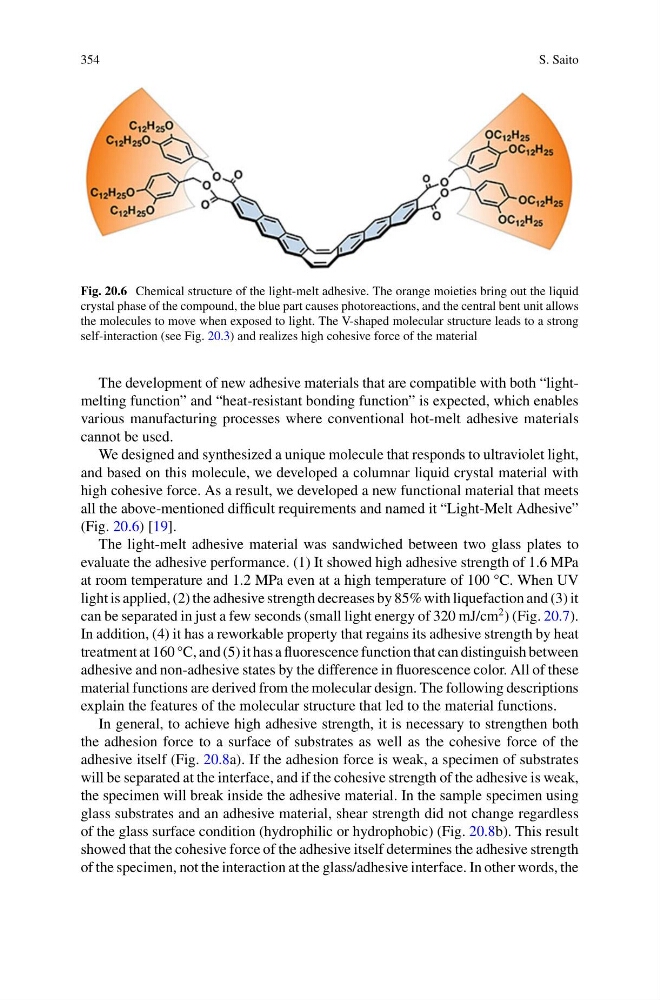
Fig. 20.6 Chemical structure of the light-melt adhesive. The orange moieties bring out the liquid
crystal phase of the compound, the blue part causes photoreactions, and the central bent unit allows
the molecules to move when exposed to light. The V-shaped molecular structure leads to a strong
self-interaction (see Fig. 20.3) and realizes high cohesive force of the material
The development of new adhesive materials that are compatible with both “lightmelting function” and “heat-resistant bonding function” is expected, which enables
various manufacturing processes where conventional hot-melt adhesive materials
cannot be used.
We designed and synthesized a unique molecule that responds to ultraviolet light,
and based on this molecule, we developed a columnar liquid crystal material with
high cohesive force. As a result, we developed a new functional material that meets
all the above-mentioned difficult requirements and named it “Light-Melt Adhesive”
(Fig. 20.6) [19].
The light-melt adhesive material was sandwiched between two glass plates to
evaluate the adhesive performance. (1) It showed high adhesive strength of 1.6 MPa
at room temperature and 1.2 MPa even at a high temperature of 100 °C. When UV
light is applied, (2) the adhesive strength decreases by 85% with liquefaction and (3) it
can be separated in just a few seconds (small light energy of 320 mJ/cm
2 ) (Fig. 20.7).
In addition, (4) it has a reworkable property that regains its adhesive strength by heat
treatment at 160 °C, and (5) it has a fluorescence function that can distinguish between
adhesive and non-adhesive states by the difference in fluorescence color. All of these
material functions are derived from the molecular design. The following descriptions
explain the features of the molecular structure that led to the material functions.
In general, to achieve high adhesive strength, it is necessary to strengthen both
the adhesion force to a surface of substrates as well as the cohesive force of the
adhesive itself (Fig. 20.8a). If the adhesion force is weak, a specimen of substrates
will be separated at the interface, and if the cohesive strength of the adhesive is weak,
the specimen will break inside the adhesive material. In the sample specimen using
glass substrates and an adhesive material, shear strength did not change regardless
of the glass surface condition (hydrophilic or hydrophobic) (Fig. 20.8b). This result
showed that the cohesive force of the adhesive itself determines the adhesive strength
of the specimen, not the interaction at the glass/adhesive interface. In other words, the
S. Saito
Fig. 20.6 Chemical structure of the light-melt adhesive. The orange moieties bring out the liquid
crystal phase of the compound, the blue part causes photoreactions, and the central bent unit allows
the molecules to move when exposed to light. The V-shaped molecular structure leads to a strong
self-interaction (see Fig. 20.3) and realizes high cohesive force of the material
The development of new adhesive materials that are compatible with both “lightmelting function” and “heat-resistant bonding function” is expected, which enables
various manufacturing processes where conventional hot-melt adhesive materials
cannot be used.
We designed and synthesized a unique molecule that responds to ultraviolet light,
and based on this molecule, we developed a columnar liquid crystal material with
high cohesive force. As a result, we developed a new functional material that meets
all the above-mentioned difficult requirements and named it “Light-Melt Adhesive”
(Fig. 20.6) [19].
The light-melt adhesive material was sandwiched between two glass plates to
evaluate the adhesive performance. (1) It showed high adhesive strength of 1.6 MPa
at room temperature and 1.2 MPa even at a high temperature of 100 °C. When UV
light is applied, (2) the adhesive strength decreases by 85% with liquefaction and (3) it
can be separated in just a few seconds (small light energy of 320 mJ/cm
2 ) (Fig. 20.7).
In addition, (4) it has a reworkable property that regains its adhesive strength by heat
treatment at 160 °C, and (5) it has a fluorescence function that can distinguish between
adhesive and non-adhesive states by the difference in fluorescence color. All of these
material functions are derived from the molecular design. The following descriptions
explain the features of the molecular structure that led to the material functions.
In general, to achieve high adhesive strength, it is necessary to strengthen both
the adhesion force to a surface of substrates as well as the cohesive force of the
adhesive itself (Fig. 20.8a). If the adhesion force is weak, a specimen of substrates
will be separated at the interface, and if the cohesive strength of the adhesive is weak,
the specimen will break inside the adhesive material. In the sample specimen using
glass substrates and an adhesive material, shear strength did not change regardless
of the glass surface condition (hydrophilic or hydrophobic) (Fig. 20.8b). This result
showed that the cohesive force of the adhesive itself determines the adhesive strength
of the specimen, not the interaction at the glass/adhesive interface. In other words, the