

350
S. Saito
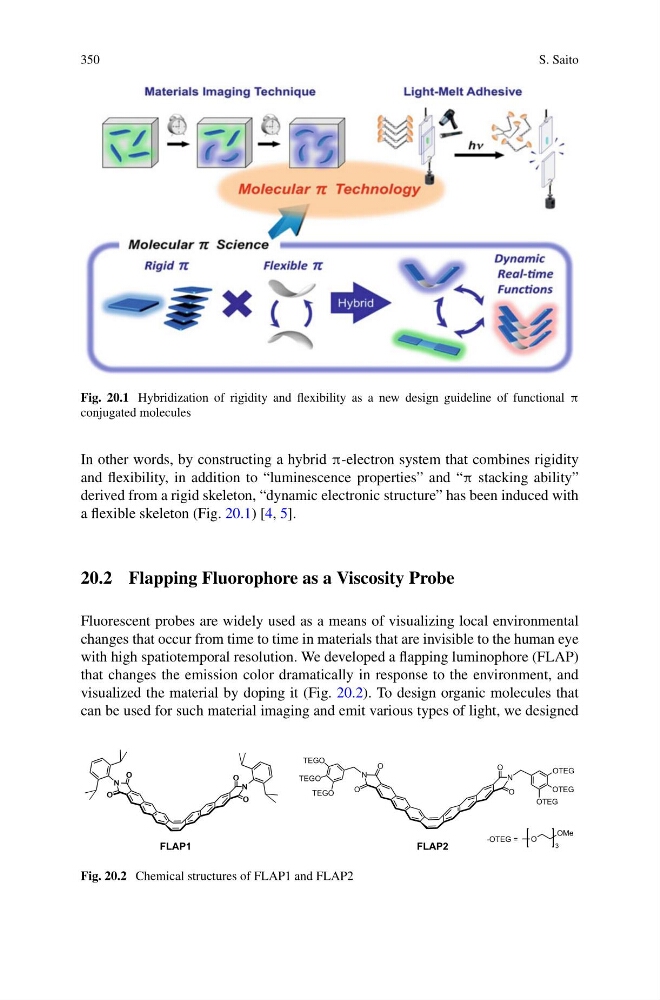
Fig. 20.1 Hybridization of rigidity and flexibility as a new design guideline of functional π
conjugated molecules
In other words, by constructing a hybrid π-electron system that combines rigidity
and flexibility, in addition to “luminescence properties” and “π stacking ability”
derived from a rigid skeleton, “dynamic electronic structure” has been induced with
a flexible skeleton (Fig. 20.1) [4, 5].
20.2 Flapping Fluorophore as a Viscosity Probe
Fluorescent probes are widely used as a means of visualizing local environmental
changes that occur from time to time in materials that are invisible to the human eye
with high spatiotemporal resolution. We developed a flapping luminophore (FLAP)
that changes the emission color dramatically in response to the environment, and
visualized the material by doping it (Fig. 20.2). To design organic molecules that
can be used for such material imaging and emit various types of light, we designed
N
O
O
N
O
O
TEGO
TEGO
TEGO
OTEG
OTEG
OTEG
-OTEG =
O
OMe
3
FLAP1
FLAP2
Fig. 20.2 Chemical structures of FLAP1 and FLAP2
S. Saito
Fig. 20.1 Hybridization of rigidity and flexibility as a new design guideline of functional π
conjugated molecules
In other words, by constructing a hybrid π-electron system that combines rigidity
and flexibility, in addition to “luminescence properties” and “π stacking ability”
derived from a rigid skeleton, “dynamic electronic structure” has been induced with
a flexible skeleton (Fig. 20.1) [4, 5].
20.2 Flapping Fluorophore as a Viscosity Probe
Fluorescent probes are widely used as a means of visualizing local environmental
changes that occur from time to time in materials that are invisible to the human eye
with high spatiotemporal resolution. We developed a flapping luminophore (FLAP)
that changes the emission color dramatically in response to the environment, and
visualized the material by doping it (Fig. 20.2). To design organic molecules that
can be used for such material imaging and emit various types of light, we designed
N
O
O
N
O
O
TEGO
TEGO
TEGO
OTEG
OTEG
OTEG
-OTEG =
O
OMe
3
FLAP1
FLAP2
Fig. 20.2 Chemical structures of FLAP1 and FLAP2