

17 Synergetic Photon Upconversion Realized by a Controlled …
295
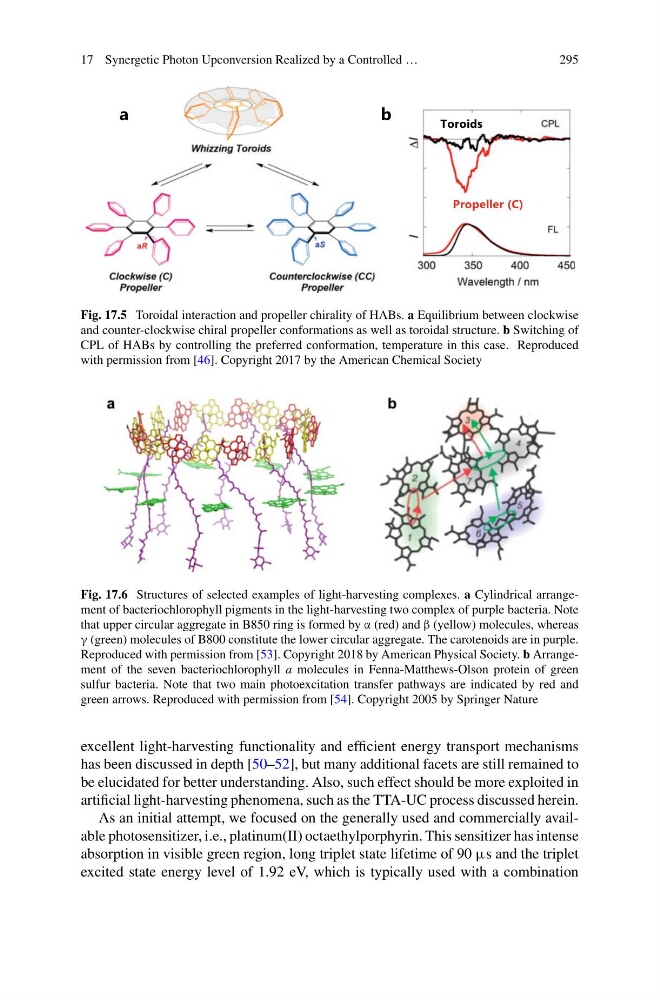
Fig. 17.5 Toroidal interaction and propeller chirality of HABs. a Equilibrium between clockwise
and counter-clockwise chiral propeller conformations as well as toroidal structure. b Switching of
CPL of HABs by controlling the preferred conformation, temperature in this case. Reproduced
with permission from [46]. Copyright 2017 by the American Chemical Society
Fig. 17.6 Structures of selected examples of light-harvesting complexes. a Cylindrical arrangement of bacteriochlorophyll pigments in the light-harvesting two complex of purple bacteria. Note
that upper circular aggregate in B850 ring is formed by α (red) and β (yellow) molecules, whereas
γ (green) molecules of B800 constitute the lower circular aggregate. The carotenoids are in purple.
Reproduced with permission from [53]. Copyright 2018 by American Physical Society. b Arrangement of the seven bacteriochlorophyll a molecules in Fenna-Matthews-Olson protein of green
sulfur bacteria. Note that two main photoexcitation transfer pathways are indicated by red and
green arrows. Reproduced with permission from [54]. Copyright 2005 by Springer Nature
excellent light-harvesting functionality and efficient energy transport mechanisms
has been discussed in depth [50–52], but many additional facets are still remained to
be elucidated for better understanding. Also, such effect should be more exploited in
artificial light-harvesting phenomena, such as the TTA-UC process discussed herein.
As an initial attempt, we focused on the generally used and commercially available photosensitizer, i.e., platinum(II) octaethylporphyrin. This sensitizer has intense
absorption in visible green region, long triplet state lifetime of 90 μs and the triplet
excited state energy level of 1.92 eV, which is typically used with a combination
295
Fig. 17.5 Toroidal interaction and propeller chirality of HABs. a Equilibrium between clockwise
and counter-clockwise chiral propeller conformations as well as toroidal structure. b Switching of
CPL of HABs by controlling the preferred conformation, temperature in this case. Reproduced
with permission from [46]. Copyright 2017 by the American Chemical Society
Fig. 17.6 Structures of selected examples of light-harvesting complexes. a Cylindrical arrangement of bacteriochlorophyll pigments in the light-harvesting two complex of purple bacteria. Note
that upper circular aggregate in B850 ring is formed by α (red) and β (yellow) molecules, whereas
γ (green) molecules of B800 constitute the lower circular aggregate. The carotenoids are in purple.
Reproduced with permission from [53]. Copyright 2018 by American Physical Society. b Arrangement of the seven bacteriochlorophyll a molecules in Fenna-Matthews-Olson protein of green
sulfur bacteria. Note that two main photoexcitation transfer pathways are indicated by red and
green arrows. Reproduced with permission from [54]. Copyright 2005 by Springer Nature
excellent light-harvesting functionality and efficient energy transport mechanisms
has been discussed in depth [50–52], but many additional facets are still remained to
be elucidated for better understanding. Also, such effect should be more exploited in
artificial light-harvesting phenomena, such as the TTA-UC process discussed herein.
As an initial attempt, we focused on the generally used and commercially available photosensitizer, i.e., platinum(II) octaethylporphyrin. This sensitizer has intense
absorption in visible green region, long triplet state lifetime of 90 μs and the triplet
excited state energy level of 1.92 eV, which is typically used with a combination