

CaBr 2 + H 2 O → CaO + 2HBr
(725°C)
(11.11)
According to these reactions, a production of hydrobromic acid is accompanied by
the release of oxygen. The next set of two reactions is as follows:
Fe 3 O 4 + 8HBr → 3FeBr 2 + 4H 2 O + Br 2
(250°C)
(11.12)
3FeBr 2 + 4H 2 O → Fe 3 O 4 + 6 HBr + H 2
(575°C)
(11.13)
It indicates the reduction of water by a bromide, accompanied by release of
hydrogen. In the original concept, these two reactions operate separately and
sequentially in two separate reactors, wherein heterogeneous reactions between
gases and solids are carried out. The main difficulty encountered was the cycling
behavior of these matrices. For example, in the first reactor during the first cycle,
CaO is converted to CaBr 2 ; in the second cycle reverse transformation occurs;
and so on. The design proved difficult to extrapolate to an industrial scale. Many
design issues for commercial applications are still under investigation [91–94]
(Funk, 2011, pers. comm.).
309
Water Dissociation Technologies for Hydrogen
Concentrated
solar energy
1 O
M O
2
x y
Solar reactor
2
y
M x O =
y
+
xM
O
2 2
M
H
Hydrolysis reactor
2
H 2 O
xM + yH =
2 O M x O y + yH 2
Recycle
M x O y
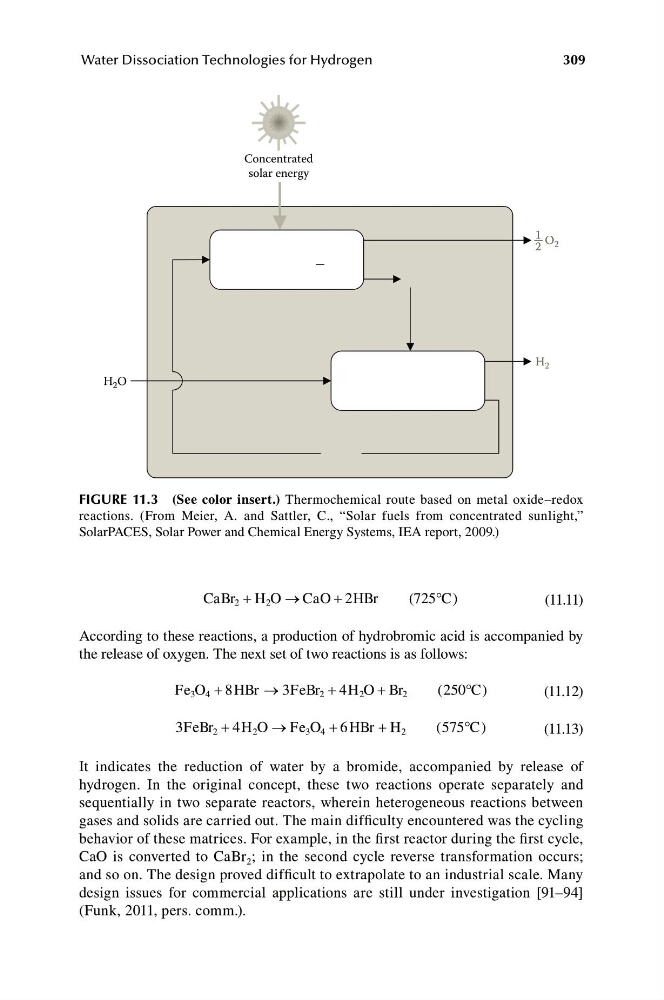
FiGUre 11.3 (See color insert.) Thermochemical route based on metal oxide–redox
reactions. (From Meier, A. and Sattler, C., “Solar fuels from concentrated sunlight,”
SolarPACES, Solar Power and Chemical Energy Systems, IEA report, 2009.)
(725°C)
(11.11)
According to these reactions, a production of hydrobromic acid is accompanied by
the release of oxygen. The next set of two reactions is as follows:
Fe 3 O 4 + 8HBr → 3FeBr 2 + 4H 2 O + Br 2
(250°C)
(11.12)
3FeBr 2 + 4H 2 O → Fe 3 O 4 + 6 HBr + H 2
(575°C)
(11.13)
It indicates the reduction of water by a bromide, accompanied by release of
hydrogen. In the original concept, these two reactions operate separately and
sequentially in two separate reactors, wherein heterogeneous reactions between
gases and solids are carried out. The main difficulty encountered was the cycling
behavior of these matrices. For example, in the first reactor during the first cycle,
CaO is converted to CaBr 2 ; in the second cycle reverse transformation occurs;
and so on. The design proved difficult to extrapolate to an industrial scale. Many
design issues for commercial applications are still under investigation [91–94]
(Funk, 2011, pers. comm.).
309
Water Dissociation Technologies for Hydrogen
Concentrated
solar energy
1 O
M O
2
x y
Solar reactor
2
y
M x O =
y
+
xM
O
2 2
M
H
Hydrolysis reactor
2
H 2 O
xM + yH =
2 O M x O y + yH 2
Recycle
M x O y
FiGUre 11.3 (See color insert.) Thermochemical route based on metal oxide–redox
reactions. (From Meier, A. and Sattler, C., “Solar fuels from concentrated sunlight,”
SolarPACES, Solar Power and Chemical Energy Systems, IEA report, 2009.)