

297
Water Dissociation Technologies for Hydrogen
Exergy efficiency
100%
50%
0%
1.0
0.9
0.8
0.7
0.6
0.5
0.4
0.3
0.2
0.1
0.0
Carnot
Toptimum
1,000
5,000
10,000
20,000
40,000
0
500
1000
1500
2000
2500
3000
3500
4000
Temperature (K)
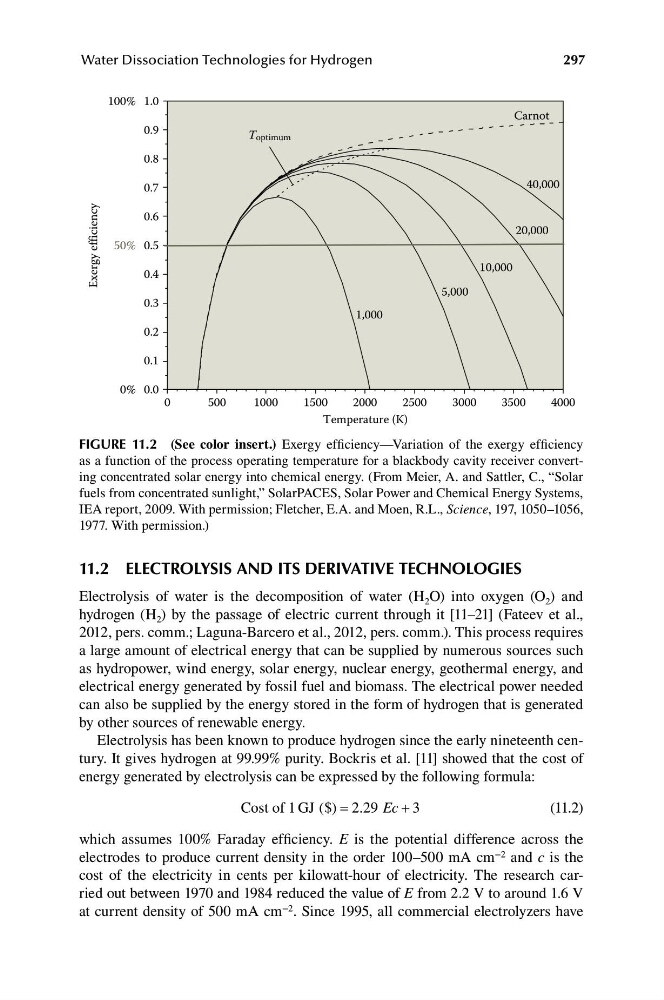
FiGUre 11.2 (See color insert.) Exergy efficiency—Variation of the exergy efficiency
as a function of the process operating temperature for a blackbody cavity receiver converting concentrated solar energy into chemical energy. (From Meier, A. and Sattler, C., “Solar
fuels from concentrated sunlight,” SolarPACES, Solar Power and Chemical Energy Systems,
IEA report, 2009. With permission; Fletcher, E.A. and Moen, R.L., Science, 197, 1050–1056,
1977. With permission.)
11.2 eleCtrOlysis a nd i ts d eriVatiVe t eChnOlOGies
Electrolysis of water is the decomposition of water (H 2 O) into oxygen (O 2 ) and
hydrogen (H 2 ) by the passage of electric current through it [11–21] (Fateev et al.,
2012, pers. comm.; Laguna-Barcero et al., 2012, pers. comm.). This process requires
a large amount of electrical energy that can be supplied by numerous sources such
as hydropower, wind energy, solar energy, nuclear energy, geothermal energy, and
electrical energy generated by fossil fuel and biomass. The electrical power needed
can also be supplied by the energy stored in the form of hydrogen that is generated
by other sources of renewable energy.
Electrolysis has been known to produce hydrogen since the early nineteenth century. It gives hydrogen at 99.99% purity. Bockris et al. [11] showed that the cost of
energy generated by electrolysis can be expressed by the following formula:
Cost of 1 GJ ( $) = 2 29
. Ec + 3
(11.2)
which assumes 100% Faraday efficiency. E is the potential difference across the
electrodes to produce current density in the order 100–500 mA cm −2 and c is the
cost of the electricity in cents per kilowatt-hour of electricity. The research carried out between 1970 and 1984 reduced the value of E from 2.2 V to around 1.6 V
at current density of 500 mA cm −2 . Since 1995, all commercial electrolyzers have
Water Dissociation Technologies for Hydrogen
Exergy efficiency
100%
50%
0%
1.0
0.9
0.8
0.7
0.6
0.5
0.4
0.3
0.2
0.1
0.0
Carnot
Toptimum
1,000
5,000
10,000
20,000
40,000
0
500
1000
1500
2000
2500
3000
3500
4000
Temperature (K)
FiGUre 11.2 (See color insert.) Exergy efficiency—Variation of the exergy efficiency
as a function of the process operating temperature for a blackbody cavity receiver converting concentrated solar energy into chemical energy. (From Meier, A. and Sattler, C., “Solar
fuels from concentrated sunlight,” SolarPACES, Solar Power and Chemical Energy Systems,
IEA report, 2009. With permission; Fletcher, E.A. and Moen, R.L., Science, 197, 1050–1056,
1977. With permission.)
11.2 eleCtrOlysis a nd i ts d eriVatiVe t eChnOlOGies
Electrolysis of water is the decomposition of water (H 2 O) into oxygen (O 2 ) and
hydrogen (H 2 ) by the passage of electric current through it [11–21] (Fateev et al.,
2012, pers. comm.; Laguna-Barcero et al., 2012, pers. comm.). This process requires
a large amount of electrical energy that can be supplied by numerous sources such
as hydropower, wind energy, solar energy, nuclear energy, geothermal energy, and
electrical energy generated by fossil fuel and biomass. The electrical power needed
can also be supplied by the energy stored in the form of hydrogen that is generated
by other sources of renewable energy.
Electrolysis has been known to produce hydrogen since the early nineteenth century. It gives hydrogen at 99.99% purity. Bockris et al. [11] showed that the cost of
energy generated by electrolysis can be expressed by the following formula:
Cost of 1 GJ ( $) = 2 29
. Ec + 3
(11.2)
which assumes 100% Faraday efficiency. E is the potential difference across the
electrodes to produce current density in the order 100–500 mA cm −2 and c is the
cost of the electricity in cents per kilowatt-hour of electricity. The research carried out between 1970 and 1984 reduced the value of E from 2.2 V to around 1.6 V
at current density of 500 mA cm −2 . Since 1995, all commercial electrolyzers have