

Methane
Carbon dioxide
Volatile fatty acids
Hydrogen
Carbon dioxide
Acetate
Carbohydrates
Sugars
Amino acids
LCFAs
Methanation
Acetogenesis/
dehydrogenation
Hydrolysis/acidogenesis
Complex biomass
Lignocellulose
Hydrolysis/
acidogenesis
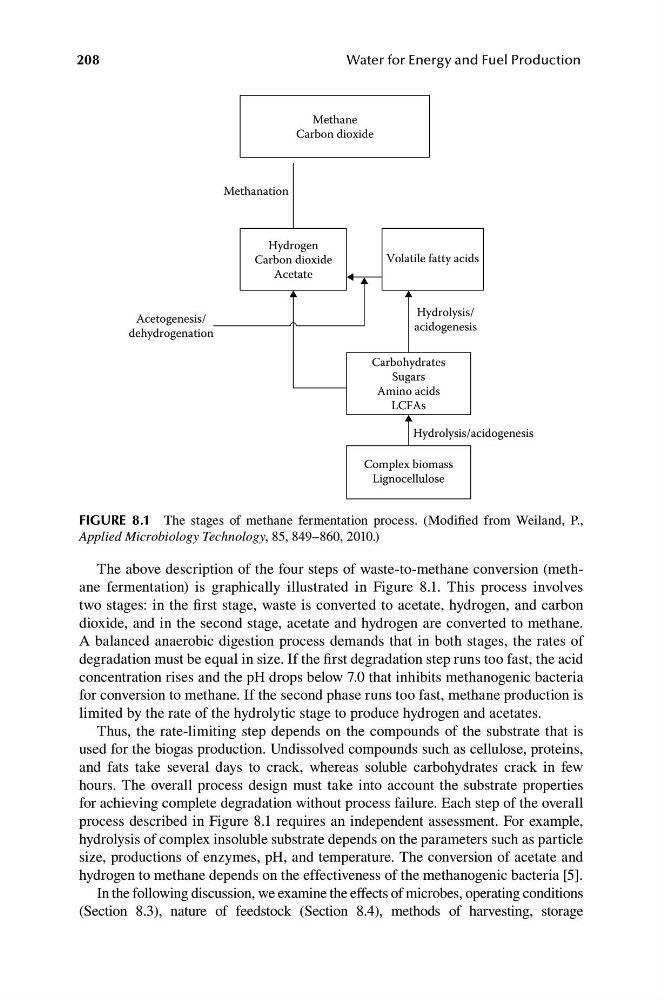
FiGUre 8.1 The stages of methane fermentation process. (Modified from Weiland, P.,
Applied Microbiology Technology, 85, 849–860, 2010.)
208
Water for Energy and Fuel Production
The above description of the four steps of waste-to-methane conversion (methane fermentation) is graphically illustrated in Figure 8.1. This process involves
two stages: in the first stage, waste is converted to acetate, hydrogen, and carbon
dioxide, and in the second stage, acetate and hydrogen are converted to methane.
A balanced anaerobic digestion process demands that in both stages, the rates of
degradation must be equal in size. If the first degradation step runs too fast, the acid
concentration rises and the pH drops below 7.0 that inhibits methanogenic bacteria
for conversion to methane. If the second phase runs too fast, methane production is
limited by the rate of the hydrolytic stage to produce hydrogen and acetates.
Thus, the rate-limiting step depends on the compounds of the substrate that is
used for the biogas production. Undissolved compounds such as cellulose, proteins,
and fats take several days to crack, whereas soluble carbohydrates crack in few
hours. The overall process design must take into account the substrate properties
for achieving complete degradation without process failure. Each step of the overall
process described in Figure 8.1 requires an independent assessment. For example,
hydrolysis of complex insoluble substrate depends on the parameters such as particle
size, productions of enzymes, pH, and temperature. The conversion of acetate and
hydrogen to methane depends on the effectiveness of the methanogenic bacteria [5].
In the following discussion, we examine the effects of microbes, operating conditions
(Section 8.3), nature of feedstock (Section 8.4), methods of harvesting, storage
Carbon dioxide
Volatile fatty acids
Hydrogen
Carbon dioxide
Acetate
Carbohydrates
Sugars
Amino acids
LCFAs
Methanation
Acetogenesis/
dehydrogenation
Hydrolysis/acidogenesis
Complex biomass
Lignocellulose
Hydrolysis/
acidogenesis
FiGUre 8.1 The stages of methane fermentation process. (Modified from Weiland, P.,
Applied Microbiology Technology, 85, 849–860, 2010.)
208
Water for Energy and Fuel Production
The above description of the four steps of waste-to-methane conversion (methane fermentation) is graphically illustrated in Figure 8.1. This process involves
two stages: in the first stage, waste is converted to acetate, hydrogen, and carbon
dioxide, and in the second stage, acetate and hydrogen are converted to methane.
A balanced anaerobic digestion process demands that in both stages, the rates of
degradation must be equal in size. If the first degradation step runs too fast, the acid
concentration rises and the pH drops below 7.0 that inhibits methanogenic bacteria
for conversion to methane. If the second phase runs too fast, methane production is
limited by the rate of the hydrolytic stage to produce hydrogen and acetates.
Thus, the rate-limiting step depends on the compounds of the substrate that is
used for the biogas production. Undissolved compounds such as cellulose, proteins,
and fats take several days to crack, whereas soluble carbohydrates crack in few
hours. The overall process design must take into account the substrate properties
for achieving complete degradation without process failure. Each step of the overall
process described in Figure 8.1 requires an independent assessment. For example,
hydrolysis of complex insoluble substrate depends on the parameters such as particle
size, productions of enzymes, pH, and temperature. The conversion of acetate and
hydrogen to methane depends on the effectiveness of the methanogenic bacteria [5].
In the following discussion, we examine the effects of microbes, operating conditions
(Section 8.3), nature of feedstock (Section 8.4), methods of harvesting, storage