

70
3 Experimental Techniques
consists of different components such as a hollow aluminium head with stand, a
heating system and a temperature measurement system. Aluminium was used to
produce the head form for the experiments since it is a light material and has higher
thermal conductivity. The head form is symmetrical in relation to the centre line from
the nose to the middle of the head and the back of the neck. The thermal conductivity
(k) of cast aluminium is approximately 170 W/m.K [4].
The size of the aluminium head form together with the textile liner was appropriate
to give a proper fit with a size E helmet. The aluminium head form was hollow, having
a wall thickness of 6–10 mm. The head form was hollow in order to pump water
inside to heat it. The aluminium head form was mounted to the floor of the wind
tunnel by using a metal stand, which was then covered by a plastic sheet to obtain a
streamline flow as shown in Fig. 3.5.
Water was heated and circulated into the hollow aluminium head form to heat it.
The method of heating by pumping hot water was selected because it would produce
a more uniform heat distribution over the aluminium head surface than other, less
uniform, heating methods. The heat supplied to the aluminium head form increase
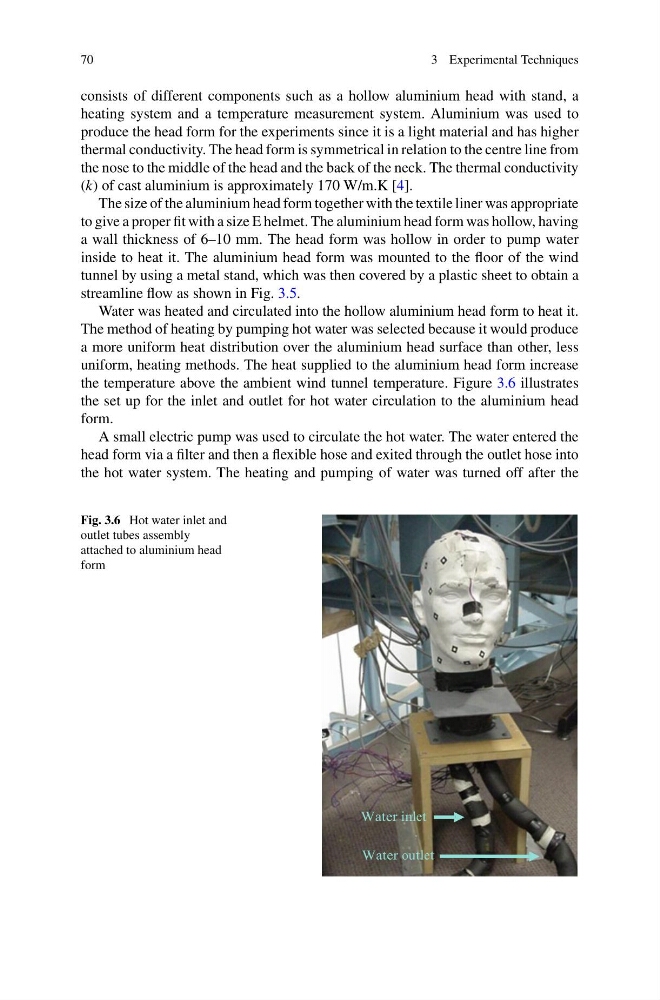
the temperature above the ambient wind tunnel temperature. Figure 3.6 illustrates
the set up for the inlet and outlet for hot water circulation to the aluminium head
form.
A small electric pump was used to circulate the hot water. The water entered the
head form via a filter and then a flexible hose and exited through the outlet hose into
the hot water system. The heating and pumping of water was turned off after the
Fig. 3.6 Hot water inlet and
outlet tubes assembly
attached to aluminium head
form
Water inlet
Water outlet
3 Experimental Techniques
consists of different components such as a hollow aluminium head with stand, a
heating system and a temperature measurement system. Aluminium was used to
produce the head form for the experiments since it is a light material and has higher
thermal conductivity. The head form is symmetrical in relation to the centre line from
the nose to the middle of the head and the back of the neck. The thermal conductivity
(k) of cast aluminium is approximately 170 W/m.K [4].
The size of the aluminium head form together with the textile liner was appropriate
to give a proper fit with a size E helmet. The aluminium head form was hollow, having
a wall thickness of 6–10 mm. The head form was hollow in order to pump water
inside to heat it. The aluminium head form was mounted to the floor of the wind
tunnel by using a metal stand, which was then covered by a plastic sheet to obtain a
streamline flow as shown in Fig. 3.5.
Water was heated and circulated into the hollow aluminium head form to heat it.
The method of heating by pumping hot water was selected because it would produce
a more uniform heat distribution over the aluminium head surface than other, less
uniform, heating methods. The heat supplied to the aluminium head form increase
the temperature above the ambient wind tunnel temperature. Figure 3.6 illustrates
the set up for the inlet and outlet for hot water circulation to the aluminium head
form.
A small electric pump was used to circulate the hot water. The water entered the
head form via a filter and then a flexible hose and exited through the outlet hose into
the hot water system. The heating and pumping of water was turned off after the
Fig. 3.6 Hot water inlet and
outlet tubes assembly
attached to aluminium head
form
Water inlet
Water outlet