

10.6 Conclusion on Comparison of Recovery Algorithms
We compared the linear, dichotomous, and modified linear recovery algorithms
using the mean time T that is required to successfully execute the segment in which
the malfunction occurred.
We have analyzed the mean time as a function of the time until the malfunction
occurred, beginning at program start and the part of non-latent malfunctions
occurring in a segment and the distance, in segments, from the program start to the
malfunction position.
The success and time of successful recovery depend on the available checking
facilities but mainly on its fault coverage, which indirectly determines the parameter
a k . The higher the fault coverage, the greater the a k , and the smaller the number of
steps (segments) needed to recover the affected task.
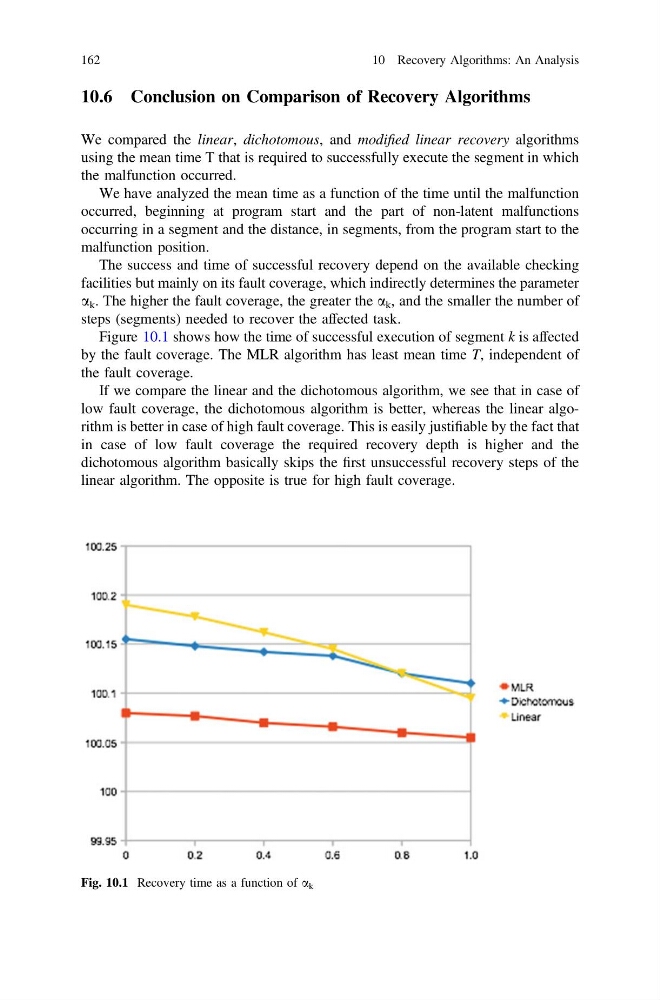
Figure 10.1 shows how the time of successful execution of segment k is affected
by the fault coverage. The MLR algorithm has least mean time T, independent of
the fault coverage.
If we compare the linear and the dichotomous algorithm, we see that in case of
low fault coverage, the dichotomous algorithm is better, whereas the linear algorithm is better in case of high fault coverage. This is easily justifiable by the fact that
in case of low fault coverage the required recovery depth is higher and the
dichotomous algorithm basically skips the first unsuccessful recovery steps of the
linear algorithm. The opposite is true for high fault coverage.
Fig. 10.1 Recovery time as a function of a k
162
10 Recovery Algorithms: An Analysis
We compared the linear, dichotomous, and modified linear recovery algorithms
using the mean time T that is required to successfully execute the segment in which
the malfunction occurred.
We have analyzed the mean time as a function of the time until the malfunction
occurred, beginning at program start and the part of non-latent malfunctions
occurring in a segment and the distance, in segments, from the program start to the
malfunction position.
The success and time of successful recovery depend on the available checking
facilities but mainly on its fault coverage, which indirectly determines the parameter
a k . The higher the fault coverage, the greater the a k , and the smaller the number of
steps (segments) needed to recover the affected task.
Figure 10.1 shows how the time of successful execution of segment k is affected
by the fault coverage. The MLR algorithm has least mean time T, independent of
the fault coverage.
If we compare the linear and the dichotomous algorithm, we see that in case of
low fault coverage, the dichotomous algorithm is better, whereas the linear algorithm is better in case of high fault coverage. This is easily justifiable by the fact that
in case of low fault coverage the required recovery depth is higher and the
dichotomous algorithm basically skips the first unsuccessful recovery steps of the
linear algorithm. The opposite is true for high fault coverage.
Fig. 10.1 Recovery time as a function of a k
162
10 Recovery Algorithms: An Analysis