

82
5 Cells in Motion
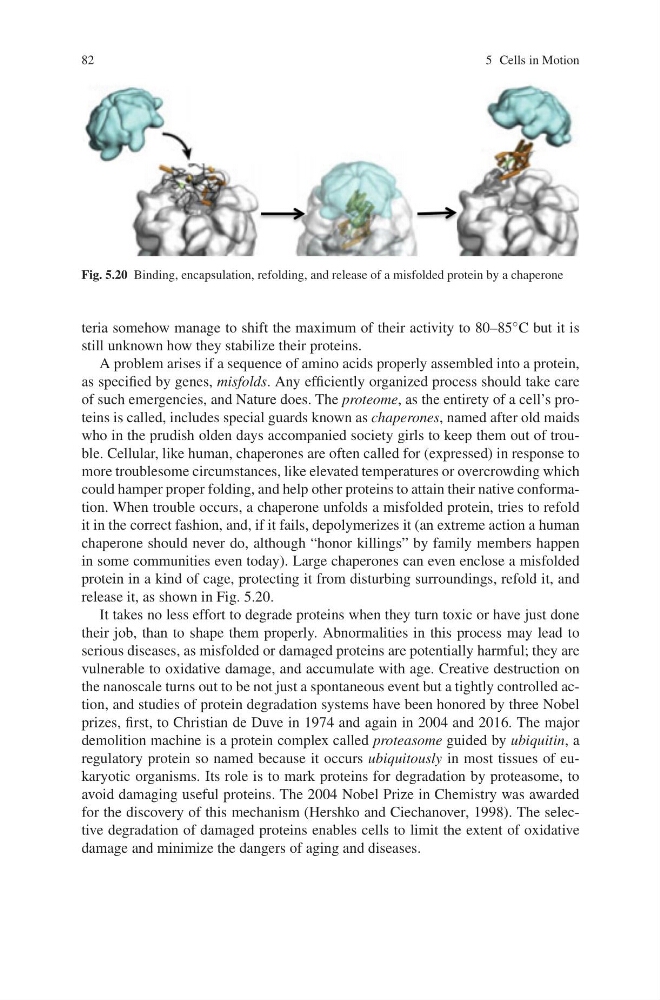
Fig. 5.20 Binding, encapsulation, refolding, and release of a misfolded protein by a chaperone
teria somehow manage to shift the maximum of their activity to 80–85 ◦ C but it is
still unknown how they stabilize their proteins.
A problem arises if a sequence of amino acids properly assembled into a protein,
as specified by genes, misfolds. Any efficiently organized process should take care
of such emergencies, and Nature does. The proteome, as the entirety of a cell’s proteins is called, includes special guards known as chaperones, named after old maids
who in the prudish olden days accompanied society girls to keep them out of trouble. Cellular, like human, chaperones are often called for (expressed) in response to
more troublesome circumstances, like elevated temperatures or overcrowding which
could hamper proper folding, and help other proteins to attain their native conformation. When trouble occurs, a chaperone unfolds a misfolded protein, tries to refold
it in the correct fashion, and, if it fails, depolymerizes it (an extreme action a human
chaperone should never do, although “honor killings” by family members happen
in some communities even today). Large chaperones can even enclose a misfolded
protein in a kind of cage, protecting it from disturbing surroundings, refold it, and
release it, as shown in Fig. 5.20.
It takes no less effort to degrade proteins when they turn toxic or have just done
their job, than to shape them properly. Abnormalities in this process may lead to
serious diseases, as misfolded or damaged proteins are potentially harmful; they are
vulnerable to oxidative damage, and accumulate with age. Creative destruction on
the nanoscale turns out to be not just a spontaneous event but a tightly controlled action, and studies of protein degradation systems have been honored by three Nobel
prizes, first, to Christian de Duve in 1974 and again in 2004 and 2016. The major
demolition machine is a protein complex called proteasome guided by ubiquitin, a
regulatory protein so named because it occurs ubiquitously in most tissues of eukaryotic organisms. Its role is to mark proteins for degradation by proteasome, to
avoid damaging useful proteins. The 2004 Nobel Prize in Chemistry was awarded
for the discovery of this mechanism (Hershko and Ciechanover, 1998). The selective degradation of damaged proteins enables cells to limit the extent of oxidative
damage and minimize the dangers of aging and diseases.
5 Cells in Motion
Fig. 5.20 Binding, encapsulation, refolding, and release of a misfolded protein by a chaperone
teria somehow manage to shift the maximum of their activity to 80–85 ◦ C but it is
still unknown how they stabilize their proteins.
A problem arises if a sequence of amino acids properly assembled into a protein,
as specified by genes, misfolds. Any efficiently organized process should take care
of such emergencies, and Nature does. The proteome, as the entirety of a cell’s proteins is called, includes special guards known as chaperones, named after old maids
who in the prudish olden days accompanied society girls to keep them out of trouble. Cellular, like human, chaperones are often called for (expressed) in response to
more troublesome circumstances, like elevated temperatures or overcrowding which
could hamper proper folding, and help other proteins to attain their native conformation. When trouble occurs, a chaperone unfolds a misfolded protein, tries to refold
it in the correct fashion, and, if it fails, depolymerizes it (an extreme action a human
chaperone should never do, although “honor killings” by family members happen
in some communities even today). Large chaperones can even enclose a misfolded
protein in a kind of cage, protecting it from disturbing surroundings, refold it, and
release it, as shown in Fig. 5.20.
It takes no less effort to degrade proteins when they turn toxic or have just done
their job, than to shape them properly. Abnormalities in this process may lead to
serious diseases, as misfolded or damaged proteins are potentially harmful; they are
vulnerable to oxidative damage, and accumulate with age. Creative destruction on
the nanoscale turns out to be not just a spontaneous event but a tightly controlled action, and studies of protein degradation systems have been honored by three Nobel
prizes, first, to Christian de Duve in 1974 and again in 2004 and 2016. The major
demolition machine is a protein complex called proteasome guided by ubiquitin, a
regulatory protein so named because it occurs ubiquitously in most tissues of eukaryotic organisms. Its role is to mark proteins for degradation by proteasome, to
avoid damaging useful proteins. The 2004 Nobel Prize in Chemistry was awarded
for the discovery of this mechanism (Hershko and Ciechanover, 1998). The selective degradation of damaged proteins enables cells to limit the extent of oxidative
damage and minimize the dangers of aging and diseases.