

64
5 Cells in Motion
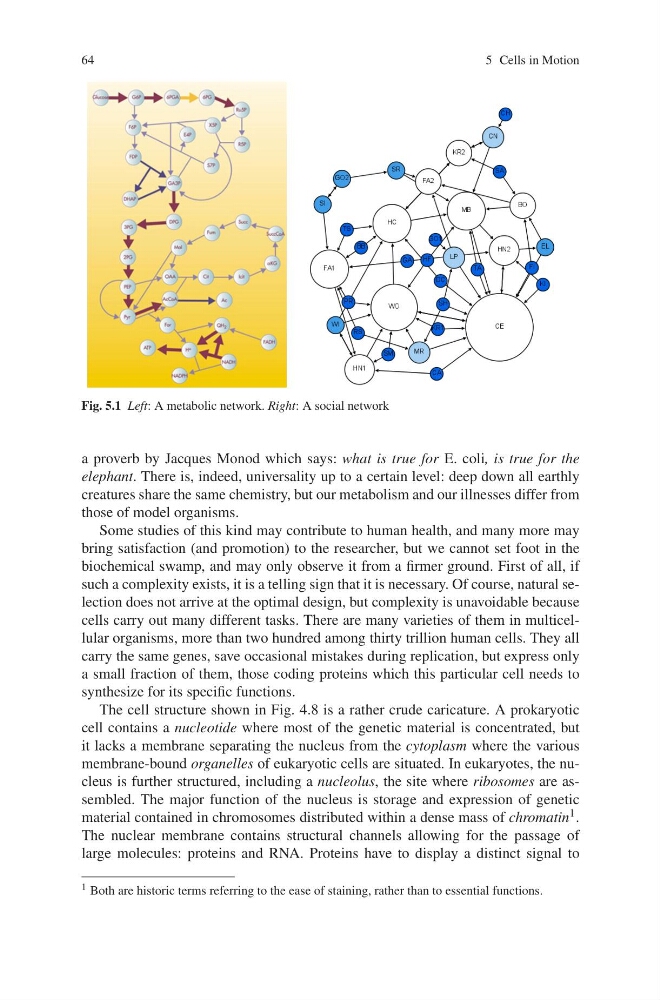
Fig. 5.1 Left: A metabolic network. Right: A social network
a proverb by Jacques Monod which says: what is true for E. coli, is true for the
elephant. There is, indeed, universality up to a certain level: deep down all earthly
creatures share the same chemistry, but our metabolism and our illnesses differ from
those of model organisms.
Some studies of this kind may contribute to human health, and many more may
bring satisfaction (and promotion) to the researcher, but we cannot set foot in the
biochemical swamp, and may only observe it from a firmer ground. First of all, if
such a complexity exists, it is a telling sign that it is necessary. Of course, natural selection does not arrive at the optimal design, but complexity is unavoidable because
cells carry out many different tasks. There are many varieties of them in multicellular organisms, more than two hundred among thirty trillion human cells. They all
carry the same genes, save occasional mistakes during replication, but express only
a small fraction of them, those coding proteins which this particular cell needs to
synthesize for its specific functions.
The cell structure shown in Fig. 4.8 is a rather crude caricature. A prokaryotic
cell contains a nucleotide where most of the genetic material is concentrated, but
it lacks a membrane separating the nucleus from the cytoplasm where the various
membrane-bound organelles of eukaryotic cells are situated. In eukaryotes, the nucleus is further structured, including a nucleolus, the site where ribosomes are assembled. The major function of the nucleus is storage and expression of genetic
material contained in chromosomes distributed within a dense mass of chromatin 1 .
The nuclear membrane contains structural channels allowing for the passage of
large molecules: proteins and RNA. Proteins have to display a distinct signal to
1 Both are historic terms referring to the ease of staining, rather than to essential functions.
5 Cells in Motion
Fig. 5.1 Left: A metabolic network. Right: A social network
a proverb by Jacques Monod which says: what is true for E. coli, is true for the
elephant. There is, indeed, universality up to a certain level: deep down all earthly
creatures share the same chemistry, but our metabolism and our illnesses differ from
those of model organisms.
Some studies of this kind may contribute to human health, and many more may
bring satisfaction (and promotion) to the researcher, but we cannot set foot in the
biochemical swamp, and may only observe it from a firmer ground. First of all, if
such a complexity exists, it is a telling sign that it is necessary. Of course, natural selection does not arrive at the optimal design, but complexity is unavoidable because
cells carry out many different tasks. There are many varieties of them in multicellular organisms, more than two hundred among thirty trillion human cells. They all
carry the same genes, save occasional mistakes during replication, but express only
a small fraction of them, those coding proteins which this particular cell needs to
synthesize for its specific functions.
The cell structure shown in Fig. 4.8 is a rather crude caricature. A prokaryotic
cell contains a nucleotide where most of the genetic material is concentrated, but
it lacks a membrane separating the nucleus from the cytoplasm where the various
membrane-bound organelles of eukaryotic cells are situated. In eukaryotes, the nucleus is further structured, including a nucleolus, the site where ribosomes are assembled. The major function of the nucleus is storage and expression of genetic
material contained in chromosomes distributed within a dense mass of chromatin 1 .
The nuclear membrane contains structural channels allowing for the passage of
large molecules: proteins and RNA. Proteins have to display a distinct signal to
1 Both are historic terms referring to the ease of staining, rather than to essential functions.