

4.5 Darwin Evolved and Devolved
55
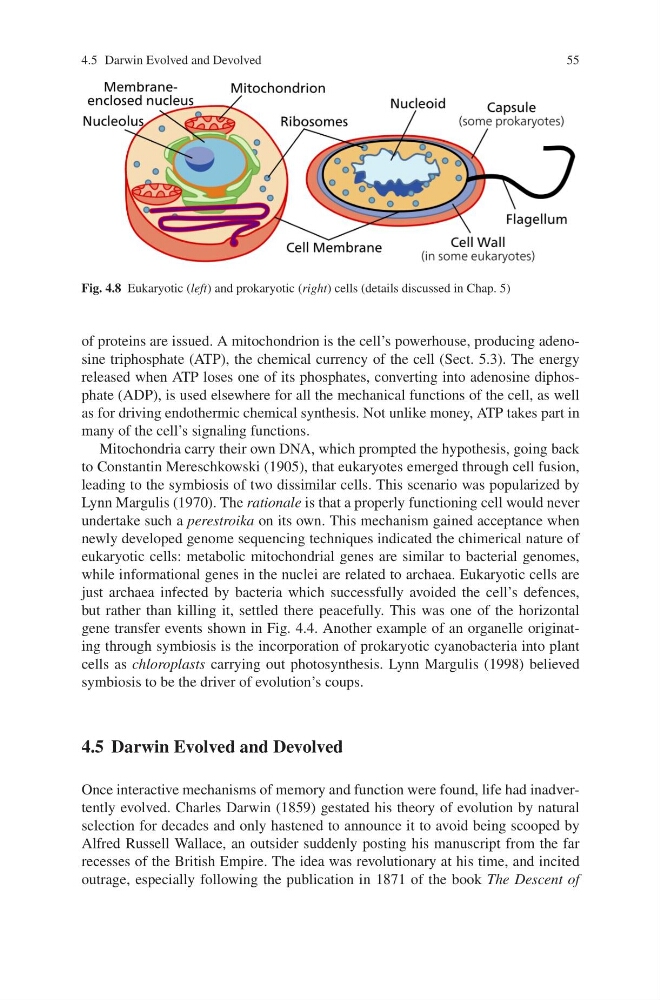
Fig. 4.8 Eukaryotic (left) and prokaryotic (right) cells (details discussed in Chap. 5)
of proteins are issued. A mitochondrion is the cell’s powerhouse, producing adenosine triphosphate (ATP), the chemical currency of the cell (Sect. 5.3). The energy
released when ATP loses one of its phosphates, converting into adenosine diphosphate (ADP), is used elsewhere for all the mechanical functions of the cell, as well
as for driving endothermic chemical synthesis. Not unlike money, ATP takes part in
many of the cell’s signaling functions.
Mitochondria carry their own DNA, which prompted the hypothesis, going back
to Constantin Mereschkowski (1905), that eukaryotes emerged through cell fusion,
leading to the symbiosis of two dissimilar cells. This scenario was popularized by
Lynn Margulis (1970). The rationale is that a properly functioning cell would never
undertake such a perestroika on its own. This mechanism gained acceptance when
newly developed genome sequencing techniques indicated the chimerical nature of
eukaryotic cells: metabolic mitochondrial genes are similar to bacterial genomes,
while informational genes in the nuclei are related to archaea. Eukaryotic cells are
just archaea infected by bacteria which successfully avoided the cell’s defences,
but rather than killing it, settled there peacefully. This was one of the horizontal
gene transfer events shown in Fig. 4.4. Another example of an organelle originating through symbiosis is the incorporation of prokaryotic cyanobacteria into plant
cells as chloroplasts carrying out photosynthesis. Lynn Margulis (1998) believed
symbiosis to be the driver of evolution’s coups.
4.5 Darwin Evolved and Devolved
Once interactive mechanisms of memory and function were found, life had inadvertently evolved. Charles Darwin (1859) gestated his theory of evolution by natural
selection for decades and only hastened to announce it to avoid being scooped by
Alfred Russell Wallace, an outsider suddenly posting his manuscript from the far
recesses of the British Empire. The idea was revolutionary at his time, and incited
outrage, especially following the publication in 1871 of the book The Descent of
55
Fig. 4.8 Eukaryotic (left) and prokaryotic (right) cells (details discussed in Chap. 5)
of proteins are issued. A mitochondrion is the cell’s powerhouse, producing adenosine triphosphate (ATP), the chemical currency of the cell (Sect. 5.3). The energy
released when ATP loses one of its phosphates, converting into adenosine diphosphate (ADP), is used elsewhere for all the mechanical functions of the cell, as well
as for driving endothermic chemical synthesis. Not unlike money, ATP takes part in
many of the cell’s signaling functions.
Mitochondria carry their own DNA, which prompted the hypothesis, going back
to Constantin Mereschkowski (1905), that eukaryotes emerged through cell fusion,
leading to the symbiosis of two dissimilar cells. This scenario was popularized by
Lynn Margulis (1970). The rationale is that a properly functioning cell would never
undertake such a perestroika on its own. This mechanism gained acceptance when
newly developed genome sequencing techniques indicated the chimerical nature of
eukaryotic cells: metabolic mitochondrial genes are similar to bacterial genomes,
while informational genes in the nuclei are related to archaea. Eukaryotic cells are
just archaea infected by bacteria which successfully avoided the cell’s defences,
but rather than killing it, settled there peacefully. This was one of the horizontal
gene transfer events shown in Fig. 4.4. Another example of an organelle originating through symbiosis is the incorporation of prokaryotic cyanobacteria into plant
cells as chloroplasts carrying out photosynthesis. Lynn Margulis (1998) believed
symbiosis to be the driver of evolution’s coups.
4.5 Darwin Evolved and Devolved
Once interactive mechanisms of memory and function were found, life had inadvertently evolved. Charles Darwin (1859) gestated his theory of evolution by natural
selection for decades and only hastened to announce it to avoid being scooped by
Alfred Russell Wallace, an outsider suddenly posting his manuscript from the far
recesses of the British Empire. The idea was revolutionary at his time, and incited
outrage, especially following the publication in 1871 of the book The Descent of