

8.4 Nanotechnology
125
Dispersed phase
Droplets
Continuous
phase
Large droplets
Small
droplets
Small
droplets
Reagent solution
Merged
droplet
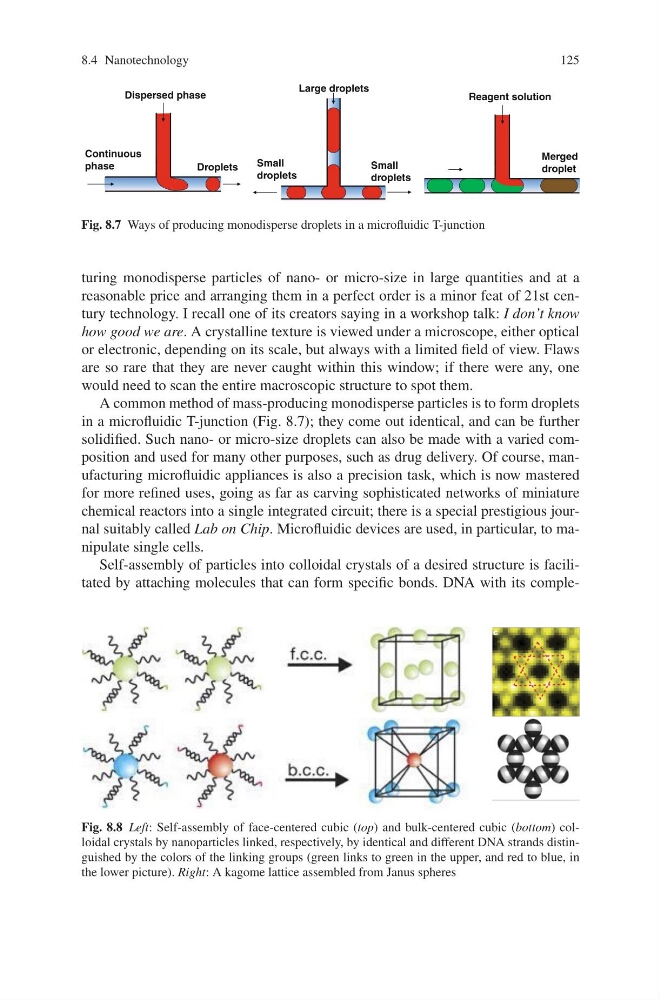
Fig. 8.7 Ways of producing monodisperse droplets in a microfluidic T-junction
turing monodisperse particles of nano- or micro-size in large quantities and at a
reasonable price and arranging them in a perfect order is a minor feat of 21st century technology. I recall one of its creators saying in a workshop talk: I don’t know
how good we are. A crystalline texture is viewed under a microscope, either optical
or electronic, depending on its scale, but always with a limited field of view. Flaws
are so rare that they are never caught within this window; if there were any, one
would need to scan the entire macroscopic structure to spot them.
A common method of mass-producing monodisperse particles is to form droplets
in a microfluidic T-junction (Fig. 8.7); they come out identical, and can be further
solidified. Such nano- or micro-size droplets can also be made with a varied composition and used for many other purposes, such as drug delivery. Of course, manufacturing microfluidic appliances is also a precision task, which is now mastered
for more refined uses, going as far as carving sophisticated networks of miniature
chemical reactors into a single integrated circuit; there is a special prestigious journal suitably called Lab on Chip. Microfluidic devices are used, in particular, to manipulate single cells.
Self-assembly of particles into colloidal crystals of a desired structure is facilitated by attaching molecules that can form specific bonds. DNA with its compleFig. 8.8 Left: Self-assembly of face-centered cubic (top) and bulk-centered cubic (bottom) colloidal crystals by nanoparticles linked, respectively, by identical and different DNA strands distinguished by the colors of the linking groups (green links to green in the upper, and red to blue, in
the lower picture). Right: A kagome lattice assembled from Janus spheres
125
Dispersed phase
Droplets
Continuous
phase
Large droplets
Small
droplets
Small
droplets
Reagent solution
Merged
droplet
Fig. 8.7 Ways of producing monodisperse droplets in a microfluidic T-junction
turing monodisperse particles of nano- or micro-size in large quantities and at a
reasonable price and arranging them in a perfect order is a minor feat of 21st century technology. I recall one of its creators saying in a workshop talk: I don’t know
how good we are. A crystalline texture is viewed under a microscope, either optical
or electronic, depending on its scale, but always with a limited field of view. Flaws
are so rare that they are never caught within this window; if there were any, one
would need to scan the entire macroscopic structure to spot them.
A common method of mass-producing monodisperse particles is to form droplets
in a microfluidic T-junction (Fig. 8.7); they come out identical, and can be further
solidified. Such nano- or micro-size droplets can also be made with a varied composition and used for many other purposes, such as drug delivery. Of course, manufacturing microfluidic appliances is also a precision task, which is now mastered
for more refined uses, going as far as carving sophisticated networks of miniature
chemical reactors into a single integrated circuit; there is a special prestigious journal suitably called Lab on Chip. Microfluidic devices are used, in particular, to manipulate single cells.
Self-assembly of particles into colloidal crystals of a desired structure is facilitated by attaching molecules that can form specific bonds. DNA with its compleFig. 8.8 Left: Self-assembly of face-centered cubic (top) and bulk-centered cubic (bottom) colloidal crystals by nanoparticles linked, respectively, by identical and different DNA strands distinguished by the colors of the linking groups (green links to green in the upper, and red to blue, in
the lower picture). Right: A kagome lattice assembled from Janus spheres