

6.6 Growth and Movements of Plants
103
5VWOR
#WZKP
#WZKP
VTCPURQTV
KPJKDKVQT
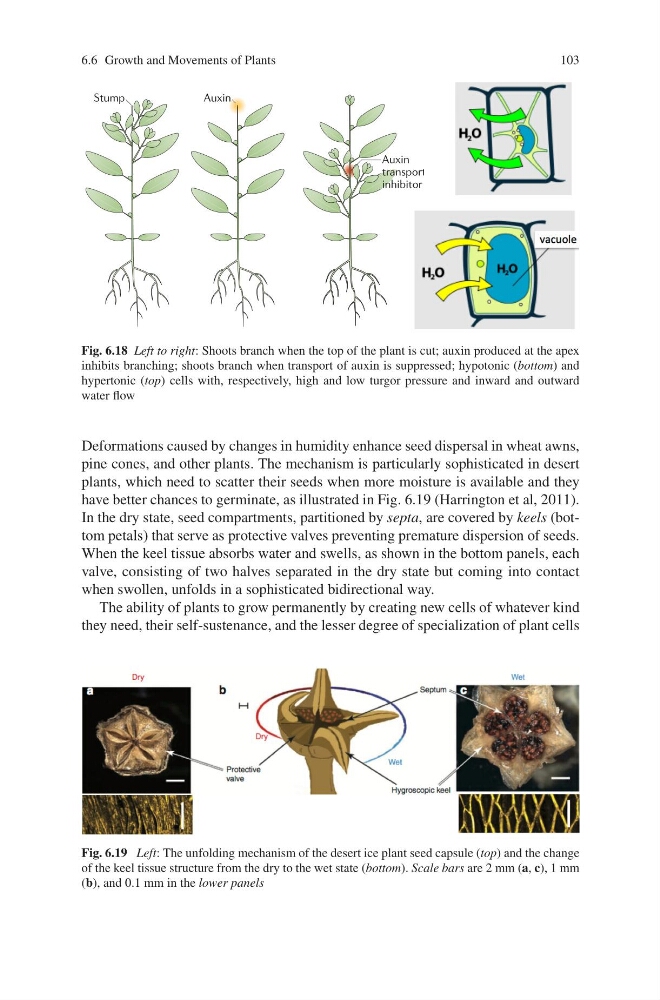
Fig. 6.18 Left to right: Shoots branch when the top of the plant is cut; auxin produced at the apex
inhibits branching; shoots branch when transport of auxin is suppressed; hypotonic (bottom) and
hypertonic (top) cells with, respectively, high and low turgor pressure and inward and outward
water flow
Deformations caused by changes in humidity enhance seed dispersal in wheat awns,
pine cones, and other plants. The mechanism is particularly sophisticated in desert
plants, which need to scatter their seeds when more moisture is available and they
have better chances to germinate, as illustrated in Fig. 6.19 (Harrington et al, 2011).
In the dry state, seed compartments, partitioned by septa, are covered by keels (bottom petals) that serve as protective valves preventing premature dispersion of seeds.
When the keel tissue absorbs water and swells, as shown in the bottom panels, each
valve, consisting of two halves separated in the dry state but coming into contact
when swollen, unfolds in a sophisticated bidirectional way.
The ability of plants to grow permanently by creating new cells of whatever kind
they need, their self-sustenance, and the lesser degree of specialization of plant cells
Fig. 6.19 Left: The unfolding mechanism of the desert ice plant seed capsule (top) and the change
of the keel tissue structure from the dry to the wet state (bottom). Scale bars are 2 mm (a, c), 1 mm
(b), and 0.1 mm in the lower panels
103
5VWOR
#WZKP
#WZKP
VTCPURQTV
KPJKDKVQT
Fig. 6.18 Left to right: Shoots branch when the top of the plant is cut; auxin produced at the apex
inhibits branching; shoots branch when transport of auxin is suppressed; hypotonic (bottom) and
hypertonic (top) cells with, respectively, high and low turgor pressure and inward and outward
water flow
Deformations caused by changes in humidity enhance seed dispersal in wheat awns,
pine cones, and other plants. The mechanism is particularly sophisticated in desert
plants, which need to scatter their seeds when more moisture is available and they
have better chances to germinate, as illustrated in Fig. 6.19 (Harrington et al, 2011).
In the dry state, seed compartments, partitioned by septa, are covered by keels (bottom petals) that serve as protective valves preventing premature dispersion of seeds.
When the keel tissue absorbs water and swells, as shown in the bottom panels, each
valve, consisting of two halves separated in the dry state but coming into contact
when swollen, unfolds in a sophisticated bidirectional way.
The ability of plants to grow permanently by creating new cells of whatever kind
they need, their self-sustenance, and the lesser degree of specialization of plant cells
Fig. 6.19 Left: The unfolding mechanism of the desert ice plant seed capsule (top) and the change
of the keel tissue structure from the dry to the wet state (bottom). Scale bars are 2 mm (a, c), 1 mm
(b), and 0.1 mm in the lower panels