

9.1.4.4 Performance Test
During the development of the control execution system, many ground tests are
needed, and finally the flight test is checked and passed. Taking the comprehensive
utilization of gas turbine energy for the two-stage missile as an example, as shown
in Fig. 9.18, the main performance test items are shown in Fig. 9.19.
Here is a brief overview of the representative feature test items.
(1) Frequency characteristic test and structural resonance test
When the rudder system is working, the sinusoidal excitation of the rudder is used.
If the signal before the integrated amplifier is used as input and the remote sensor
for rudder deflection is used as output, the amplitude and phase–frequency characteristics of the rudder system can be obtained. For the push–pull linkage mechanism of the integral steering gear, the feedback potentiometer is used as the input
signal and the rudder deflection telemetry sensor is used as the output signal to
obtain the amplitude and phase–frequency characteristics of the manipulating
mechanism. If the resonance of the manipulating mechanism is maintained at the
natural vibration point for a certain time, this is the anti-structural resonance test of
the manipulating mechanism. The mechanism and steering arm should be kept
intact after vibration.
(2) Simulated Load Test and System Anti-Counter Manipulation Test
Under the working condition of the rudder system, the rudder is stimulated by
sinusoidal excitation of a certain frequency and amplitude, and a load simulator is
used to impose a linear or constant load on the rudder surface. It is required that the
Battery
Motor
Variable
pump
Oil
filtration
Nitrogen
cylinder
Electric Explosion
Valve
Electric Pump Unit
Pneumatic booster unit
Pneumatic
booster tank
Unidirectional
pump
Self-steering gear
Hydraulic
safety valve
Gas-liquid
accumulator
To steering gear
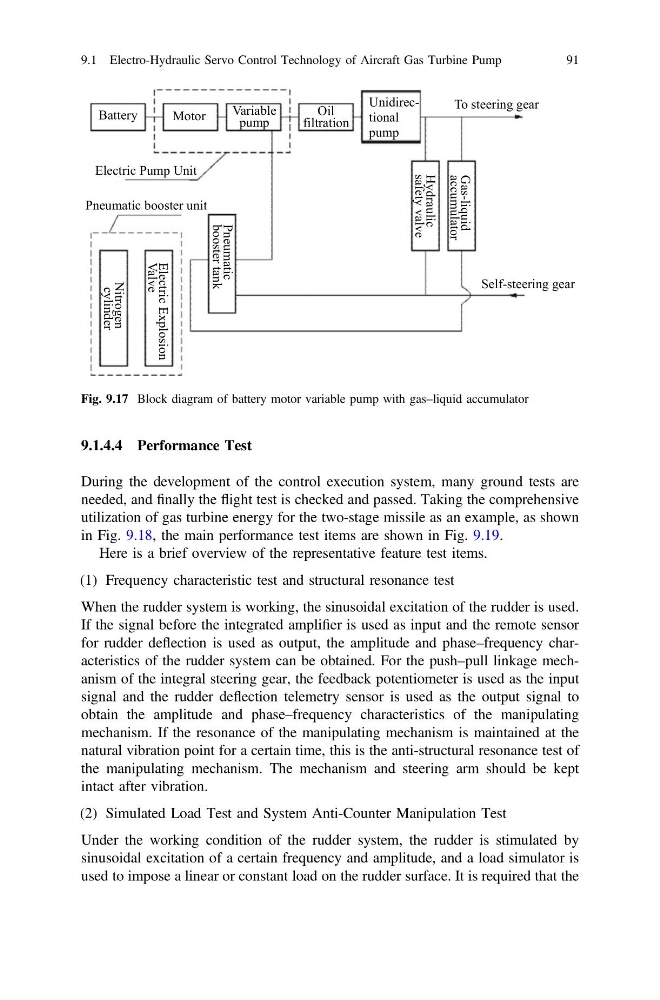
Fig. 9.17 Block diagram of battery motor variable pump with gas–liquid accumulator
9.1 Electro-Hydraulic Servo Control Technology of Aircraft Gas Turbine Pump
91
During the development of the control execution system, many ground tests are
needed, and finally the flight test is checked and passed. Taking the comprehensive
utilization of gas turbine energy for the two-stage missile as an example, as shown
in Fig. 9.18, the main performance test items are shown in Fig. 9.19.
Here is a brief overview of the representative feature test items.
(1) Frequency characteristic test and structural resonance test
When the rudder system is working, the sinusoidal excitation of the rudder is used.
If the signal before the integrated amplifier is used as input and the remote sensor
for rudder deflection is used as output, the amplitude and phase–frequency characteristics of the rudder system can be obtained. For the push–pull linkage mechanism of the integral steering gear, the feedback potentiometer is used as the input
signal and the rudder deflection telemetry sensor is used as the output signal to
obtain the amplitude and phase–frequency characteristics of the manipulating
mechanism. If the resonance of the manipulating mechanism is maintained at the
natural vibration point for a certain time, this is the anti-structural resonance test of
the manipulating mechanism. The mechanism and steering arm should be kept
intact after vibration.
(2) Simulated Load Test and System Anti-Counter Manipulation Test
Under the working condition of the rudder system, the rudder is stimulated by
sinusoidal excitation of a certain frequency and amplitude, and a load simulator is
used to impose a linear or constant load on the rudder surface. It is required that the
Battery
Motor
Variable
pump
Oil
filtration
Nitrogen
cylinder
Electric Explosion
Valve
Electric Pump Unit
Pneumatic booster unit
Pneumatic
booster tank
Unidirectional
pump
Self-steering gear
Hydraulic
safety valve
Gas-liquid
accumulator
To steering gear
Fig. 9.17 Block diagram of battery motor variable pump with gas–liquid accumulator
9.1 Electro-Hydraulic Servo Control Technology of Aircraft Gas Turbine Pump
91