

mycobacterial b-lactamase enzyme [125]. The anti-tubercular activity of carbapenems, i.e., Meropenem, Imipenem, has been of immense interest in recent
years, and some of the carbapenem antibiotics are in clinical trials for the treatment
of TB. These antibiotics targets covalently modify both D,D-transpeptidase enzyme
and Ldt enzymes involved in PG cross-linking. The mechanism of action of carbapenems against Ldt enzymes are well studied, and crystal structure of some of
these antibiotic compounds has been solved and deposited in PDB. The drug forms
a covalent bond with the thiol group of Cys 354/226 present in the active site of
both the Ldt enzymes (Ldt Mt1 & Ldt Mt2 ). Other amino acid residues which stabilize
the binding are His 208/336, Ser 209/337, Met 175/303, Tyr 190/318, His 224/352,
Gly 225/353, and Asn 228/356 of Ldt Mt1 and Ldt Mt2, respectively [46, 47, 126].
The molecular mechanism of binding of Meropenem, a carbapenem class of
antibiotic which is in clinical trials for TB therapy toward Ldt Mt2 , is given in Fig. 7.
Artemisinin: It is an ancient Chinese medicine extracted from sweet wormwood
Artemisia annua and is used to treat malaria. In 2016, Abramovitch et al.
demonstrated the anti-tubercular activity of Artemisinin. The compound targets
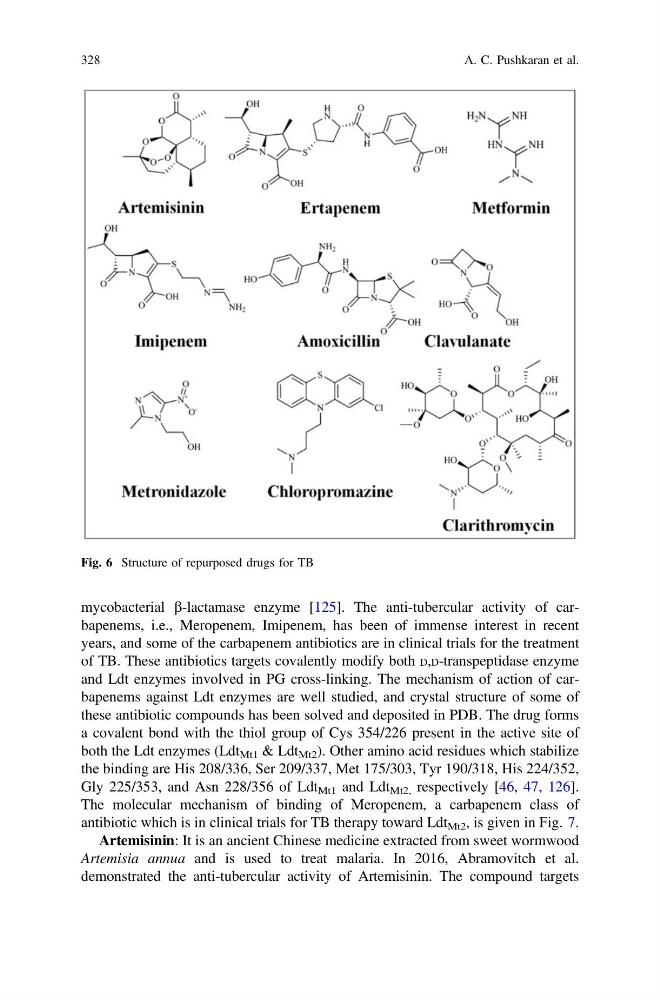
Fig. 6 Structure of repurposed drugs for TB
328
A. C. Pushkaran et al.
years, and some of the carbapenem antibiotics are in clinical trials for the treatment
of TB. These antibiotics targets covalently modify both D,D-transpeptidase enzyme
and Ldt enzymes involved in PG cross-linking. The mechanism of action of carbapenems against Ldt enzymes are well studied, and crystal structure of some of
these antibiotic compounds has been solved and deposited in PDB. The drug forms
a covalent bond with the thiol group of Cys 354/226 present in the active site of
both the Ldt enzymes (Ldt Mt1 & Ldt Mt2 ). Other amino acid residues which stabilize
the binding are His 208/336, Ser 209/337, Met 175/303, Tyr 190/318, His 224/352,
Gly 225/353, and Asn 228/356 of Ldt Mt1 and Ldt Mt2, respectively [46, 47, 126].
The molecular mechanism of binding of Meropenem, a carbapenem class of
antibiotic which is in clinical trials for TB therapy toward Ldt Mt2 , is given in Fig. 7.
Artemisinin: It is an ancient Chinese medicine extracted from sweet wormwood
Artemisia annua and is used to treat malaria. In 2016, Abramovitch et al.
demonstrated the anti-tubercular activity of Artemisinin. The compound targets
Fig. 6 Structure of repurposed drugs for TB
328
A. C. Pushkaran et al.