

(5) Belinostat (also known as PXD-101 or Beleodaq®): Belinostat is another
histone deacetylase (HDAC) inhibitor that gained accelerated approval by the
FDA for the treatment of patients with relapsed or refractory PTCL (peripheral
T cell lymphoma).
Currently, the second generation of epi-drugs is entering clinical trials and holds
more promise because of their greater intrinsic selectivity for the molecular targets
(Table 3):
(1) GSK126: GSK126 has been validated as an histone methyltransferase
(HMT) inhibitor of EZH2 (enhancer of zeste homolog 2). It has shown
promising results in inhibition of DLBCL (diffuse large B cell lymphoma).
(2) C646: C646 is a potent and selective (HAT—histone acetyltransferase) inhibitor
of p300 enzyme, which has proven to be effective against cancer cell growth.
(3) EPZ004777: EPZ004777 is a selective inhibitor of DOT1L (disruptor of
telomeric silencing 1-like), a protein methyltransferase. It has been demonstrated to kill MLL (mixed lineage leukemia) cells in vitro and prolongs survival in an MLL xenograft mouse model.
(4) JQ1: JQ1 is a bromodomain inhibitor for BRD4 (bromodomain-containing 4)
protein. It promotes differentiation, tumor regression, and prolonged survival in
murine models.
(5) UNC669: UNC669 is a potent and selective MBT (malignant brain tumor)
inhibitor for L3MBTL1 (lethal(3)malignant brain tumor-like protein 1).
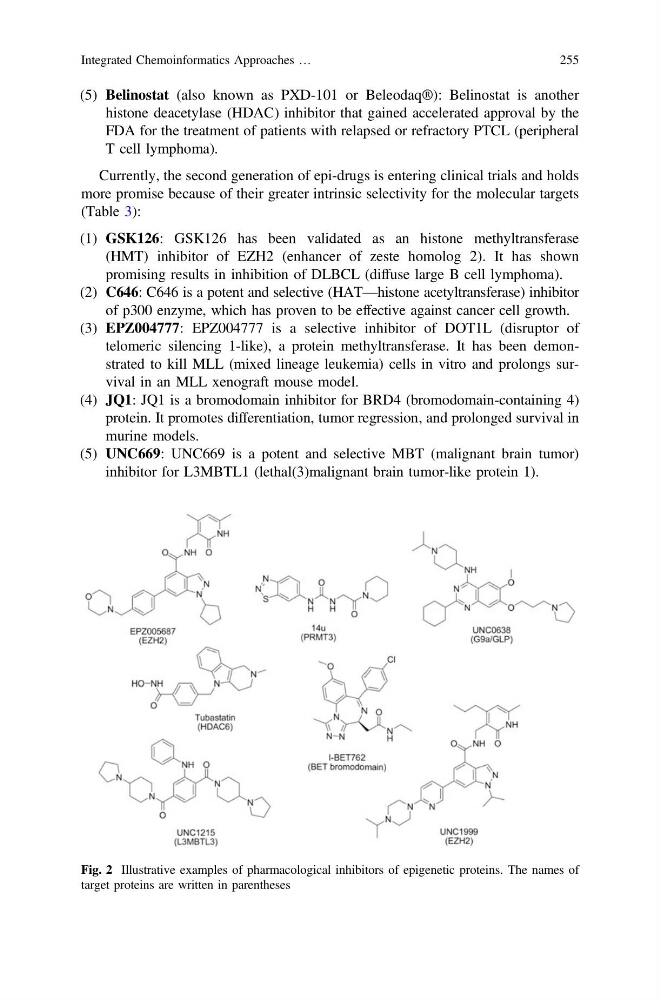
Fig. 2 Illustrative examples of pharmacological inhibitors of epigenetic proteins. The names of
target proteins are written in parentheses
Integrated Chemoinformatics Approaches …
255
histone deacetylase (HDAC) inhibitor that gained accelerated approval by the
FDA for the treatment of patients with relapsed or refractory PTCL (peripheral
T cell lymphoma).
Currently, the second generation of epi-drugs is entering clinical trials and holds
more promise because of their greater intrinsic selectivity for the molecular targets
(Table 3):
(1) GSK126: GSK126 has been validated as an histone methyltransferase
(HMT) inhibitor of EZH2 (enhancer of zeste homolog 2). It has shown
promising results in inhibition of DLBCL (diffuse large B cell lymphoma).
(2) C646: C646 is a potent and selective (HAT—histone acetyltransferase) inhibitor
of p300 enzyme, which has proven to be effective against cancer cell growth.
(3) EPZ004777: EPZ004777 is a selective inhibitor of DOT1L (disruptor of
telomeric silencing 1-like), a protein methyltransferase. It has been demonstrated to kill MLL (mixed lineage leukemia) cells in vitro and prolongs survival in an MLL xenograft mouse model.
(4) JQ1: JQ1 is a bromodomain inhibitor for BRD4 (bromodomain-containing 4)
protein. It promotes differentiation, tumor regression, and prolonged survival in
murine models.
(5) UNC669: UNC669 is a potent and selective MBT (malignant brain tumor)
inhibitor for L3MBTL1 (lethal(3)malignant brain tumor-like protein 1).
Fig. 2 Illustrative examples of pharmacological inhibitors of epigenetic proteins. The names of
target proteins are written in parentheses
Integrated Chemoinformatics Approaches …
255