

Biodiesel
77
The GMD increases with an increase in load. At high loads, more fuel is
consumed in the diffusion mode and hence more particles are formed. With
an increase in the number of particles, coagulation rate increases and hence
larger particles are formed leading to an increase of GMD. Biodiesel blends
favors reduction in soot nuclei and hence particulate number concentration.
However, the coagulation and agglomeration of the small particles to form
larger particles will also be slowed down, leading to an increase of the smaller-sized particles.
3.6.2 engine Durability Studies
Engine-related problems can be studied by conducting an engine test for the
long duration or endurance tests. In general, biodiesel blends up to 5% do
not create engine-related problems. Using higher percentage of biodiesel in
engines, creates problems in injectors because the injectors are designed for
diesel and materials used also are compatible with diesel only. Poor quality
of biodiesel may contain organic acids, water, free glycerol, total glycerol,
and any other contaminants that may polymerize and attack engine components. Fuel injectors are prone to be subjected to injector nozzle clogging
problems. Though most of fuel injector manufacturers/auto manufactures
extend the warranty of parts with the use of biodiesel (B5); it is necessary to
store the biodiesel from extreme temperatures in order to avoid oxidation of
fuel. The common problems observed on engine components with biodiesel
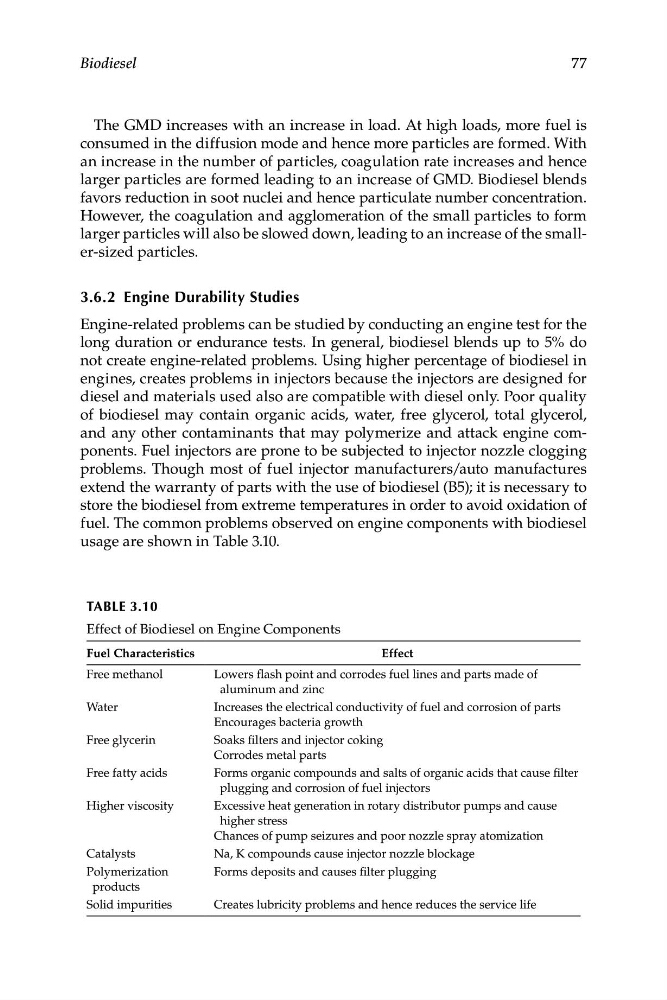
usage are shown in Table 3.10.
TABLe 3.10
Effect of Biodiesel on Engine Components
Fuel Characteristics
Effect
Free methanol
Lowers flash point and corrodes fuel lines and parts made of
aluminum and zinc
Water
Increases the electrical conductivity of fuel and corrosion of parts
Encourages bacteria growth
Free glycerin
Soaks filters and injector coking
Corrodes metal parts
Free fatty acids
Forms organic compounds and salts of organic acids that cause filter
plugging and corrosion of fuel injectors
Higher viscosity
Excessive heat generation in rotary distributor pumps and cause
higher stress
Chances of pump seizures and poor nozzle spray atomization
Catalysts
Na, K compounds cause injector nozzle blockage
Polymerization
Forms deposits and causes filter plugging
products
Solid impurities
Creates lubricity problems and hence reduces the service life
77
The GMD increases with an increase in load. At high loads, more fuel is
consumed in the diffusion mode and hence more particles are formed. With
an increase in the number of particles, coagulation rate increases and hence
larger particles are formed leading to an increase of GMD. Biodiesel blends
favors reduction in soot nuclei and hence particulate number concentration.
However, the coagulation and agglomeration of the small particles to form
larger particles will also be slowed down, leading to an increase of the smaller-sized particles.
3.6.2 engine Durability Studies
Engine-related problems can be studied by conducting an engine test for the
long duration or endurance tests. In general, biodiesel blends up to 5% do
not create engine-related problems. Using higher percentage of biodiesel in
engines, creates problems in injectors because the injectors are designed for
diesel and materials used also are compatible with diesel only. Poor quality
of biodiesel may contain organic acids, water, free glycerol, total glycerol,
and any other contaminants that may polymerize and attack engine components. Fuel injectors are prone to be subjected to injector nozzle clogging
problems. Though most of fuel injector manufacturers/auto manufactures
extend the warranty of parts with the use of biodiesel (B5); it is necessary to
store the biodiesel from extreme temperatures in order to avoid oxidation of
fuel. The common problems observed on engine components with biodiesel
usage are shown in Table 3.10.
TABLe 3.10
Effect of Biodiesel on Engine Components
Fuel Characteristics
Effect
Free methanol
Lowers flash point and corrodes fuel lines and parts made of
aluminum and zinc
Water
Increases the electrical conductivity of fuel and corrosion of parts
Encourages bacteria growth
Free glycerin
Soaks filters and injector coking
Corrodes metal parts
Free fatty acids
Forms organic compounds and salts of organic acids that cause filter
plugging and corrosion of fuel injectors
Higher viscosity
Excessive heat generation in rotary distributor pumps and cause
higher stress
Chances of pump seizures and poor nozzle spray atomization
Catalysts
Na, K compounds cause injector nozzle blockage
Polymerization
Forms deposits and causes filter plugging
products
Solid impurities
Creates lubricity problems and hence reduces the service life