

Anode
Cathode
(–)
(+)
Discharge
Pb + 2H 2 SO 4 + PbO 2
PbSO 4 + 2H 2 O + PbSO 4
Charge
(+)
(–)
Anode
Cathode
307
Electric Vehicles
c. Aluminum–air battery
d. Zinc–air battery
10.3.2.3 Lead–Acid Batteries
The lead–acid battery has been a successful commercial product for over a
century and is still widely used as electrical energy storage devices in the
automotive field and other applications. During discharge, the cathode is positive and the anode negative, and the reverse is the case during charging.
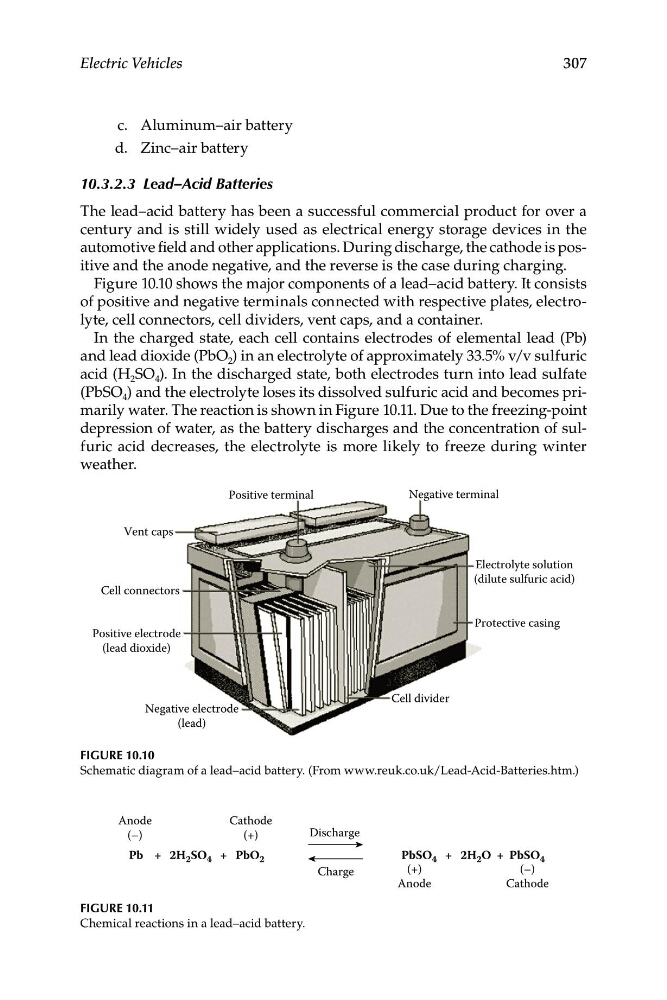
Figure 10.10 shows the major components of a lead–acid battery. It consists
of positive and negative terminals connected with respective plates, electrolyte, cell connectors, cell dividers, vent caps, and a container.
In the charged state, each cell contains electrodes of elemental lead (Pb)
and lead dioxide (PbO 2 ) in an electrolyte of approximately 33.5% v/v sulfuric
acid (H 2 SO 4 ). In the discharged state, both electrodes turn into lead sulfate
(PbSO 4 ) and the electrolyte loses its dissolved sulfuric acid and becomes primarily water. The reaction is shown in Figure 10.11. Due to the freezing-point
depression of water, as the battery discharges and the concentration of sulfuric acid decreases, the electrolyte is more likely to freeze during winter
weather.
Positive terminal
Vent caps
Cell connectors
Positive electrode
(lead dioxide)
Negative electrode
(lead)
Negative terminal
Electrolyte solution
(dilute sulfuric acid)
Protective casing
Cell divider
Figure 10.10
Schematic diagram of a lead–acid battery. (From www.reuk.co.uk/Lead-Acid-Batteries.htm.)
Figure 10.11
Chemical reactions in a lead–acid battery.
Cathode
(–)
(+)
Discharge
Pb + 2H 2 SO 4 + PbO 2
PbSO 4 + 2H 2 O + PbSO 4
Charge
(+)
(–)
Anode
Cathode
307
Electric Vehicles
c. Aluminum–air battery
d. Zinc–air battery
10.3.2.3 Lead–Acid Batteries
The lead–acid battery has been a successful commercial product for over a
century and is still widely used as electrical energy storage devices in the
automotive field and other applications. During discharge, the cathode is positive and the anode negative, and the reverse is the case during charging.
Figure 10.10 shows the major components of a lead–acid battery. It consists
of positive and negative terminals connected with respective plates, electrolyte, cell connectors, cell dividers, vent caps, and a container.
In the charged state, each cell contains electrodes of elemental lead (Pb)
and lead dioxide (PbO 2 ) in an electrolyte of approximately 33.5% v/v sulfuric
acid (H 2 SO 4 ). In the discharged state, both electrodes turn into lead sulfate
(PbSO 4 ) and the electrolyte loses its dissolved sulfuric acid and becomes primarily water. The reaction is shown in Figure 10.11. Due to the freezing-point
depression of water, as the battery discharges and the concentration of sulfuric acid decreases, the electrolyte is more likely to freeze during winter
weather.
Positive terminal
Vent caps
Cell connectors
Positive electrode
(lead dioxide)
Negative electrode
(lead)
Negative terminal
Electrolyte solution
(dilute sulfuric acid)
Protective casing
Cell divider
Figure 10.10
Schematic diagram of a lead–acid battery. (From www.reuk.co.uk/Lead-Acid-Batteries.htm.)
Figure 10.11
Chemical reactions in a lead–acid battery.