

246
P. Volarath et al.
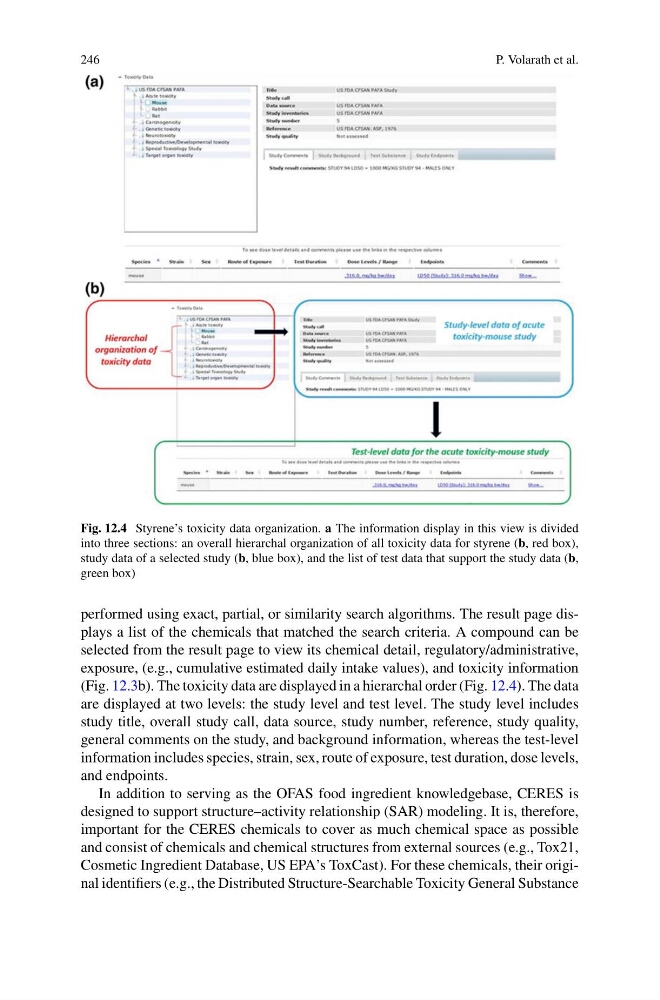
Fig. 12.4 Styrene’s toxicity data organization. a The information display in this view is divided
into three sections: an overall hierarchal organization of all toxicity data for styrene (b, red box),
study data of a selected study (b, blue box), and the list of test data that support the study data (b,
green box)
performed using exact, partial, or similarity search algorithms. The result page displays a list of the chemicals that matched the search criteria. A compound can be
selected from the result page to view its chemical detail, regulatory/administrative,
exposure, (e.g., cumulative estimated daily intake values), and toxicity information
(Fig. 12.3b). The toxicity data are displayed in a hierarchal order (Fig. 12.4). The data
are displayed at two levels: the study level and test level. The study level includes
study title, overall study call, data source, study number, reference, study quality,
general comments on the study, and background information, whereas the test-level
information includes species, strain, sex, route of exposure, test duration, dose levels,
and endpoints.
In addition to serving as the OFAS food ingredient knowledgebase, CERES is
designed to support structure–activity relationship (SAR) modeling. It is, therefore,
important for the CERES chemicals to cover as much chemical space as possible
and consist of chemicals and chemical structures from external sources (e.g., Tox21,
Cosmetic Ingredient Database, US EPA’s ToxCast). For these chemicals, their original identifiers (e.g., the Distributed Structure-Searchable Toxicity General Substance
P. Volarath et al.
Fig. 12.4 Styrene’s toxicity data organization. a The information display in this view is divided
into three sections: an overall hierarchal organization of all toxicity data for styrene (b, red box),
study data of a selected study (b, blue box), and the list of test data that support the study data (b,
green box)
performed using exact, partial, or similarity search algorithms. The result page displays a list of the chemicals that matched the search criteria. A compound can be
selected from the result page to view its chemical detail, regulatory/administrative,
exposure, (e.g., cumulative estimated daily intake values), and toxicity information
(Fig. 12.3b). The toxicity data are displayed in a hierarchal order (Fig. 12.4). The data
are displayed at two levels: the study level and test level. The study level includes
study title, overall study call, data source, study number, reference, study quality,
general comments on the study, and background information, whereas the test-level
information includes species, strain, sex, route of exposure, test duration, dose levels,
and endpoints.
In addition to serving as the OFAS food ingredient knowledgebase, CERES is
designed to support structure–activity relationship (SAR) modeling. It is, therefore,
important for the CERES chemicals to cover as much chemical space as possible
and consist of chemicals and chemical structures from external sources (e.g., Tox21,
Cosmetic Ingredient Database, US EPA’s ToxCast). For these chemicals, their original identifiers (e.g., the Distributed Structure-Searchable Toxicity General Substance