

222
T. Hanser et al.
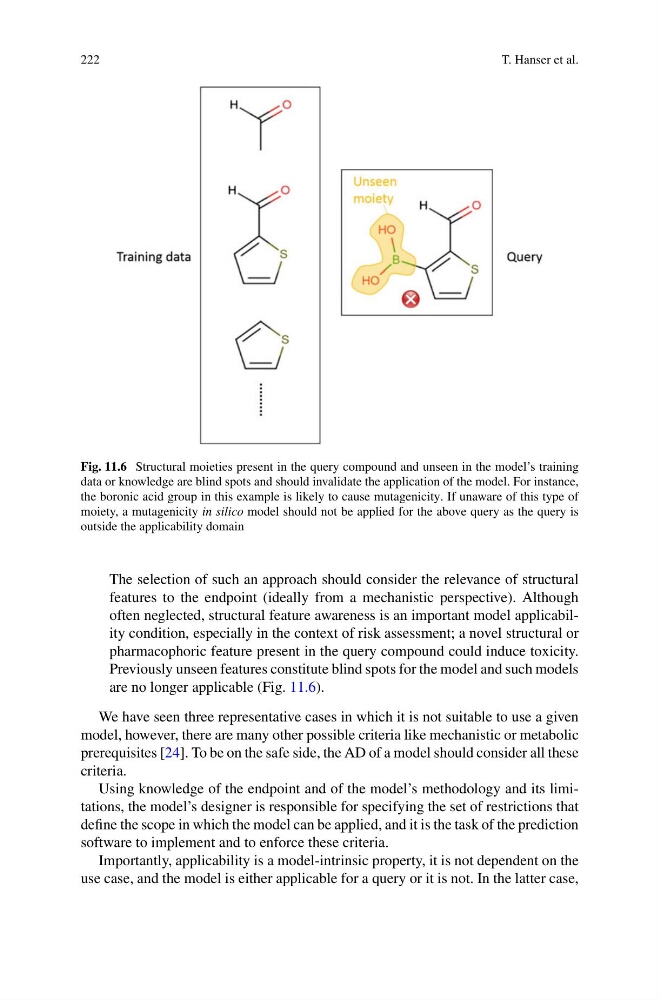
Fig. 11.6 Structural moieties present in the query compound and unseen in the model’s training
data or knowledge are blind spots and should invalidate the application of the model. For instance,
the boronic acid group in this example is likely to cause mutagenicity. If unaware of this type of
moiety, a mutagenicity in silico model should not be applied for the above query as the query is
outside the applicability domain
The selection of such an approach should consider the relevance of structural
features to the endpoint (ideally from a mechanistic perspective). Although
often neglected, structural feature awareness is an important model applicability condition, especially in the context of risk assessment; a novel structural or
pharmacophoric feature present in the query compound could induce toxicity.
Previously unseen features constitute blind spots for the model and such models
are no longer applicable (Fig. 11.6).
We have seen three representative cases in which it is not suitable to use a given
model, however, there are many other possible criteria like mechanistic or metabolic
prerequisites [24]. To be on the safe side, the AD of a model should consider all these
criteria.
Using knowledge of the endpoint and of the model’s methodology and its limitations, the model’s designer is responsible for specifying the set of restrictions that
define the scope in which the model can be applied, and it is the task of the prediction
software to implement and to enforce these criteria.
Importantly, applicability is a model-intrinsic property, it is not dependent on the
use case, and the model is either applicable for a query or it is not. In the latter case,
T. Hanser et al.
Fig. 11.6 Structural moieties present in the query compound and unseen in the model’s training
data or knowledge are blind spots and should invalidate the application of the model. For instance,
the boronic acid group in this example is likely to cause mutagenicity. If unaware of this type of
moiety, a mutagenicity in silico model should not be applied for the above query as the query is
outside the applicability domain
The selection of such an approach should consider the relevance of structural
features to the endpoint (ideally from a mechanistic perspective). Although
often neglected, structural feature awareness is an important model applicability condition, especially in the context of risk assessment; a novel structural or
pharmacophoric feature present in the query compound could induce toxicity.
Previously unseen features constitute blind spots for the model and such models
are no longer applicable (Fig. 11.6).
We have seen three representative cases in which it is not suitable to use a given
model, however, there are many other possible criteria like mechanistic or metabolic
prerequisites [24]. To be on the safe side, the AD of a model should consider all these
criteria.
Using knowledge of the endpoint and of the model’s methodology and its limitations, the model’s designer is responsible for specifying the set of restrictions that
define the scope in which the model can be applied, and it is the task of the prediction
software to implement and to enforce these criteria.
Importantly, applicability is a model-intrinsic property, it is not dependent on the
use case, and the model is either applicable for a query or it is not. In the latter case,