

172
Z. Liu et al.
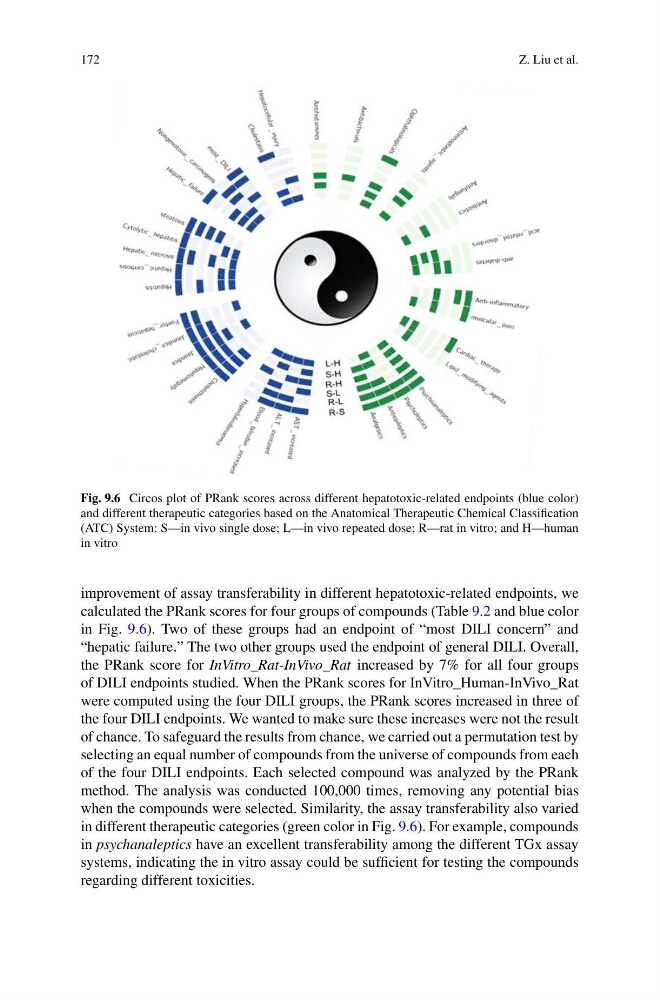
Fig. 9.6 Circos plot of PRank scores across different hepatotoxic-related endpoints (blue color)
and different therapeutic categories based on the Anatomical Therapeutic Chemical Classification
(ATC) System: S—in vivo single dose; L—in vivo repeated dose; R—rat in vitro; and H—human
in vitro
improvement of assay transferability in different hepatotoxic-related endpoints, we
calculated the PRank scores for four groups of compounds (Table 9.2 and blue color
in Fig. 9.6). Two of these groups had an endpoint of “most DILI concern” and
“hepatic failure.” The two other groups used the endpoint of general DILI. Overall,
the PRank score for InVitro_Rat-InVivo_Rat increased by 7% for all four groups
of DILI endpoints studied. When the PRank scores for InVitro_Human-InVivo_Rat
were computed using the four DILI groups, the PRank scores increased in three of
the four DILI endpoints. We wanted to make sure these increases were not the result
of chance. To safeguard the results from chance, we carried out a permutation test by
selecting an equal number of compounds from the universe of compounds from each
of the four DILI endpoints. Each selected compound was analyzed by the PRank
method. The analysis was conducted 100,000 times, removing any potential bias
when the compounds were selected. Similarity, the assay transferability also varied
in different therapeutic categories (green color in Fig. 9.6). For example, compounds
in psychanaleptics have an excellent transferability among the different TGx assay
systems, indicating the in vitro assay could be sufficient for testing the compounds
regarding different toxicities.
Z. Liu et al.
Fig. 9.6 Circos plot of PRank scores across different hepatotoxic-related endpoints (blue color)
and different therapeutic categories based on the Anatomical Therapeutic Chemical Classification
(ATC) System: S—in vivo single dose; L—in vivo repeated dose; R—rat in vitro; and H—human
in vitro
improvement of assay transferability in different hepatotoxic-related endpoints, we
calculated the PRank scores for four groups of compounds (Table 9.2 and blue color
in Fig. 9.6). Two of these groups had an endpoint of “most DILI concern” and
“hepatic failure.” The two other groups used the endpoint of general DILI. Overall,
the PRank score for InVitro_Rat-InVivo_Rat increased by 7% for all four groups
of DILI endpoints studied. When the PRank scores for InVitro_Human-InVivo_Rat
were computed using the four DILI groups, the PRank scores increased in three of
the four DILI endpoints. We wanted to make sure these increases were not the result
of chance. To safeguard the results from chance, we carried out a permutation test by
selecting an equal number of compounds from the universe of compounds from each
of the four DILI endpoints. Each selected compound was analyzed by the PRank
method. The analysis was conducted 100,000 times, removing any potential bias
when the compounds were selected. Similarity, the assay transferability also varied
in different therapeutic categories (green color in Fig. 9.6). For example, compounds
in psychanaleptics have an excellent transferability among the different TGx assay
systems, indicating the in vitro assay could be sufficient for testing the compounds
regarding different toxicities.