

170
Z. Liu et al.
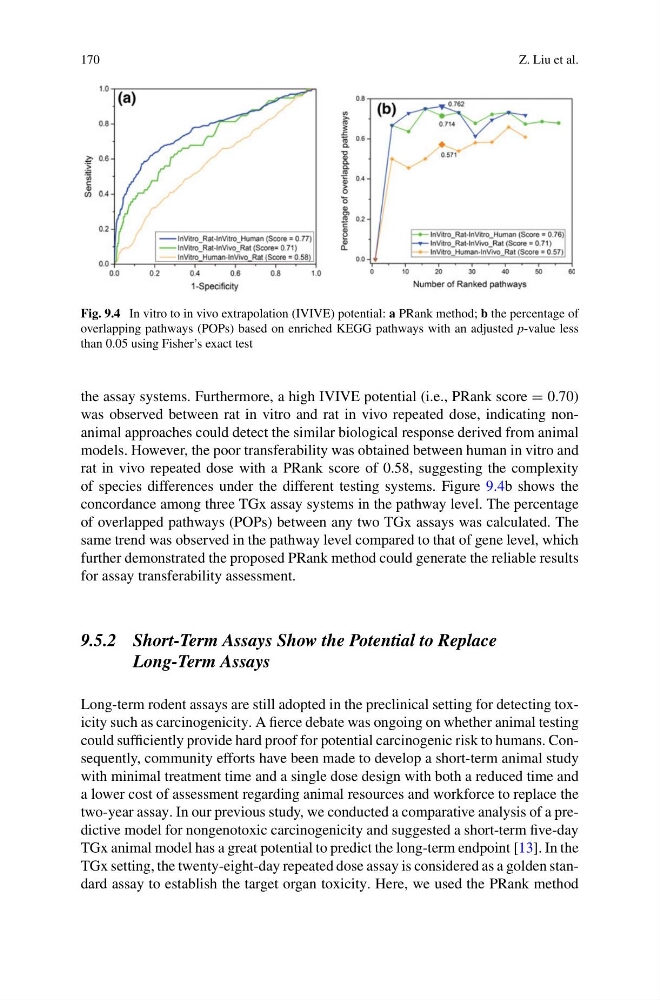
Fig. 9.4 In vitro to in vivo extrapolation (IVIVE) potential: a PRank method; b the percentage of
overlapping pathways (POPs) based on enriched KEGG pathways with an adjusted p-value less
than 0.05 using Fisher’s exact test
the assay systems. Furthermore, a high IVIVE potential (i.e., PRank score = 0.70)
was observed between rat in vitro and rat in vivo repeated dose, indicating nonanimal approaches could detect the similar biological response derived from animal
models. However, the poor transferability was obtained between human in vitro and
rat in vivo repeated dose with a PRank score of 0.58, suggesting the complexity
of species differences under the different testing systems. Figure 9.4b shows the
concordance among three TGx assay systems in the pathway level. The percentage
of overlapped pathways (POPs) between any two TGx assays was calculated. The
same trend was observed in the pathway level compared to that of gene level, which
further demonstrated the proposed PRank method could generate the reliable results
for assay transferability assessment.
9.5.2 Short-Term Assays Show the Potential to Replace
Long-Term Assays
Long-term rodent assays are still adopted in the preclinical setting for detecting toxicity such as carcinogenicity. A fierce debate was ongoing on whether animal testing
could sufficiently provide hard proof for potential carcinogenic risk to humans. Consequently, community efforts have been made to develop a short-term animal study
with minimal treatment time and a single dose design with both a reduced time and
a lower cost of assessment regarding animal resources and workforce to replace the
two-year assay. In our previous study, we conducted a comparative analysis of a predictive model for nongenotoxic carcinogenicity and suggested a short-term five-day
TGx animal model has a great potential to predict the long-term endpoint [13]. In the
TGx setting, the twenty-eight-day repeated dose assay is considered as a golden standard assay to establish the target organ toxicity. Here, we used the PRank method
Z. Liu et al.
Fig. 9.4 In vitro to in vivo extrapolation (IVIVE) potential: a PRank method; b the percentage of
overlapping pathways (POPs) based on enriched KEGG pathways with an adjusted p-value less
than 0.05 using Fisher’s exact test
the assay systems. Furthermore, a high IVIVE potential (i.e., PRank score = 0.70)
was observed between rat in vitro and rat in vivo repeated dose, indicating nonanimal approaches could detect the similar biological response derived from animal
models. However, the poor transferability was obtained between human in vitro and
rat in vivo repeated dose with a PRank score of 0.58, suggesting the complexity
of species differences under the different testing systems. Figure 9.4b shows the
concordance among three TGx assay systems in the pathway level. The percentage
of overlapped pathways (POPs) between any two TGx assays was calculated. The
same trend was observed in the pathway level compared to that of gene level, which
further demonstrated the proposed PRank method could generate the reliable results
for assay transferability assessment.
9.5.2 Short-Term Assays Show the Potential to Replace
Long-Term Assays
Long-term rodent assays are still adopted in the preclinical setting for detecting toxicity such as carcinogenicity. A fierce debate was ongoing on whether animal testing
could sufficiently provide hard proof for potential carcinogenic risk to humans. Consequently, community efforts have been made to develop a short-term animal study
with minimal treatment time and a single dose design with both a reduced time and
a lower cost of assessment regarding animal resources and workforce to replace the
two-year assay. In our previous study, we conducted a comparative analysis of a predictive model for nongenotoxic carcinogenicity and suggested a short-term five-day
TGx animal model has a great potential to predict the long-term endpoint [13]. In the
TGx setting, the twenty-eight-day repeated dose assay is considered as a golden standard assay to establish the target organ toxicity. Here, we used the PRank method