

124
G. Idakwo et al.
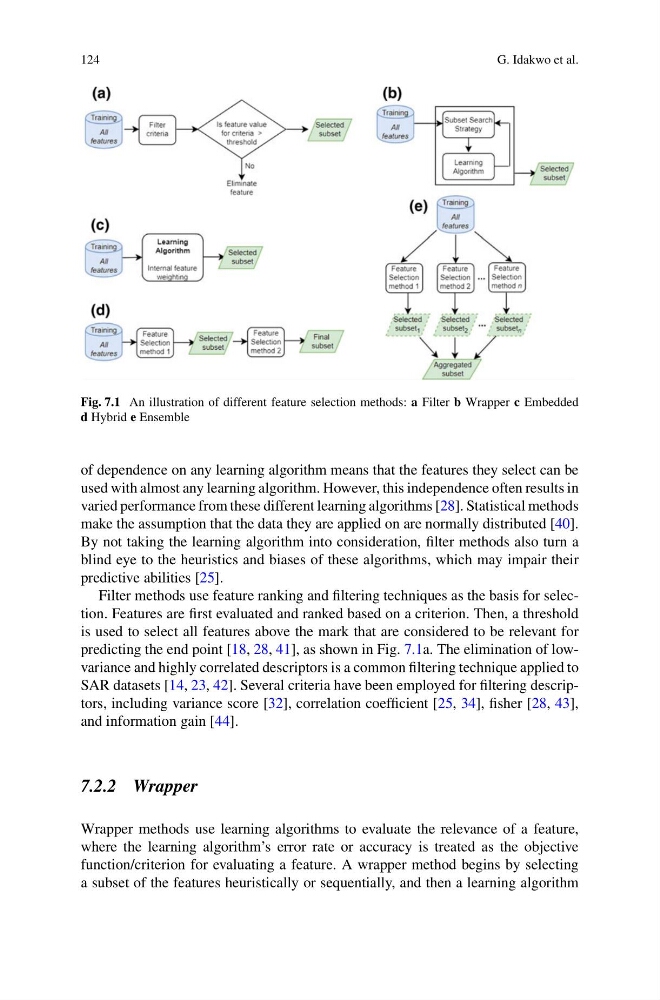
Fig. 7.1 An illustration of different feature selection methods: a Filter b Wrapper c Embedded
d Hybrid e Ensemble
of dependence on any learning algorithm means that the features they select can be
used with almost any learning algorithm. However, this independence often results in
varied performance from these different learning algorithms [28]. Statistical methods
make the assumption that the data they are applied on are normally distributed [40].
By not taking the learning algorithm into consideration, filter methods also turn a
blind eye to the heuristics and biases of these algorithms, which may impair their
predictive abilities [25].
Filter methods use feature ranking and filtering techniques as the basis for selection. Features are first evaluated and ranked based on a criterion. Then, a threshold
is used to select all features above the mark that are considered to be relevant for
predicting the end point [18, 28, 41], as shown in Fig. 7.1a. The elimination of lowvariance and highly correlated descriptors is a common filtering technique applied to
SAR datasets [14, 23, 42]. Several criteria have been employed for filtering descriptors, including variance score [32], correlation coefficient [25, 34], fisher [28, 43],
and information gain [44].
7.2.2 Wrapper
Wrapper methods use learning algorithms to evaluate the relevance of a feature,
where the learning algorithm’s error rate or accuracy is treated as the objective
function/criterion for evaluating a feature. A wrapper method begins by selecting
a subset of the features heuristically or sequentially, and then a learning algorithm
G. Idakwo et al.
Fig. 7.1 An illustration of different feature selection methods: a Filter b Wrapper c Embedded
d Hybrid e Ensemble
of dependence on any learning algorithm means that the features they select can be
used with almost any learning algorithm. However, this independence often results in
varied performance from these different learning algorithms [28]. Statistical methods
make the assumption that the data they are applied on are normally distributed [40].
By not taking the learning algorithm into consideration, filter methods also turn a
blind eye to the heuristics and biases of these algorithms, which may impair their
predictive abilities [25].
Filter methods use feature ranking and filtering techniques as the basis for selection. Features are first evaluated and ranked based on a criterion. Then, a threshold
is used to select all features above the mark that are considered to be relevant for
predicting the end point [18, 28, 41], as shown in Fig. 7.1a. The elimination of lowvariance and highly correlated descriptors is a common filtering technique applied to
SAR datasets [14, 23, 42]. Several criteria have been employed for filtering descriptors, including variance score [32], correlation coefficient [25, 34], fisher [28, 43],
and information gain [44].
7.2.2 Wrapper
Wrapper methods use learning algorithms to evaluate the relevance of a feature,
where the learning algorithm’s error rate or accuracy is treated as the objective
function/criterion for evaluating a feature. A wrapper method begins by selecting
a subset of the features heuristically or sequentially, and then a learning algorithm