

10 Tube Hydro-Forming Process Design Based …
121
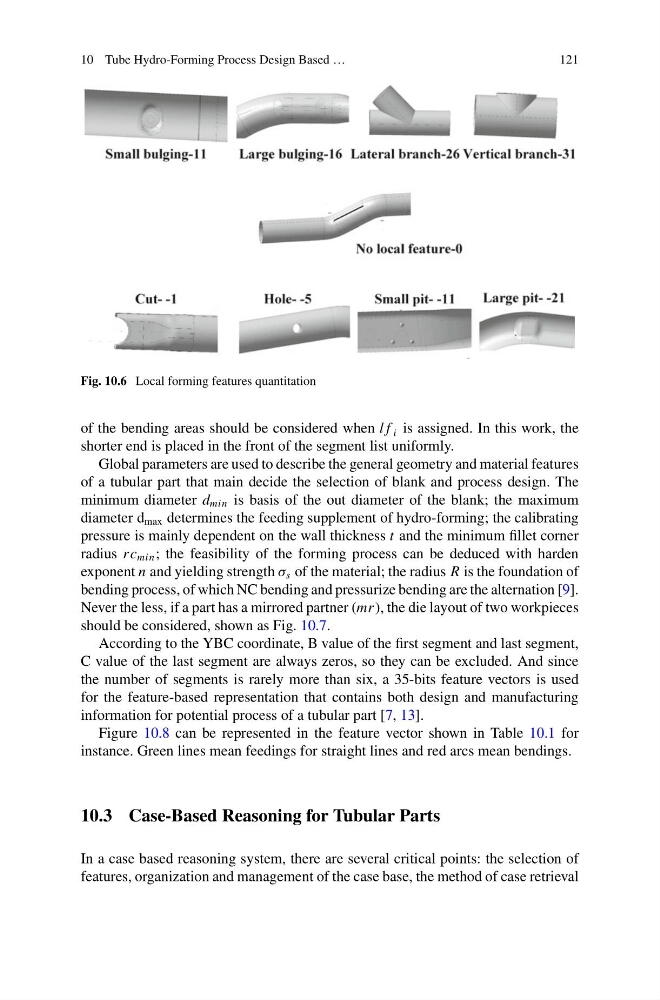
Fig. 10.6 Local forming features quantitation
of the bending areas should be considered when l f i is assigned. In this work, the
shorter end is placed in the front of the segment list uniformly.
Global parameters are used to describe the general geometry and material features
of a tubular part that main decide the selection of blank and process design. The
minimum diameter d min is basis of the out diameter of the blank; the maximum
diameter d max determines the feeding supplement of hydro-forming; the calibrating
pressure is mainly dependent on the wall thickness t and the minimum fillet corner
radius rc min ; the feasibility of the forming process can be deduced with harden
exponent n and yielding strength σ s of the material; the radius R is the foundation of
bending process, of which NC bending and pressurize bending are the alternation [9].
Never the less, if a part has a mirrored partner (mr), the die layout of two workpieces
should be considered, shown as Fig. 10.7.
According to the YBC coordinate, B value of the first segment and last segment,
C value of the last segment are always zeros, so they can be excluded. And since
the number of segments is rarely more than six, a 35-bits feature vectors is used
for the feature-based representation that contains both design and manufacturing
information for potential process of a tubular part [7, 13].
Figure 10.8 can be represented in the feature vector shown in Table 10.1 for
instance. Green lines mean feedings for straight lines and red arcs mean bendings.
10.3 Case-Based Reasoning for Tubular Parts
In a case based reasoning system, there are several critical points: the selection of
features, organization and management of the case base, the method of case retrieval
121
Fig. 10.6 Local forming features quantitation
of the bending areas should be considered when l f i is assigned. In this work, the
shorter end is placed in the front of the segment list uniformly.
Global parameters are used to describe the general geometry and material features
of a tubular part that main decide the selection of blank and process design. The
minimum diameter d min is basis of the out diameter of the blank; the maximum
diameter d max determines the feeding supplement of hydro-forming; the calibrating
pressure is mainly dependent on the wall thickness t and the minimum fillet corner
radius rc min ; the feasibility of the forming process can be deduced with harden
exponent n and yielding strength σ s of the material; the radius R is the foundation of
bending process, of which NC bending and pressurize bending are the alternation [9].
Never the less, if a part has a mirrored partner (mr), the die layout of two workpieces
should be considered, shown as Fig. 10.7.
According to the YBC coordinate, B value of the first segment and last segment,
C value of the last segment are always zeros, so they can be excluded. And since
the number of segments is rarely more than six, a 35-bits feature vectors is used
for the feature-based representation that contains both design and manufacturing
information for potential process of a tubular part [7, 13].
Figure 10.8 can be represented in the feature vector shown in Table 10.1 for
instance. Green lines mean feedings for straight lines and red arcs mean bendings.
10.3 Case-Based Reasoning for Tubular Parts
In a case based reasoning system, there are several critical points: the selection of
features, organization and management of the case base, the method of case retrieval