

while I was ‘up’ at Penn. His connection with the Le Rossignols was much
stronger than others I met that day. For example, he had been a neighbour for
at least ten years before Robert died, he was a Trustee
6 of the Fellowship
when the flatlets opened in 1967 (Plate 19.4), he was a scientist—a mathematician and a physicist—and he was also a beneficiary in Robert’s Will.
Arriving at Dr Sims’ home at the agreed time, I was taken to a first-floor
sitting room to meet with him. In his nineties, but alert and most welcoming,
he began ‘Well … what do you want to know?’ which I took as my ‘cue’ to
provide him with what I knew—and didn’t know—of Robert’s life at the
time. Having discovered that Dr Sims had a scientific background, I had
previously sent him a copy of the English version of the 1913 Haber-Le
Rossignol paper
7 and this formed the basis of my discussion of the discovery
of ‘fixation’. To emphasise the importance of Haber, I brought a number of
biographies
8 with me, and kneeling on the floor besides Dr. Sims
9 I took
these from my back-pack and laid them out for him to pore over. After
looking at the photographs for a while, he was quite unequivocal about Haber
‘Unpleasant looking man! …’. Fritz was clearly off to a bad start, but my first
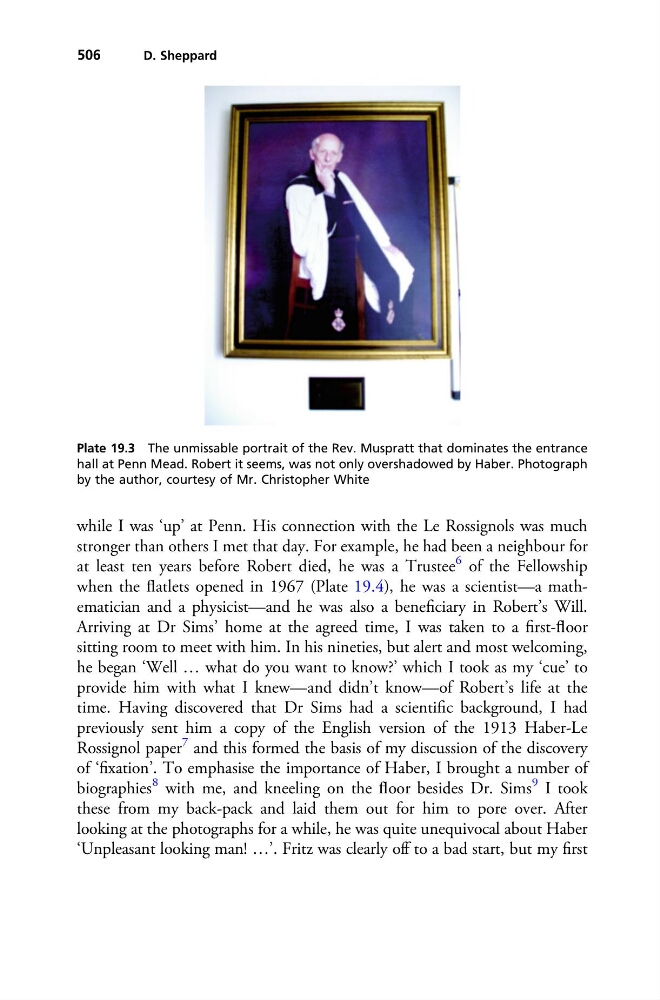
Plate 19.3 The unmissable portrait of the Rev. Muspratt that dominates the entrance
hall at Penn Mead. Robert it seems, was not only overshadowed by Haber. Photograph
by the author, courtesy of Mr. Christopher White
506
D. Sheppard
stronger than others I met that day. For example, he had been a neighbour for
at least ten years before Robert died, he was a Trustee
6 of the Fellowship
when the flatlets opened in 1967 (Plate 19.4), he was a scientist—a mathematician and a physicist—and he was also a beneficiary in Robert’s Will.
Arriving at Dr Sims’ home at the agreed time, I was taken to a first-floor
sitting room to meet with him. In his nineties, but alert and most welcoming,
he began ‘Well … what do you want to know?’ which I took as my ‘cue’ to
provide him with what I knew—and didn’t know—of Robert’s life at the
time. Having discovered that Dr Sims had a scientific background, I had
previously sent him a copy of the English version of the 1913 Haber-Le
Rossignol paper
7 and this formed the basis of my discussion of the discovery
of ‘fixation’. To emphasise the importance of Haber, I brought a number of
biographies
8 with me, and kneeling on the floor besides Dr. Sims
9 I took
these from my back-pack and laid them out for him to pore over. After
looking at the photographs for a while, he was quite unequivocal about Haber
‘Unpleasant looking man! …’. Fritz was clearly off to a bad start, but my first
Plate 19.3 The unmissable portrait of the Rev. Muspratt that dominates the entrance
hall at Penn Mead. Robert it seems, was not only overshadowed by Haber. Photograph
by the author, courtesy of Mr. Christopher White
506
D. Sheppard