

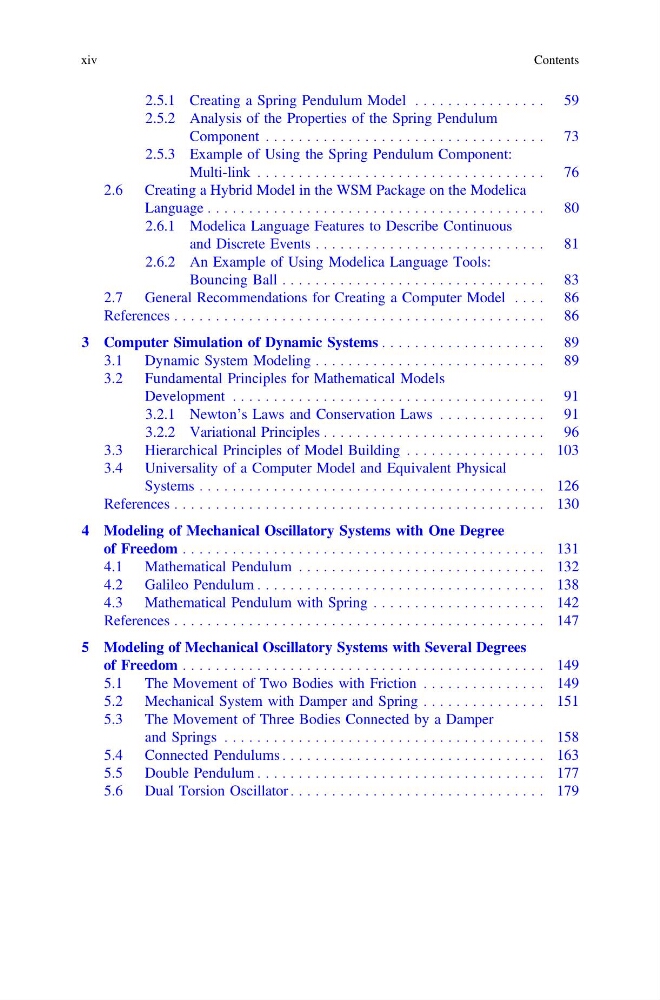
2.5.1 Creating a Spring Pendulum Model . . . . . . . . . . . . . . . . 59
2.5.2 Analysis of the Properties of the Spring Pendulum
Component . . . . . . . . . . . . . . . . . . . . . . . . . . . . . . . . . . 73
2.5.3 Example of Using the Spring Pendulum Component:
Multi-link . . . . . . . . . . . . . . . . . . . . . . . . . . . . . . . . . . . 76
2.6 Creating a Hybrid Model in the WSM Package on the Modelica
Language . . . . . . . . . . . . . . . . . . . . . . . . . . . . . . . . . . . . . . . . . 80
2.6.1 Modelica Language Features to Describe Continuous
and Discrete Events . . . . . . . . . . . . . . . . . . . . . . . . . . . . 81
2.6.2 An Example of Using Modelica Language Tools:
Bouncing Ball . . . . . . . . . . . . . . . . . . . . . . . . . . . . . . . . 83
2.7 General Recommendations for Creating a Computer Model . . . . 86
References . . . . . . . . . . . . . . . . . . . . . . . . . . . . . . . . . . . . . . . . . . . . . 86
3 Computer Simulation of Dynamic Systems . . . . . . . . . . . . . . . . . . . . 89
3.1 Dynamic System Modeling . . . . . . . . . . . . . . . . . . . . . . . . . . . . 89
3.2 Fundamental Principles for Mathematical Models
Development . . . . . . . . . . . . . . . . . . . . . . . . . . . . . . . . . . . . . . 91
3.2.1 Newton’s Laws and Conservation Laws . . . . . . . . . . . . . 91
3.2.2 Variational Principles . . . . . . . . . . . . . . . . . . . . . . . . . . . 96
3.3 Hierarchical Principles of Model Building . . . . . . . . . . . . . . . . . 103
3.4 Universality of a Computer Model and Equivalent Physical
Systems . . . . . . . . . . . . . . . . . . . . . . . . . . . . . . . . . . . . . . . . . . 126
References . . . . . . . . . . . . . . . . . . . . . . . . . . . . . . . . . . . . . . . . . . . . . 130
4 Modeling of Mechanical Oscillatory Systems with One Degree
of Freedom . . . . . . . . . . . . . . . . . . . . . . . . . . . . . . . . . . . . . . . . . . . . 131
4.1 Mathematical Pendulum . . . . . . . . . . . . . . . . . . . . . . . . . . . . . . 132
4.2 Galileo Pendulum . . . . . . . . . . . . . . . . . . . . . . . . . . . . . . . . . . . 138
4.3 Mathematical Pendulum with Spring . . . . . . . . . . . . . . . . . . . . . 142
References . . . . . . . . . . . . . . . . . . . . . . . . . . . . . . . . . . . . . . . . . . . . . 147
5 Modeling of Mechanical Oscillatory Systems with Several Degrees
of Freedom . . . . . . . . . . . . . . . . . . . . . . . . . . . . . . . . . . . . . . . . . . . . 149
5.1 The Movement of Two Bodies with Friction . . . . . . . . . . . . . . . 149
5.2 Mechanical System with Damper and Spring . . . . . . . . . . . . . . . 151
5.3 The Movement of Three Bodies Connected by a Damper
and Springs . . . . . . . . . . . . . . . . . . . . . . . . . . . . . . . . . . . . . . . 158
5.4 Connected Pendulums . . . . . . . . . . . . . . . . . . . . . . . . . . . . . . . . 163
5.5 Double Pendulum . . . . . . . . . . . . . . . . . . . . . . . . . . . . . . . . . . . 177
5.6 Dual Torsion Oscillator . . . . . . . . . . . . . . . . . . . . . . . . . . . . . . . 179
xiv
Contents
2.5.2 Analysis of the Properties of the Spring Pendulum
Component . . . . . . . . . . . . . . . . . . . . . . . . . . . . . . . . . . 73
2.5.3 Example of Using the Spring Pendulum Component:
Multi-link . . . . . . . . . . . . . . . . . . . . . . . . . . . . . . . . . . . 76
2.6 Creating a Hybrid Model in the WSM Package on the Modelica
Language . . . . . . . . . . . . . . . . . . . . . . . . . . . . . . . . . . . . . . . . . 80
2.6.1 Modelica Language Features to Describe Continuous
and Discrete Events . . . . . . . . . . . . . . . . . . . . . . . . . . . . 81
2.6.2 An Example of Using Modelica Language Tools:
Bouncing Ball . . . . . . . . . . . . . . . . . . . . . . . . . . . . . . . . 83
2.7 General Recommendations for Creating a Computer Model . . . . 86
References . . . . . . . . . . . . . . . . . . . . . . . . . . . . . . . . . . . . . . . . . . . . . 86
3 Computer Simulation of Dynamic Systems . . . . . . . . . . . . . . . . . . . . 89
3.1 Dynamic System Modeling . . . . . . . . . . . . . . . . . . . . . . . . . . . . 89
3.2 Fundamental Principles for Mathematical Models
Development . . . . . . . . . . . . . . . . . . . . . . . . . . . . . . . . . . . . . . 91
3.2.1 Newton’s Laws and Conservation Laws . . . . . . . . . . . . . 91
3.2.2 Variational Principles . . . . . . . . . . . . . . . . . . . . . . . . . . . 96
3.3 Hierarchical Principles of Model Building . . . . . . . . . . . . . . . . . 103
3.4 Universality of a Computer Model and Equivalent Physical
Systems . . . . . . . . . . . . . . . . . . . . . . . . . . . . . . . . . . . . . . . . . . 126
References . . . . . . . . . . . . . . . . . . . . . . . . . . . . . . . . . . . . . . . . . . . . . 130
4 Modeling of Mechanical Oscillatory Systems with One Degree
of Freedom . . . . . . . . . . . . . . . . . . . . . . . . . . . . . . . . . . . . . . . . . . . . 131
4.1 Mathematical Pendulum . . . . . . . . . . . . . . . . . . . . . . . . . . . . . . 132
4.2 Galileo Pendulum . . . . . . . . . . . . . . . . . . . . . . . . . . . . . . . . . . . 138
4.3 Mathematical Pendulum with Spring . . . . . . . . . . . . . . . . . . . . . 142
References . . . . . . . . . . . . . . . . . . . . . . . . . . . . . . . . . . . . . . . . . . . . . 147
5 Modeling of Mechanical Oscillatory Systems with Several Degrees
of Freedom . . . . . . . . . . . . . . . . . . . . . . . . . . . . . . . . . . . . . . . . . . . . 149
5.1 The Movement of Two Bodies with Friction . . . . . . . . . . . . . . . 149
5.2 Mechanical System with Damper and Spring . . . . . . . . . . . . . . . 151
5.3 The Movement of Three Bodies Connected by a Damper
and Springs . . . . . . . . . . . . . . . . . . . . . . . . . . . . . . . . . . . . . . . 158
5.4 Connected Pendulums . . . . . . . . . . . . . . . . . . . . . . . . . . . . . . . . 163
5.5 Double Pendulum . . . . . . . . . . . . . . . . . . . . . . . . . . . . . . . . . . . 177
5.6 Dual Torsion Oscillator . . . . . . . . . . . . . . . . . . . . . . . . . . . . . . . 179
xiv
Contents