

214
7 Nanomaterials for Supercapacitors
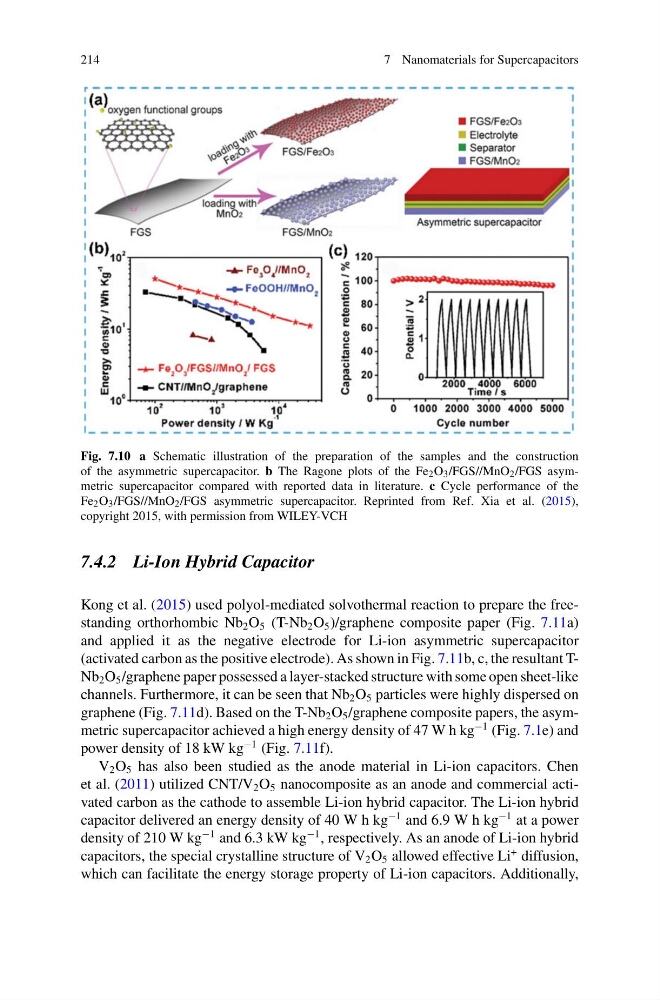
Fig. 7.10 a Schematic illustration of the preparation of the samples and the construction
of the asymmetric supercapacitor. b The Ragone plots of the Fe 2 O 3 /FGS//MnO 2 /FGS asymmetric supercapacitor compared with reported data in literature. c Cycle performance of the
Fe 2 O 3 /FGS//MnO 2 /FGS asymmetric supercapacitor. Reprinted from Ref. Xia et al. (2015),
copyright 2015, with permission from WILEY-VCH
7.4.2 Li-Ion Hybrid Capacitor
Kong et al. (2015) used polyol-mediated solvothermal reaction to prepare the freestanding orthorhombic Nb 2 O 5 (T-Nb 2 O 5 )/graphene composite paper (Fig. 7.11a)
and applied it as the negative electrode for Li-ion asymmetric supercapacitor
(activated carbon as the positive electrode). As shown in Fig. 7.11b, c, the resultant TNb 2 O 5 /graphene paper possessed a layer-stacked structure with some open sheet-like
channels. Furthermore, it can be seen that Nb 2 O 5 particles were highly dispersed on
graphene (Fig. 7.11d). Based on the T-Nb 2 O 5 /graphene composite papers, the asymmetric supercapacitor achieved a high energy density of 47 W h kg
−1 (Fig. 7.1e) and
power density of 18 kW kg
−1 (Fig. 7.11f).
V 2 O 5 has also been studied as the anode material in Li-ion capacitors. Chen
et al. (2011) utilized CNT/V 2 O 5 nanocomposite as an anode and commercial activated carbon as the cathode to assemble Li-ion hybrid capacitor. The Li-ion hybrid
capacitor delivered an energy density of 40 W h kg
−1 and 6.9 W h kg
−1 at a power
density of 210 W kg
−1 and 6.3 kW kg
−1 , respectively. As an anode of Li-ion hybrid
capacitors, the special crystalline structure of V 2 O 5 allowed effective Li
+ diffusion,
which can facilitate the energy storage property of Li-ion capacitors. Additionally,
7 Nanomaterials for Supercapacitors
Fig. 7.10 a Schematic illustration of the preparation of the samples and the construction
of the asymmetric supercapacitor. b The Ragone plots of the Fe 2 O 3 /FGS//MnO 2 /FGS asymmetric supercapacitor compared with reported data in literature. c Cycle performance of the
Fe 2 O 3 /FGS//MnO 2 /FGS asymmetric supercapacitor. Reprinted from Ref. Xia et al. (2015),
copyright 2015, with permission from WILEY-VCH
7.4.2 Li-Ion Hybrid Capacitor
Kong et al. (2015) used polyol-mediated solvothermal reaction to prepare the freestanding orthorhombic Nb 2 O 5 (T-Nb 2 O 5 )/graphene composite paper (Fig. 7.11a)
and applied it as the negative electrode for Li-ion asymmetric supercapacitor
(activated carbon as the positive electrode). As shown in Fig. 7.11b, c, the resultant TNb 2 O 5 /graphene paper possessed a layer-stacked structure with some open sheet-like
channels. Furthermore, it can be seen that Nb 2 O 5 particles were highly dispersed on
graphene (Fig. 7.11d). Based on the T-Nb 2 O 5 /graphene composite papers, the asymmetric supercapacitor achieved a high energy density of 47 W h kg
−1 (Fig. 7.1e) and
power density of 18 kW kg
−1 (Fig. 7.11f).
V 2 O 5 has also been studied as the anode material in Li-ion capacitors. Chen
et al. (2011) utilized CNT/V 2 O 5 nanocomposite as an anode and commercial activated carbon as the cathode to assemble Li-ion hybrid capacitor. The Li-ion hybrid
capacitor delivered an energy density of 40 W h kg
−1 and 6.9 W h kg
−1 at a power
density of 210 W kg
−1 and 6.3 kW kg
−1 , respectively. As an anode of Li-ion hybrid
capacitors, the special crystalline structure of V 2 O 5 allowed effective Li
+ diffusion,
which can facilitate the energy storage property of Li-ion capacitors. Additionally,