

6.4 Metal-Air Battery
167
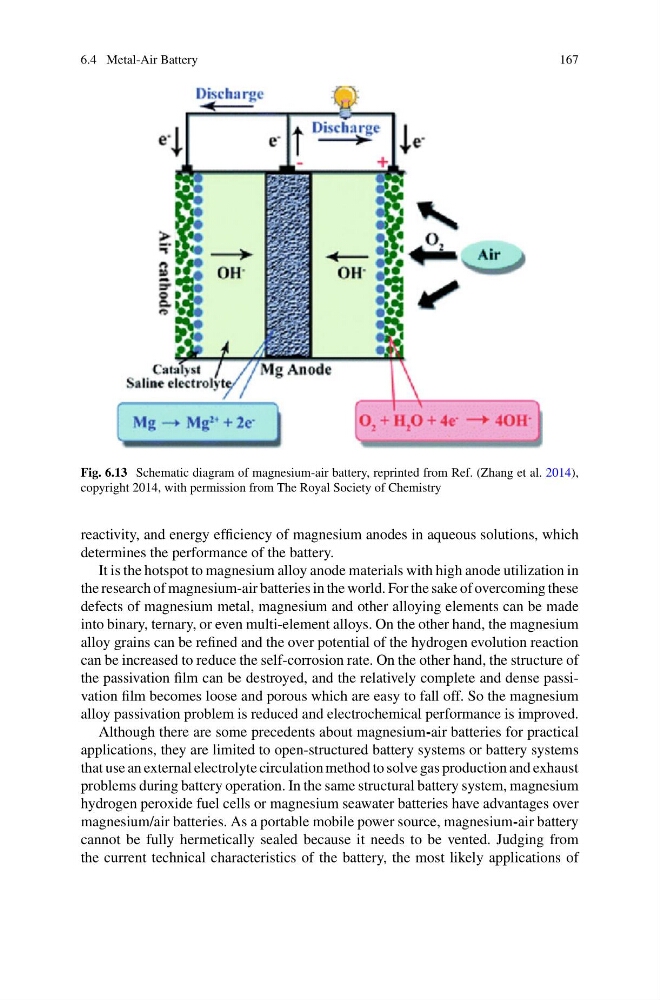
Fig. 6.13 Schematic diagram of magnesium-air battery, reprinted from Ref. (Zhang et al. 2014),
copyright 2014, with permission from The Royal Society of Chemistry
reactivity, and energy efficiency of magnesium anodes in aqueous solutions, which
determines the performance of the battery.
It is the hotspot to magnesium alloy anode materials with high anode utilization in
the research of magnesium-air batteries in the world. For the sake of overcoming these
defects of magnesium metal, magnesium and other alloying elements can be made
into binary, ternary, or even multi-element alloys. On the other hand, the magnesium
alloy grains can be refined and the over potential of the hydrogen evolution reaction
can be increased to reduce the self-corrosion rate. On the other hand, the structure of
the passivation film can be destroyed, and the relatively complete and dense passivation film becomes loose and porous which are easy to fall off. So the magnesium
alloy passivation problem is reduced and electrochemical performance is improved.
Although there are some precedents about magnesium-air batteries for practical
applications, they are limited to open-structured battery systems or battery systems
that use an external electrolyte circulation method to solve gas production and exhaust
problems during battery operation. In the same structural battery system, magnesium
hydrogen peroxide fuel cells or magnesium seawater batteries have advantages over
magnesium/air batteries. As a portable mobile power source, magnesium-air battery
cannot be fully hermetically sealed because it needs to be vented. Judging from
the current technical characteristics of the battery, the most likely applications of
167
Fig. 6.13 Schematic diagram of magnesium-air battery, reprinted from Ref. (Zhang et al. 2014),
copyright 2014, with permission from The Royal Society of Chemistry
reactivity, and energy efficiency of magnesium anodes in aqueous solutions, which
determines the performance of the battery.
It is the hotspot to magnesium alloy anode materials with high anode utilization in
the research of magnesium-air batteries in the world. For the sake of overcoming these
defects of magnesium metal, magnesium and other alloying elements can be made
into binary, ternary, or even multi-element alloys. On the other hand, the magnesium
alloy grains can be refined and the over potential of the hydrogen evolution reaction
can be increased to reduce the self-corrosion rate. On the other hand, the structure of
the passivation film can be destroyed, and the relatively complete and dense passivation film becomes loose and porous which are easy to fall off. So the magnesium
alloy passivation problem is reduced and electrochemical performance is improved.
Although there are some precedents about magnesium-air batteries for practical
applications, they are limited to open-structured battery systems or battery systems
that use an external electrolyte circulation method to solve gas production and exhaust
problems during battery operation. In the same structural battery system, magnesium
hydrogen peroxide fuel cells or magnesium seawater batteries have advantages over
magnesium/air batteries. As a portable mobile power source, magnesium-air battery
cannot be fully hermetically sealed because it needs to be vented. Judging from
the current technical characteristics of the battery, the most likely applications of