

6.2 Lithium Batteries and Lithium-Ion Batteries
135
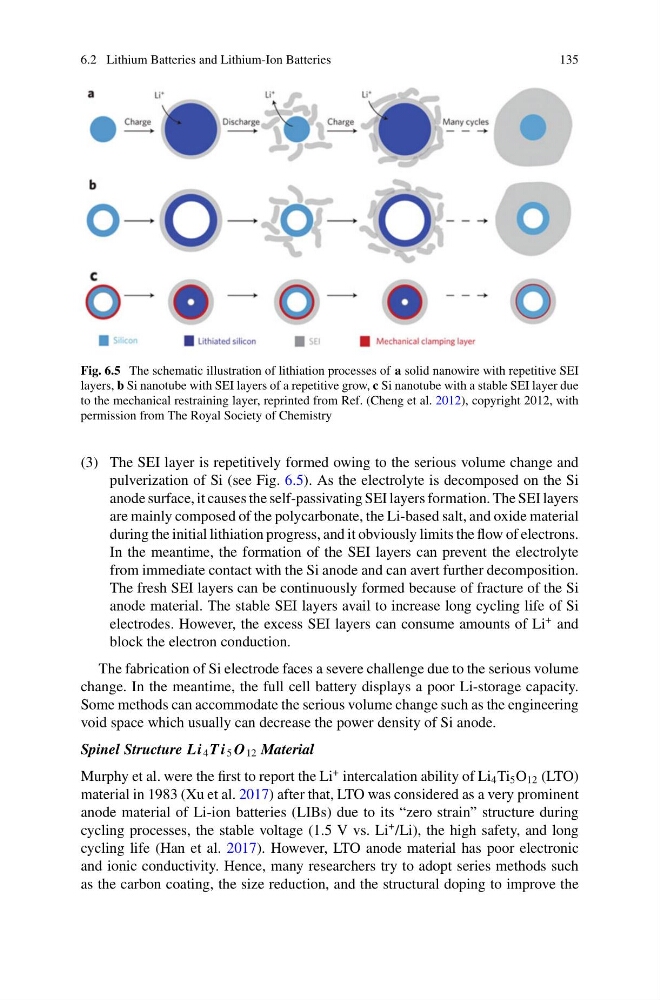
Fig. 6.5 The schematic illustration of lithiation processes of a solid nanowire with repetitive SEI
layers, b Si nanotube with SEI layers of a repetitive grow, c Si nanotube with a stable SEI layer due
to the mechanical restraining layer, reprinted from Ref. (Cheng et al. 2012), copyright 2012, with
permission from The Royal Society of Chemistry
(3) The SEI layer is repetitively formed owing to the serious volume change and
pulverization of Si (see Fig. 6.5). As the electrolyte is decomposed on the Si
anode surface, it causes the self-passivating SEI layers formation. The SEI layers
are mainly composed of the polycarbonate, the Li-based salt, and oxide material
during the initial lithiation progress, and it obviously limits the flow of electrons.
In the meantime, the formation of the SEI layers can prevent the electrolyte
from immediate contact with the Si anode and can avert further decomposition.
The fresh SEI layers can be continuously formed because of fracture of the Si
anode material. The stable SEI layers avail to increase long cycling life of Si
electrodes. However, the excess SEI layers can consume amounts of Li
+ and
block the electron conduction.
The fabrication of Si electrode faces a severe challenge due to the serious volume
change. In the meantime, the full cell battery displays a poor Li-storage capacity.
Some methods can accommodate the serious volume change such as the engineering
void space which usually can decrease the power density of Si anode.
Spinel Structure Li 4 T i 5 O 12 Material
Murphy et al. were the first to report the Li
+ intercalation ability of Li 4 Ti 5 O 12 (LTO)
material in 1983 (Xu et al. 2017) after that, LTO was considered as a very prominent
anode material of Li-ion batteries (LIBs) due to its “zero strain” structure during
cycling processes, the stable voltage (1.5 V vs. Li
+ /Li), the high safety, and long
cycling life (Han et al. 2017). However, LTO anode material has poor electronic
and ionic conductivity. Hence, many researchers try to adopt series methods such
as the carbon coating, the size reduction, and the structural doping to improve the
135
Fig. 6.5 The schematic illustration of lithiation processes of a solid nanowire with repetitive SEI
layers, b Si nanotube with SEI layers of a repetitive grow, c Si nanotube with a stable SEI layer due
to the mechanical restraining layer, reprinted from Ref. (Cheng et al. 2012), copyright 2012, with
permission from The Royal Society of Chemistry
(3) The SEI layer is repetitively formed owing to the serious volume change and
pulverization of Si (see Fig. 6.5). As the electrolyte is decomposed on the Si
anode surface, it causes the self-passivating SEI layers formation. The SEI layers
are mainly composed of the polycarbonate, the Li-based salt, and oxide material
during the initial lithiation progress, and it obviously limits the flow of electrons.
In the meantime, the formation of the SEI layers can prevent the electrolyte
from immediate contact with the Si anode and can avert further decomposition.
The fresh SEI layers can be continuously formed because of fracture of the Si
anode material. The stable SEI layers avail to increase long cycling life of Si
electrodes. However, the excess SEI layers can consume amounts of Li
+ and
block the electron conduction.
The fabrication of Si electrode faces a severe challenge due to the serious volume
change. In the meantime, the full cell battery displays a poor Li-storage capacity.
Some methods can accommodate the serious volume change such as the engineering
void space which usually can decrease the power density of Si anode.
Spinel Structure Li 4 T i 5 O 12 Material
Murphy et al. were the first to report the Li
+ intercalation ability of Li 4 Ti 5 O 12 (LTO)
material in 1983 (Xu et al. 2017) after that, LTO was considered as a very prominent
anode material of Li-ion batteries (LIBs) due to its “zero strain” structure during
cycling processes, the stable voltage (1.5 V vs. Li
+ /Li), the high safety, and long
cycling life (Han et al. 2017). However, LTO anode material has poor electronic
and ionic conductivity. Hence, many researchers try to adopt series methods such
as the carbon coating, the size reduction, and the structural doping to improve the