

6.2 Lithium Batteries and Lithium-Ion Batteries
119
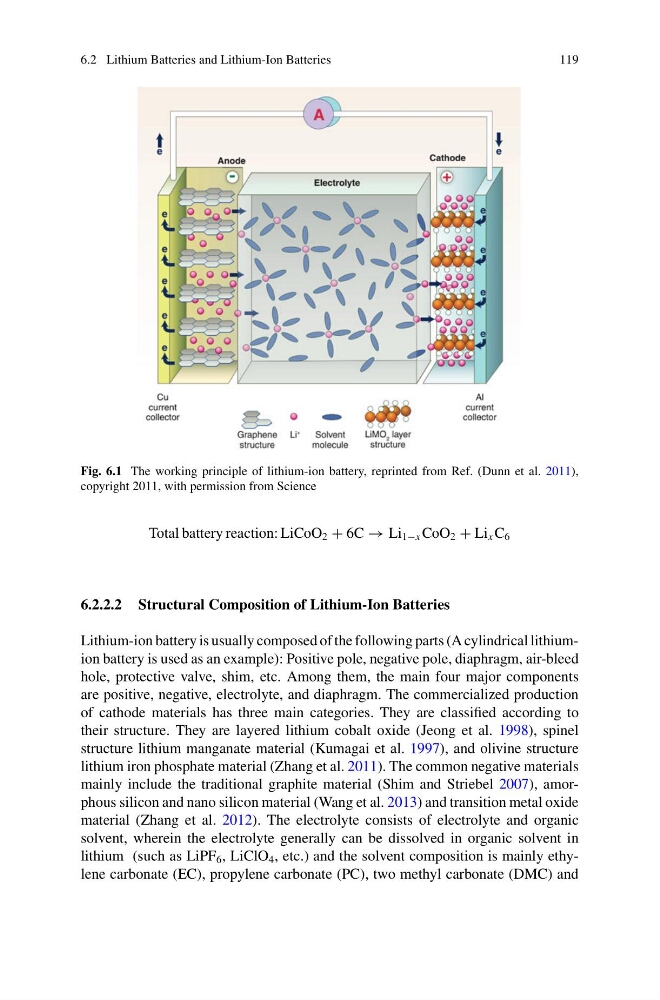
Fig. 6.1 The working principle of lithium-ion battery, reprinted from Ref. (Dunn et al. 2011),
copyright 2011, with permission from Science
Total battery reaction: LiCoO 2 + 6C → Li 1−x CoO 2 + Li x C 6
6.2.2.2 Structural Composition of Lithium-Ion Batteries
Lithium-ion battery is usually composed of the following parts (A cylindrical lithiumion battery is used as an example): Positive pole, negative pole, diaphragm, air-bleed
hole, protective valve, shim, etc. Among them, the main four major components
are positive, negative, electrolyte, and diaphragm. The commercialized production
of cathode materials has three main categories. They are classified according to
their structure. They are layered lithium cobalt oxide (Jeong et al. 1998), spinel
structure lithium manganate material (Kumagai et al. 1997), and olivine structure
lithium iron phosphate material (Zhang et al. 2011). The common negative materials
mainly include the traditional graphite material (Shim and Striebel 2007), amorphous silicon and nano silicon material (Wang et al. 2013) and transition metal oxide
material (Zhang et al. 2012). The electrolyte consists of electrolyte and organic
solvent, wherein the electrolyte generally can be dissolved in organic solvent in
lithium (such as LiPF 6 , LiClO 4 , etc.) and the solvent composition is mainly ethylene carbonate (EC), propylene carbonate (PC), two methyl carbonate (DMC) and
119
Fig. 6.1 The working principle of lithium-ion battery, reprinted from Ref. (Dunn et al. 2011),
copyright 2011, with permission from Science
Total battery reaction: LiCoO 2 + 6C → Li 1−x CoO 2 + Li x C 6
6.2.2.2 Structural Composition of Lithium-Ion Batteries
Lithium-ion battery is usually composed of the following parts (A cylindrical lithiumion battery is used as an example): Positive pole, negative pole, diaphragm, air-bleed
hole, protective valve, shim, etc. Among them, the main four major components
are positive, negative, electrolyte, and diaphragm. The commercialized production
of cathode materials has three main categories. They are classified according to
their structure. They are layered lithium cobalt oxide (Jeong et al. 1998), spinel
structure lithium manganate material (Kumagai et al. 1997), and olivine structure
lithium iron phosphate material (Zhang et al. 2011). The common negative materials
mainly include the traditional graphite material (Shim and Striebel 2007), amorphous silicon and nano silicon material (Wang et al. 2013) and transition metal oxide
material (Zhang et al. 2012). The electrolyte consists of electrolyte and organic
solvent, wherein the electrolyte generally can be dissolved in organic solvent in
lithium (such as LiPF 6 , LiClO 4 , etc.) and the solvent composition is mainly ethylene carbonate (EC), propylene carbonate (PC), two methyl carbonate (DMC) and