

AME- Analysis of Motif
Enrichment
Going back to the set of genes that are developmentally coexpressed with ABI3, we can query whether these sequences share
any putative regulatory similarities. AME can answer this question
by finding enriched transcription factor binding sites from a usersupplied motif database.
1. Go to http://meme-suite.org/tools/ame.
2. Under “Select the type of control sequences to use,” toggle
“Shuffled input sequences.” Because you chose “Shuffled input
sequences,” AME will create control sequences by shuffling the
letters in each input sequence.
3. Under “Input the primary sequences,” select “Upload
sequences” from the dropdown menu. Upload the file called
“ABI3_coexpressed_genes_500bp_upstream.fasta” (available
here; see Note 16). This file contains the 500-bp upstream
sequences for each of the ABI3 coexpressed genes in FASTA
format.
4. Using the “Input the motifs” drop down menu, we select the
database for our search. For the first dropdown menu, select
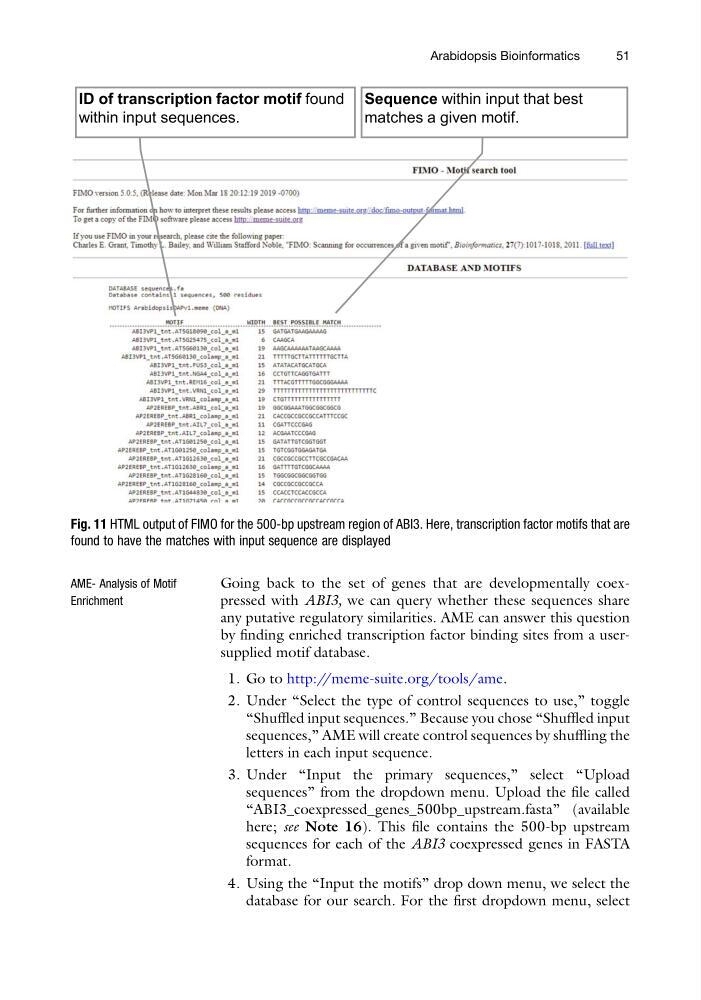
Fig. 11 HTML output of FIMO for the 500-bp upstream region of ABI3. Here, transcription factor motifs that are
found to have the matches with input sequence are displayed
Arabidopsis Bioinformatics
51
Enrichment
Going back to the set of genes that are developmentally coexpressed with ABI3, we can query whether these sequences share
any putative regulatory similarities. AME can answer this question
by finding enriched transcription factor binding sites from a usersupplied motif database.
1. Go to http://meme-suite.org/tools/ame.
2. Under “Select the type of control sequences to use,” toggle
“Shuffled input sequences.” Because you chose “Shuffled input
sequences,” AME will create control sequences by shuffling the
letters in each input sequence.
3. Under “Input the primary sequences,” select “Upload
sequences” from the dropdown menu. Upload the file called
“ABI3_coexpressed_genes_500bp_upstream.fasta” (available
here; see Note 16). This file contains the 500-bp upstream
sequences for each of the ABI3 coexpressed genes in FASTA
format.
4. Using the “Input the motifs” drop down menu, we select the
database for our search. For the first dropdown menu, select
Fig. 11 HTML output of FIMO for the 500-bp upstream region of ABI3. Here, transcription factor motifs that are
found to have the matches with input sequence are displayed
Arabidopsis Bioinformatics
51