

62
3 Governance: Solving or Reproducing Inequalities
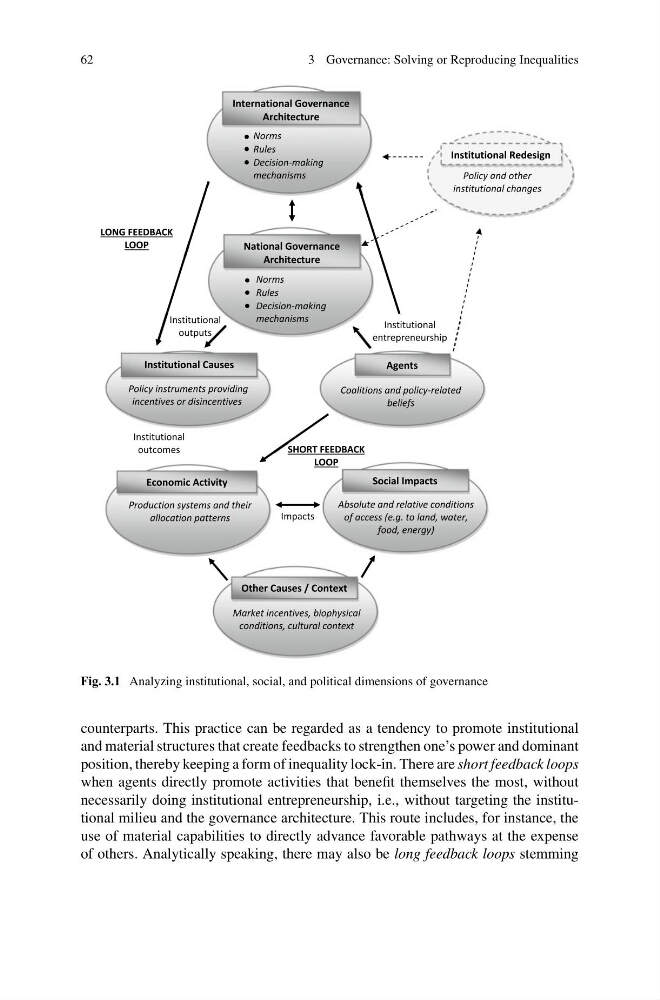
Fig. 3.1 Analyzing institutional, social, and political dimensions of governance
counterparts. This practice can be regarded as a tendency to promote institutional
and material structures that create feedbacks to strengthen one’s power and dominant
position, thereby keeping a form of inequality lock-in. There are short feedback loops
when agents directly promote activities that benefit themselves the most, without
necessarily doing institutional entrepreneurship, i.e., without targeting the institutional milieu and the governance architecture. This route includes, for instance, the
use of material capabilities to directly advance favorable pathways at the expense
of others. Analytically speaking, there may also be long feedback loops stemming
3 Governance: Solving or Reproducing Inequalities
Fig. 3.1 Analyzing institutional, social, and political dimensions of governance
counterparts. This practice can be regarded as a tendency to promote institutional
and material structures that create feedbacks to strengthen one’s power and dominant
position, thereby keeping a form of inequality lock-in. There are short feedback loops
when agents directly promote activities that benefit themselves the most, without
necessarily doing institutional entrepreneurship, i.e., without targeting the institutional milieu and the governance architecture. This route includes, for instance, the
use of material capabilities to directly advance favorable pathways at the expense
of others. Analytically speaking, there may also be long feedback loops stemming