

8.4 The Bioeconomy: Addressing or Aggravating North-South …
197
Brazilian sugarcane
ethanol & soy/beef
biodiesel
Brazilian mixed
biodiesel
Indian sugarcane
ethanol
Indian jatropha
biodiesel
Indonesian palm oil
biodiesel
-2.5
-2
-1.5
-1
-0.5
0
0.5
1
1.5
-2
-1
0
1
2
3
4
5
6 Equalizing
development
Socio-environmental performance
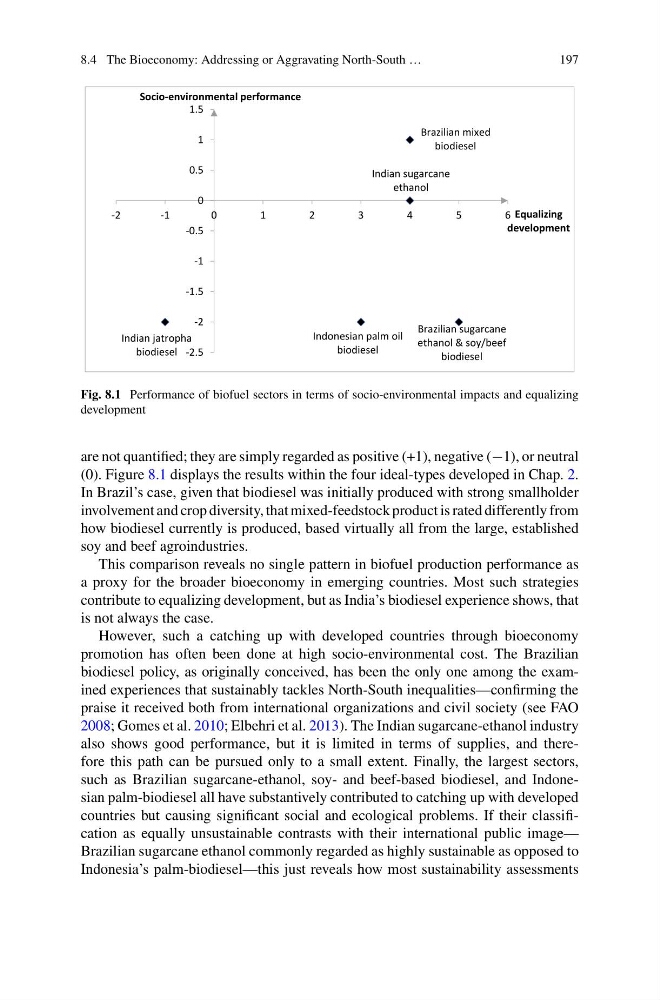
Fig. 8.1 Performance of biofuel sectors in terms of socio-environmental impacts and equalizing
development
are not quantified; they are simply regarded as positive (+1), negative (−1), or neutral
(0). Figure 8.1 displays the results within the four ideal-types developed in Chap. 2.
In Brazil’s case, given that biodiesel was initially produced with strong smallholder
involvement and crop diversity, that mixed-feedstock product is rated differently from
how biodiesel currently is produced, based virtually all from the large, established
soy and beef agroindustries.
This comparison reveals no single pattern in biofuel production performance as
a proxy for the broader bioeconomy in emerging countries. Most such strategies
contribute to equalizing development, but as India’s biodiesel experience shows, that
is not always the case.
However, such a catching up with developed countries through bioeconomy
promotion has often been done at high socio-environmental cost. The Brazilian
biodiesel policy, as originally conceived, has been the only one among the examined experiences that sustainably tackles North-South inequalities—confirming the
praise it received both from international organizations and civil society (see FAO
2008; Gomes et al. 2010; Elbehri et al. 2013). The Indian sugarcane-ethanol industry
also shows good performance, but it is limited in terms of supplies, and therefore this path can be pursued only to a small extent. Finally, the largest sectors,
such as Brazilian sugarcane-ethanol, soy- and beef-based biodiesel, and Indonesian palm-biodiesel all have substantively contributed to catching up with developed
countries but causing significant social and ecological problems. If their classification as equally unsustainable contrasts with their international public image—
Brazilian sugarcane ethanol commonly regarded as highly sustainable as opposed to
Indonesia’s palm-biodiesel—this just reveals how most sustainability assessments
197
Brazilian sugarcane
ethanol & soy/beef
biodiesel
Brazilian mixed
biodiesel
Indian sugarcane
ethanol
Indian jatropha
biodiesel
Indonesian palm oil
biodiesel
-2.5
-2
-1.5
-1
-0.5
0
0.5
1
1.5
-2
-1
0
1
2
3
4
5
6 Equalizing
development
Socio-environmental performance
Fig. 8.1 Performance of biofuel sectors in terms of socio-environmental impacts and equalizing
development
are not quantified; they are simply regarded as positive (+1), negative (−1), or neutral
(0). Figure 8.1 displays the results within the four ideal-types developed in Chap. 2.
In Brazil’s case, given that biodiesel was initially produced with strong smallholder
involvement and crop diversity, that mixed-feedstock product is rated differently from
how biodiesel currently is produced, based virtually all from the large, established
soy and beef agroindustries.
This comparison reveals no single pattern in biofuel production performance as
a proxy for the broader bioeconomy in emerging countries. Most such strategies
contribute to equalizing development, but as India’s biodiesel experience shows, that
is not always the case.
However, such a catching up with developed countries through bioeconomy
promotion has often been done at high socio-environmental cost. The Brazilian
biodiesel policy, as originally conceived, has been the only one among the examined experiences that sustainably tackles North-South inequalities—confirming the
praise it received both from international organizations and civil society (see FAO
2008; Gomes et al. 2010; Elbehri et al. 2013). The Indian sugarcane-ethanol industry
also shows good performance, but it is limited in terms of supplies, and therefore this path can be pursued only to a small extent. Finally, the largest sectors,
such as Brazilian sugarcane-ethanol, soy- and beef-based biodiesel, and Indonesian palm-biodiesel all have substantively contributed to catching up with developed
countries but causing significant social and ecological problems. If their classification as equally unsustainable contrasts with their international public image—
Brazilian sugarcane ethanol commonly regarded as highly sustainable as opposed to
Indonesia’s palm-biodiesel—this just reveals how most sustainability assessments